By: Fatima Winniclare Jayme
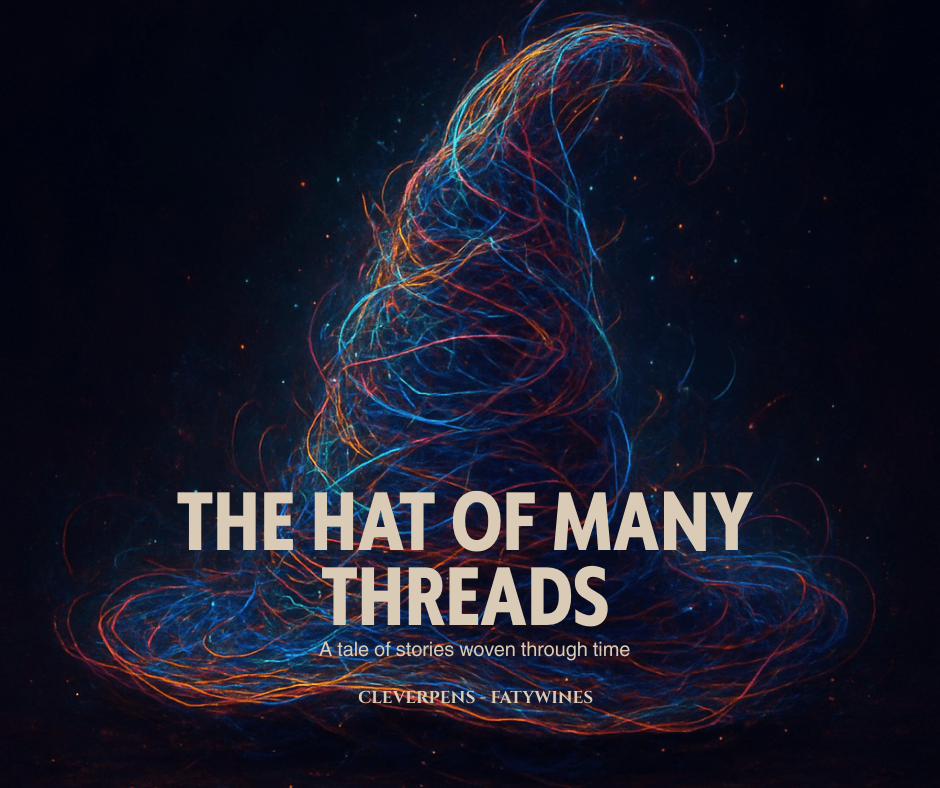
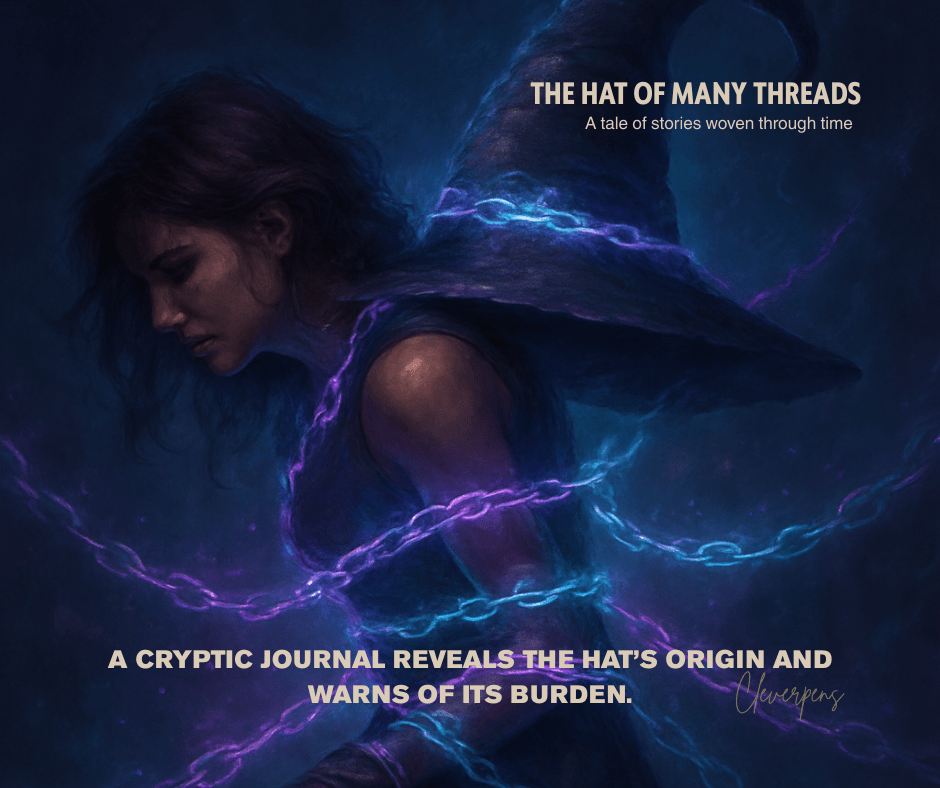
A hat, intricately woven from numerous strands, exists in a realm where each thread embodies a memory, a promise, or a secret. Each thread signifies a life experienced, a decision executed, or a route not pursued. The individual who dons the hat gains insight into the narratives of others, albeit at a price.
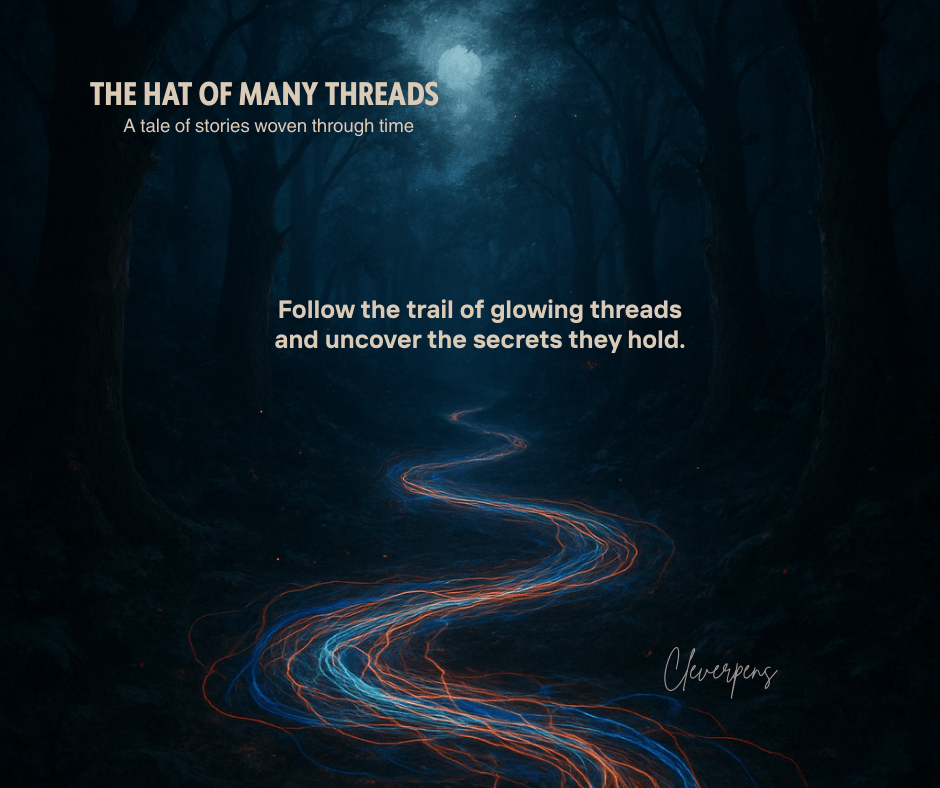
Ages ago, a skilled weaver whose name was cursed created a hat using threads collected from dawn and dusk, positing that beginnings and endings encapsulate profound truths. The skilled weaver disappeared upon completion, leaving the hat as an enduring legacy. Countless stories were told about it, and one of them was the tale of the Hat of Many Threads.
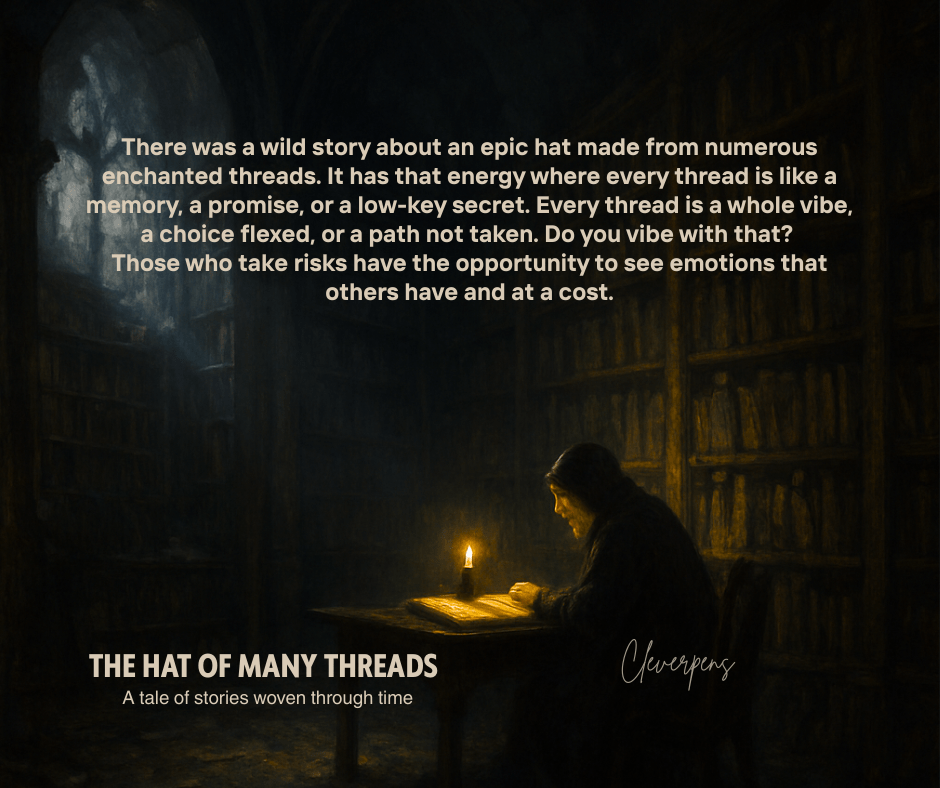
The Hat of Many Threads is discussed with reverence, as if each mention contributes to its complex design. The hat is said to have originated at the intersection of dawn and dusk, where the Weaver collected threads woven from beginnings and endings. Each thread conveys a narrative—some victorious, some sorrowful, some incomplete.
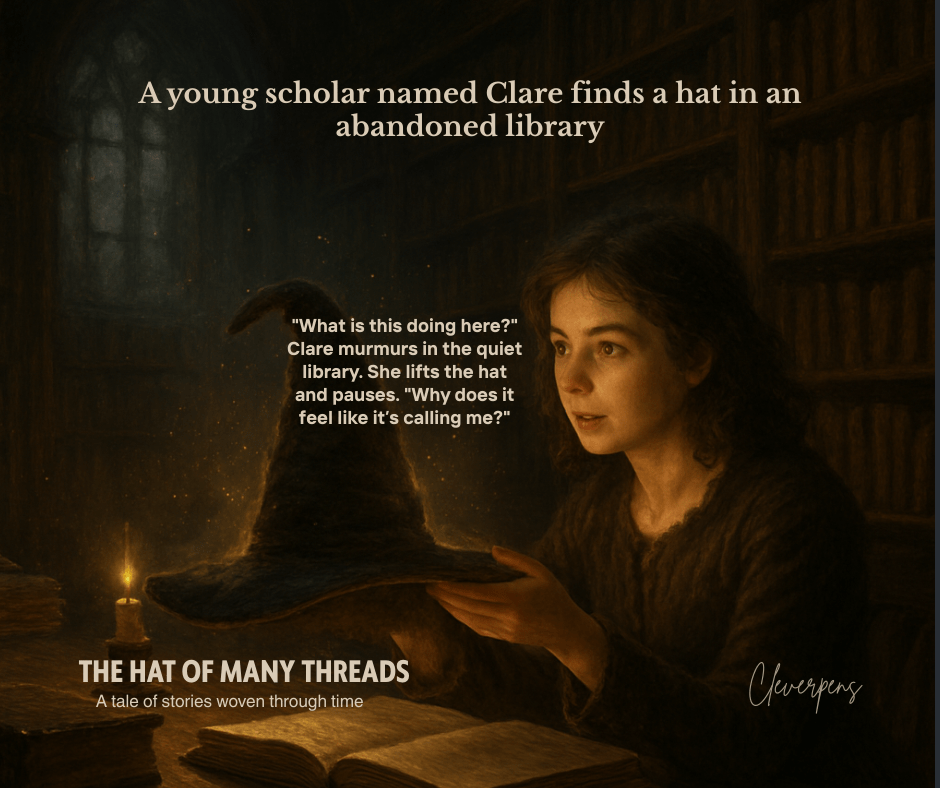
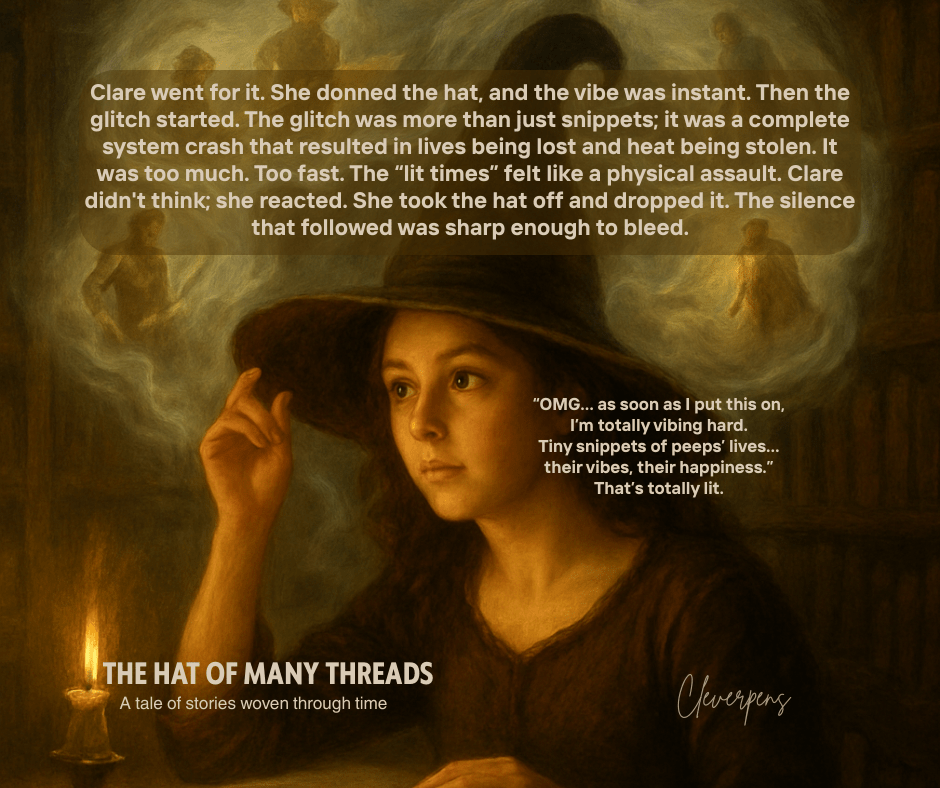
Clare adjusted the hat, its weight pressing down like a crown of memories. A singular crimson thread pulsed at the periphery, capturing her awareness and leading her into a different reality.
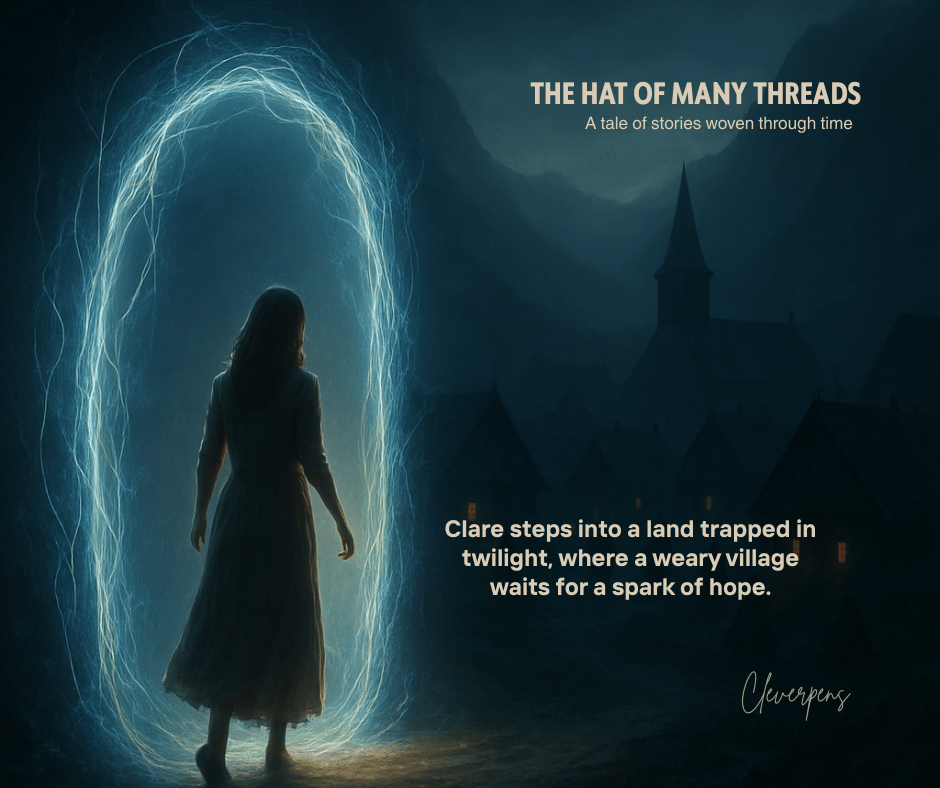
She entered and discovered herself in a valley enveloped in perpetual twilight. The sky radiated a muted light, existing in a delicate balance between day and night, as the villagers carried out their routines with a sense of resigned acceptance, their appearances reflecting the ephemeral charm of a dawn that remained elusive.
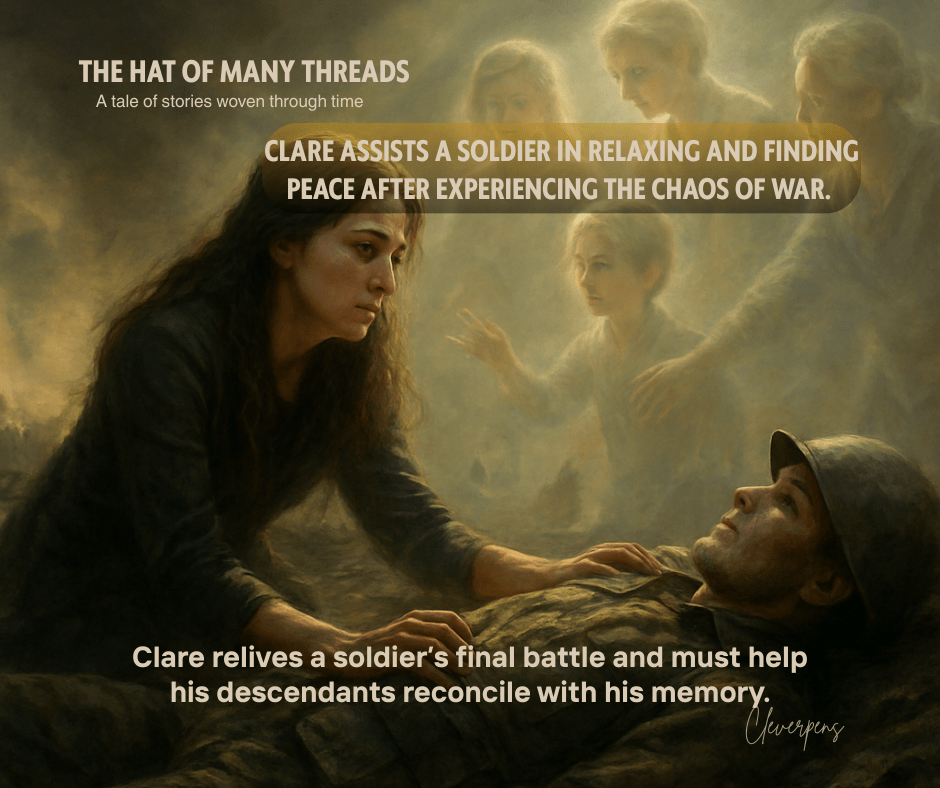
Clare abruptly found herself in a battlefield suspended in twilight. The atmosphere was permeated with the scent of iron and smoke. Surrounding her, ethereal soldiers engaged in perpetual combat, their shouts resonating like thunder. At the center rested a solitary figure—a fatigued soldier grasping a shattered sword, his eyes brimming with remorse.
Clare knelt alongside him. She experienced the pain of his injuries and the weight of his decisions. The hat revealed glimpses: a woman waiting at the threshold, a toddler grasping a wooden toy, and unsent letters. His narrative remained incomplete—not due to mortality, but because his recollections had been muted.
She saw the objective: to convey his truth to the living.
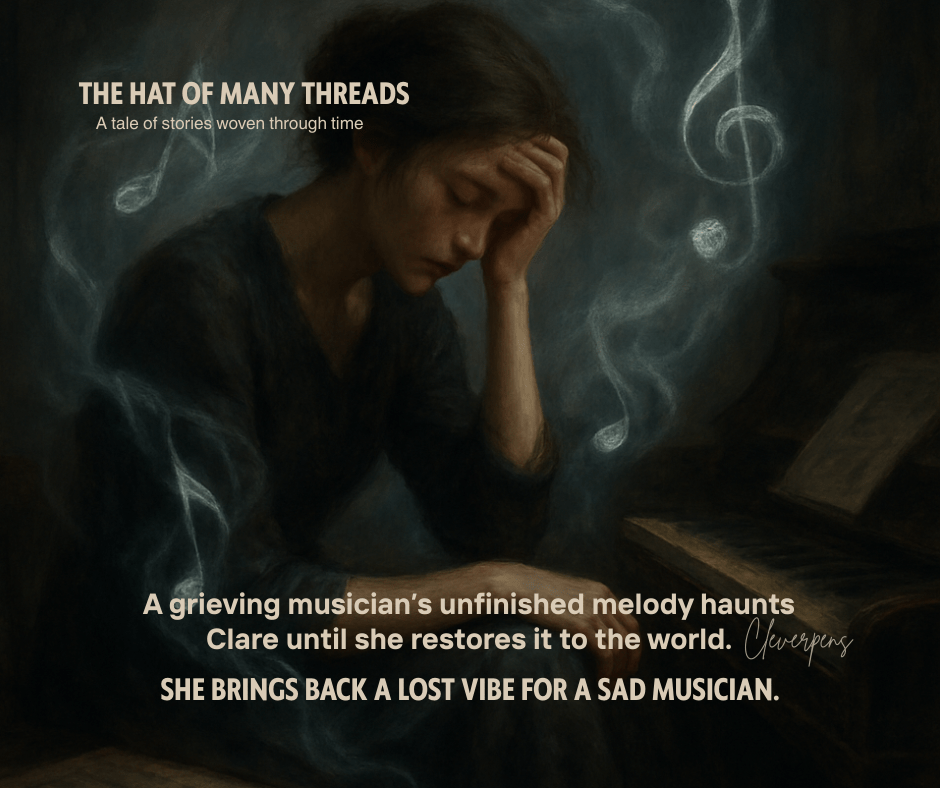
At the village square, she met a girl named Amara, who carried a lantern that never lit. The hat pulsed, and Clare heard faint music—notes scattered like threads in the air. She realized the sunrise was bound to a melody, broken long ago. If she could restore it, the dawn would return.
Clare gathered the villagers under the direction of the hat. She requested them to vocalize the snippets she perceived: a hum from the baker, a whistle from the shepherd, and a lullaby from Amara’s grandmother. The melody gradually integrated into a complete composition
At the final note, the horizon was illuminated with vibrant hues. Gold spread throughout the valley, covering rooftops and fields. The villagers expressed astonishment, with tears flowing as the first sunrise in generations enveloped them in warmth. Amara’s lantern ignited, radiating an intensified brightness.
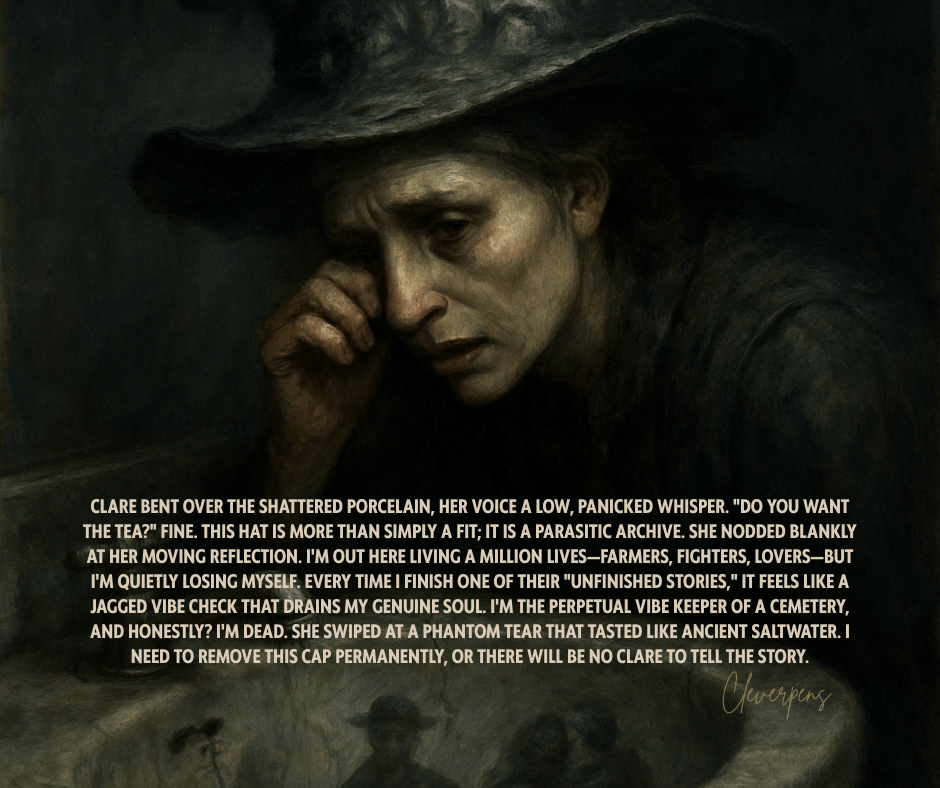
The hat grew heavier. Clare saw the soldier’s appreciation as it settled into her bones, but she also became aware of the cost: with each story that she repaired, she became more connected to the narrative. She wondered how many other threads awaited her and if she’d ever be free of them.
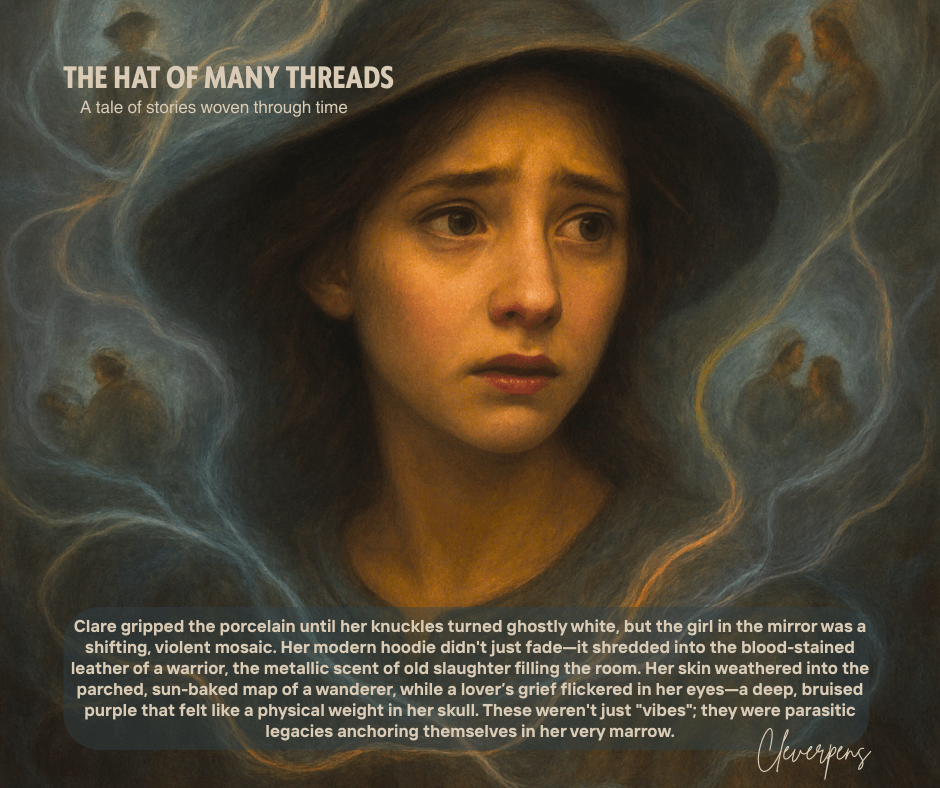
The golden thread vanished into the hat, filling the air with a delightful sense of otherworldly warmth. Clare felt an overwhelming joy, realizing that every story she mended was intricately connecting her more deeply to the essence of life. The hat became so much more than just an accessory; it beautifully connected her life to the stories it embodied.
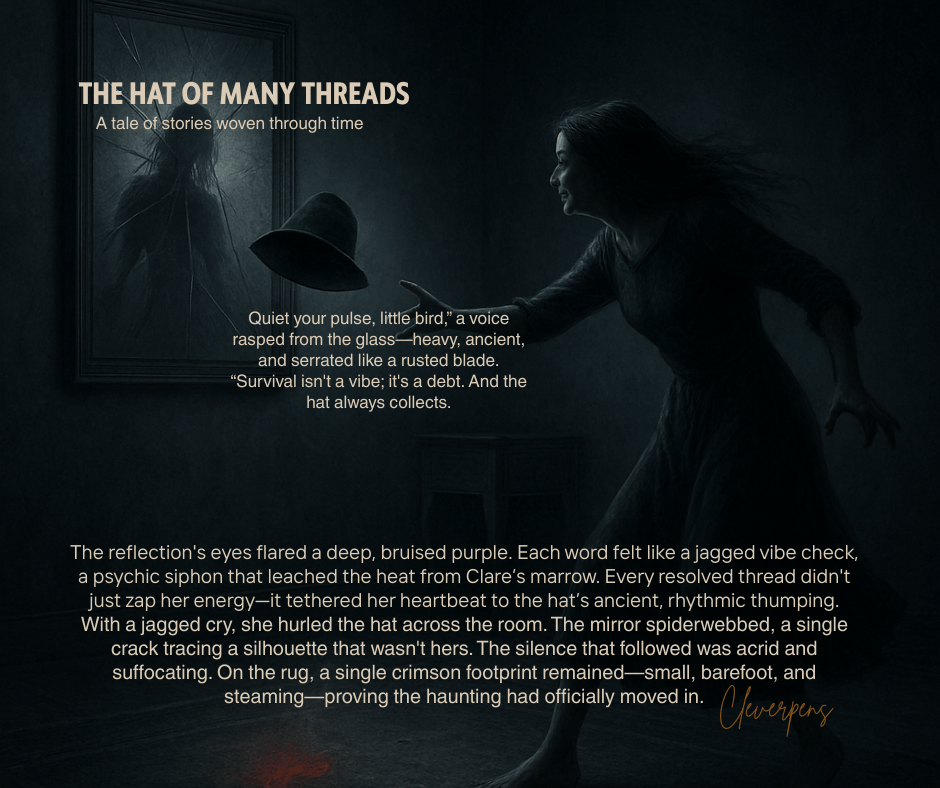
Those who wear the hat do not merely observe; they transform into something extraordinary. They stroll through the echoes of lost farmers, listen to the final melody of a sorrowful musician, and sense the pulse of a soldier who never attained tranquility. But the hat is relentless—it insists on harmony. For every story unveiled, the wearer must repair what was shattered or face the exhilarating chance of dissolving into oblivion.
Children engaged in play devoid of laughter, crops faced significant challenges in growth, and the elders speculated about a potential curse: “The sun has forgotten us.”
Clare experienced the hat’s influence. It did not center on conflict or sorrow—it focused on hope.
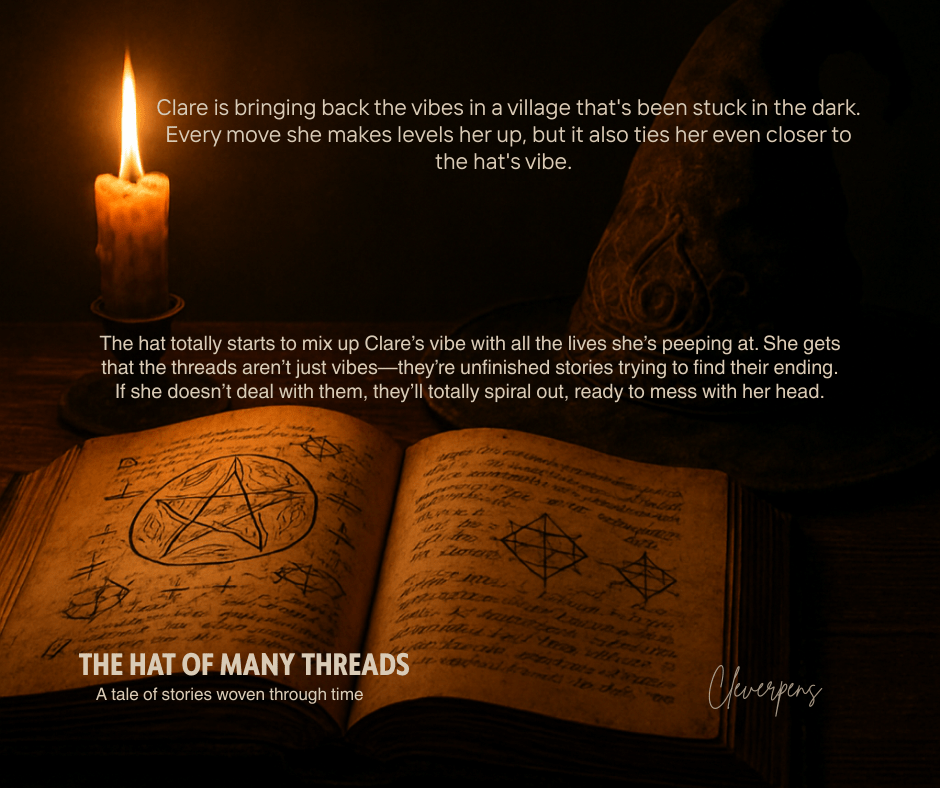
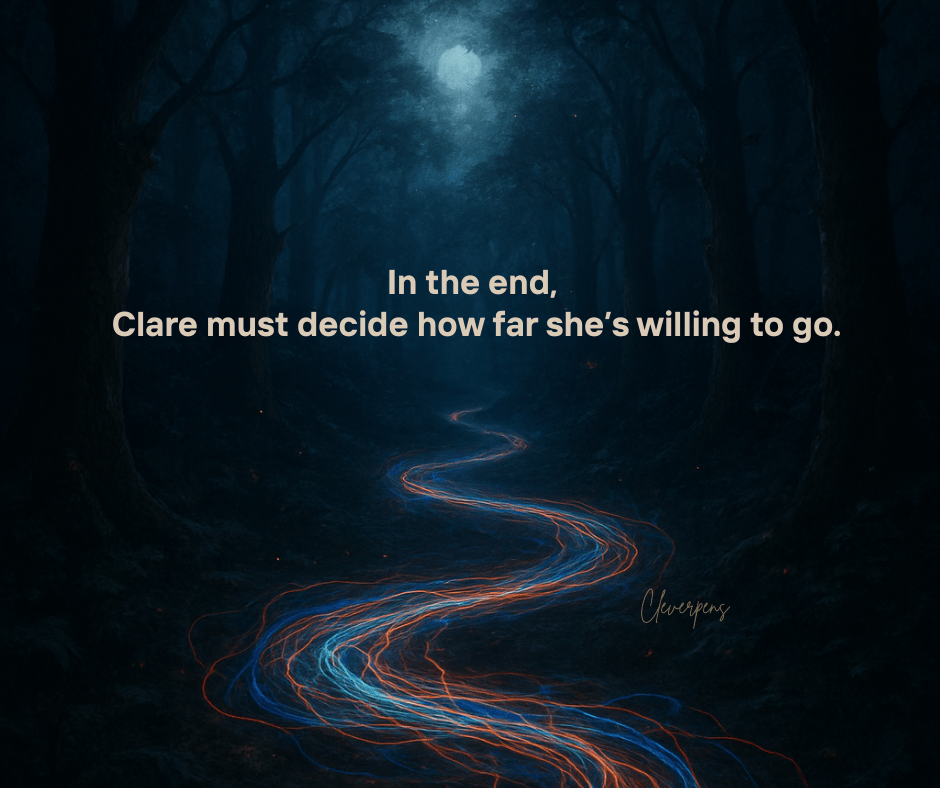
There is a choice to be made:
• To keep the hat safe, serving as its lasting guardian.
• Or, Clare will decide to destroy the hat, tossing the stories into the air.
Alternatively, Clare can make her life a part of the beautiful chorus of humanity by adding a unique thread to its vibrant tapestry.
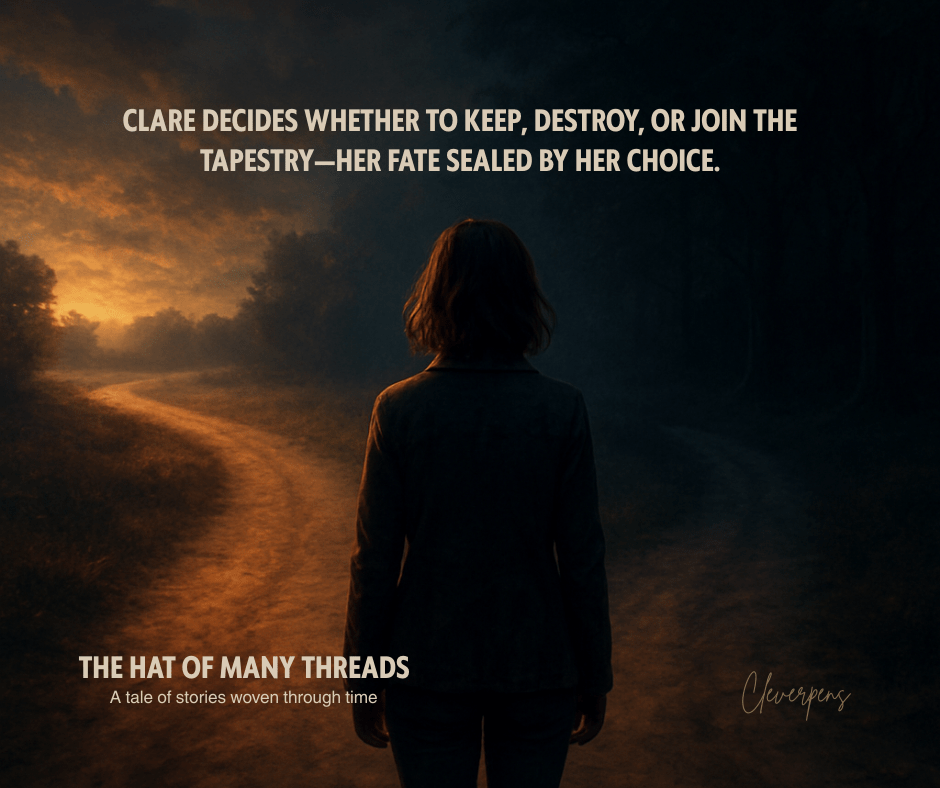
The story of the Hat of Many Threads transcends its objectification, highlighting the significance of each life as a strand in the vast fabric of existence and a manifestation of destiny.
The tale of the Hat of Many Threads runs deeper than just a simple trinket, shining a light on the significance of every soul as a thread in the grand tapestry of life, a symbol of destiny itself. Clare isn’t just wrangling puzzles; she’s mending hearts and souls across the ages.
Summary:
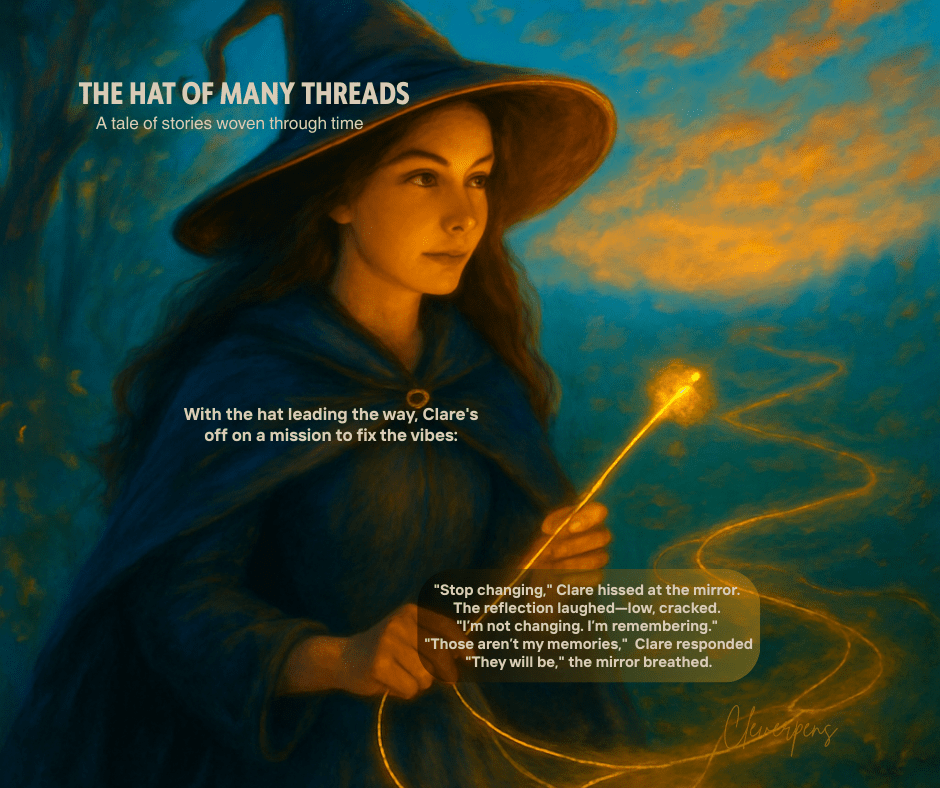
There is this hat made from a bunch of threads, hanging out in a magical place where every thread tells a story, a choice, or a dream from someone’s life. The story follows Clare as she puts on the Hat of Many Threads and sets off on a journey through different moments in other people’s lives, revealing some touching stories along the way. With the hat leading the way, Clare chats with a tired warrior, hears about dreams that slipped away, and helps the villagers find their spark again by putting together a sweet tune to bring the sun back. However, immersing herself in these stories can be draining, as each one draws her further into their world. In the end, the hat represents how everything is connected, pushing Clare to decide whether to keep its magic safe or to create her own story in the bigger picture of life. It really brings out ideas about memory, identity, culture, and resilience in the overall story of humanity.
Takeaways:
The narratives explore fundamental aspects of humanity: memory, identity, culture, and resilience. Readers have the opportunity to examine the philosophical, psychological, and sociological aspects of the story. The hat’s narratives function as case studies that span multiple fields of study.
Each thread represents a small unit of knowledge and wisdom, contributing to a comprehensive tapestry of excellence. We integrate these elements to illustrate how various trades confront challenges, preserve narratives, and shape future developments.


 Cleverpens
Leave a comment