
Fresh written precepts from mind to yours. ~ Cleverpens Fatywines
by: Fatima Winniclare Jayme (Cleverpen~Fatywines)
INTRODUCTION: The COVID-19 pandemic had a significant effect on the horticulture industry. It caused many problems for businesses and made more people cultivate plants at home. Travel restrictions hindered the industry’s ability to recruit workers, resulting in unpicked and wasted crops. Problems in the supply chain had a major impact on perishable goods, which is why producers had to throw away millions of fresh items. Retail evolved from normal stores to supermarkets and online purchasing. For instance, supermarket deliveries by mail developed quickly.
THE SCENARIO: People all across the world started gardening more since they had more time alone. Sales of seeds and plants went up a lot. There are five times as many gardening questions now. People in cities started to use container gardening, and new terminology like “plantito” and “plantita” came forth. Gardening became an essential tool for public health because it helped people feel better by lessening stress and anxiety. It also encouraged people to become more active in their communities by setting up seed exchanges and food-sharing kiosks, which helped alleviate food insecurity during the pandemic. The epidemic left behind horticultural policies that stress resilience. Urban horticulture is increasingly a part of national food security initiatives. Many pandemic gardeners continue because they are concerned about rising food prices and prefer to obtain their fruits and vegetables from local sources that don’t use pesticides.
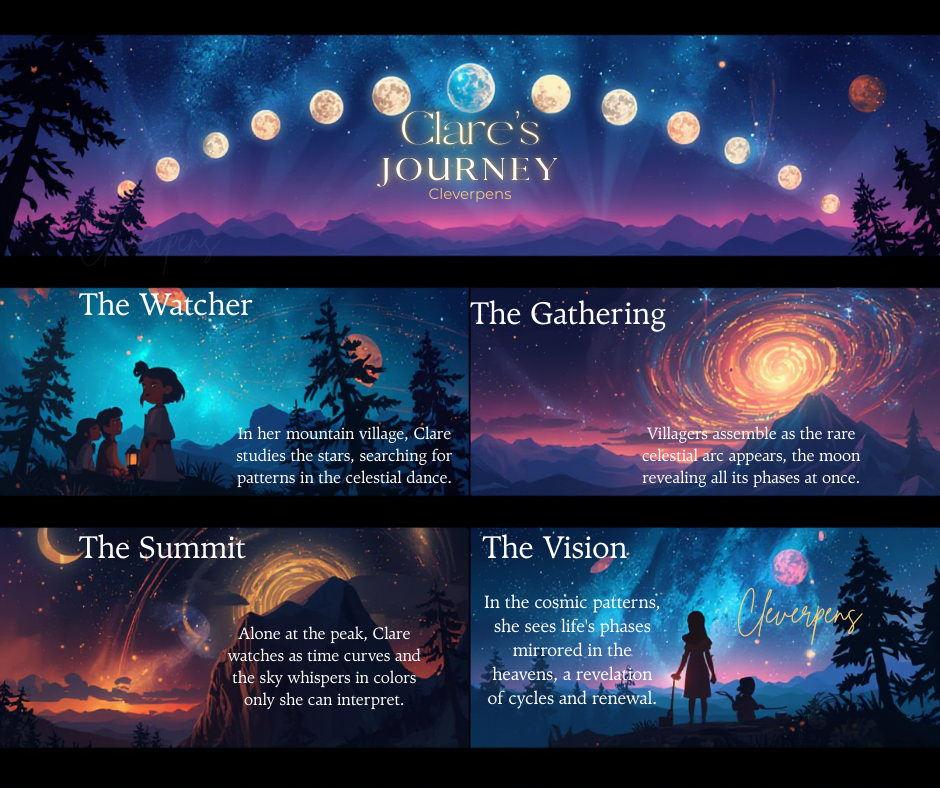
CLARE’S JOURNEY: Meet Clare, an entrepreneur and urban gardener who is making a difference in Talipapa. She’s not only passionate, but she’s also a leader who embodies community growth and empowerment. Clare started Clever Clare Fresh because she knew that people in Talipapa didn’t have easy access to fresh, healthy foods. The brand isn’t just a store; it’s a community center that sells things that are good for your body and mind and supports local businesses. Clever Clare Fresh comes straight from farms in the area, ensuring the best quality and supporting local farmers. Clever Clare Fresh encourages health from the inside out with anything from handmade soaps to natural cures. Small business owners in Talipapa have a rare opportunity to sell their products in person thanks to clever Clare Fresh. Clare’s dedication goes beyond her own business; she works to create a community where people may work together.
CLEVER CLARE CRAFT TAKEAWAYS: Clare thinks that any hobby can become a successful business if you are passionate about it and work hard. She says that becoming involved in the community and working together are important for success. People can support grassroots initiatives by identifying their community’s needs and addressing those needs.
The pandemic showed how weak our current food systems are and sparked a long-lasting interest in growing food locally and in ways that are strong. It also sped up the search for technical solutions like vertical farming and e-commerce platforms that could help create stronger and more sustainable horticulture systems for the future. Unlike problems with businesses, the epidemic generated a large, grassroots movement in home and urban gardening, which is commonly called “quarantine gardening.”
Guide Questions
1. Post-Pandemic Consumer Behavior: How has “quarantine gardening” influenced the purchase and appreciation of fresh produce?
2. Digital Evolution: What do you think personalized first-party data, AI search, and generative AI will do to make the e-commerce experience better this year?
3. Omnichannel Strategy: How can marketing and operations work together to improve promotions and show real-time product availability and e-commerce fulfillment capabilities?
4. Ethical Considerations in Brand Value: How were consumers’ long-term valuation and loyalty to certain brands impacted by companies’ responses to the pandemic, such as the creation of crucial items or aid to field workers?
5. Alignment with Strategy: How can a marketing and supply chain strategy for 2026 ensure that it helps the business achieve its goals, not only meet “vanity metrics”?
Fresh written precepts from mind to yours. ~ Cleverpens Fatywines
by Fatima Winniclare Jayme, MBA. EdD.,LPT
In the domain where intervals extend infinitely, the nature of time is revealed, showcasing the complex interplay of existence that goes beyond the mere movement of clock hands. This exploration aims to comprehend the complex challenges that exist beyond our physical reality, where the essence of existence aligns with the universe. In the context of time, where moments progress continuously, there exists an ongoing journey, a structure composed of the elements of infinity. Each heartbeat signifies a continuous progression, a sequence of transformations that flows like the gentle breeze across the expansive landscape, perpetually advancing without retrospection. In an alternate realm, where time remains constant, exists a location where each heartbeat resonates, embraced by a perpetual present.
Eternity reveals itself as an unbounded expanse, a complex structure interlaced with countless potential outcomes. It summarizes a perpetual conflict, where instances extend indefinitely yet remain static, a conundrum that has engaged the intellects of scholars throughout history. While it may imply an infinite duration in informal conversation, it holds significant depth when analyzed as the core of existence, intricately linked with the divine or the ultimate truth that directs our understanding. Within the core of our existence, there are subtle indications of a reality, a commitment that we can rise above the relentless passage of time. By harnessing the principles of mindfulness and the clarity of focused thought, we can engage with the boundless, where the fundamental nature of time diminishes, revealing only the rhythm of being.
Time is a quantifiable, sequential flow of moments categorized as past, present, and future. In contrast, timelessness embodies characteristics, concepts, or entities that remain impervious to the passage of time—eternal, classic, or transcending chronological boundaries. This state is often articulated as a condition in which the present moment is wholly engaged or as the essential physical principles that govern the nature of time itself. Time represents change and sequence, whereas timelessness signifies permanence, beauty, or truth that transcends eras, existing in the present or within a more profound, atemporal reality.
The above poem is bout the darkest hour falls not in the transition of dusk to dawn, but in the deep night between them—when twilight’s faint glow has fully faded. The stars we gaze up at don’t bring this darkness; rather, it’s pierced by the tiny light reflected in each other’s eyes. What time is the darkest hour of the day?answer: Between 3 am-4am
Conceptualizing Time
The concept of time, with its limitless nature and the complexities of existence that go beyond the confines of a clock, provides a framework for understanding what exists beyond our physical reality. The concept of infinite time refers to a continuous span without a beginning or end, characterized by an ongoing sequence of moments that progress like a shifting prairie wind, constantly evolving and advancing.
“Timelessness” refers to a state that transcends the passage of time, where every moment coexists at once, depicted as an “eternal present.” The idea of eternity represents a complex concept, characterized by its vastness, akin to wide landscapes. It presents a contradiction regarding time, where it appears to stretch endlessly while also seeming to stop, a puzzle that has intrigued philosophers throughout history. While it may imply an infinite duration in everyday conversation, it holds a deeper significance when exploring the fundamental aspects of existence in connection with the divine or ultimate reality. Some perspectives suggest that individuals can reach a state of timelessness through deep presence or meditative experiences, where the linear flow of time becomes unclear.
Time and Faith in Contemporary Culture
Time is conventionally understood in a linear fashion within contemporary culture, characterized by organized schedules and timelines. Christianity has preserved earlier societies’ perception of time as cyclical, aligning with the rhythms of nature. Figures like Augustine underscored this circularity, emphasizing humanity’s dependence on God. Flannery O’Connor demonstrates this cyclical nature through her characters, who frequently undergo disruption to acknowledge their reliance on divine grace, as exemplified in her stories like “Greenleaf,” where characters represent various relationships to time and existence. O’Connor’s narrative technique, which is frequently nonlinear, reflects the intrinsic disorientation of the gospel, challenging contemporary perceptions and prompting acknowledgment of our ultimate dependence on God. Her work reminds readers that genuine fulfillment arises from surrendering all to God and embracing the complex relationship between time and faith.
Jung’s Perspective of Time
The examination of time is a detailed and intricate subject that has captivated philosophers, scientists, and intellectuals across the ages. Time serves as a critical element in understanding human existence, impacting various fields and approaches. This examination does not aim to solve the mysteries of time but instead focuses on exploring Carl Gustav Jung’s perspectives on the subject, along with the historical evolution of our understanding of it.
All over, ancient civilizations perceived time as a fundamental aspect of their lives, shaped by natural cycles and mythological narratives. The Greeks distinguished between Chronos, which represents infinite time, and Kronos, the Titan associated with consumption and decay. This distinction highlights a prevalent misconception in contemporary discussions about time.
The majority of philosophers and scientists have examined time through different perspectives, with Archimedes and Newton supporting a definitive, linear understanding, whereas Einstein proposed the idea of time being relative, indicating that it depends on the observer’s frame of reference. The current discourse surrounding absolute versus relative time carries significant consequences for our comprehension of reality.
Psychoanalysis understands the concept of time from both fixed and contextual perspectives. Freud’s insights into the unconscious mind demonstrate that memories and experiences operate independently of time, highlighting a multifaceted connection between temporal dynamics and human awareness. Freud distinguished between two forms of time: one associated with memory and repetition, and another linked to conscious experience, highlighting the eternal quality of the unconscious.
The discussion surrounding time continues to be ambiguous, influencing our understanding of human experience and existence. The relationship between absolute and relative time remains a focal point in both philosophical and scientific discussions, highlighting the complex essence of temporality in human existence.
The Distinction of Time and Timelessness
Understanding the nature of time (memory, sequence) enables us to appreciate the timeless, which exists beyond our grasp.
In physics, some ideas about quantum gravity say that time might not be a basic part of the universe but rather something that comes from other things. The “block universe” theory says that all moments exist at the same time, which means that the universe is basically timeless.
Philosophical Perspectives on Time and Timelessness
In comprehensiveness and space, the collection encompasses a vast timeline, presenting a variety of viewpoints from key intellectuals regarding the essence of time and the realms that extend beyond it.
The “Great Conversation” aims to illustrate the ongoing debate and reinterpretation of timeless questions throughout the centuries, fostering a dialogue that transcends time. From the fundamental principles of metaphysical reality as posited by Plato to the exploration of human purpose by Aristotle and extending to the spiritual longing articulated by Augustine, these texts establish a foundational framework for comprehending our temporal existence. Engaging with these texts offers a thorough exploration of humanity’s efforts to understand the progression of time, the concept of eternity, and our role within these frameworks.
Deepak Chopra asserts that while the brain processes time in the present, human consciousness acts as a conduit that converts the timeless into temporal experience.
Jiddu Krishnamurti differentiates between chronological time (necessary for daily existence) and psychological time (memory). He says that “timelessness” is a state in which the mind is free from the weight of memory and the process of “becoming.”
Regarding design and architecture, timeless design is not tied to a specific time or style. In architecture, it refers to buildings that blend seamlessly with their surroundings, remaining visually appealing and functional for decades.
In content and media, “timely” content, like news, loses its value quickly, while “timeless” content, like writing advice, stays relevant regardless of when it is read.
Temporal Dynamics of Time
Scholars have examined the concept of time for centuries, presenting diverse perspectives.
The discussion surrounding Presentism and Eternalism highlights a significant philosophical inquiry into the nature of reality across various temporal moments.
Presentism asserts that only objects and events occurring in the present moment possess reality. Eternalism, often referred to as the “block universe” theory, posits that the past, present, and future coexist simultaneously and are all tangible within a four-dimensional framework of spacetime.
Time can be categorized into various types, including everyday civil time units such as seconds, minutes, and hours, along with variations like daylight saving. Additionally, there are scientific measures like Universal Time (UT), Julian Dates, and Sidereal Time. Philosophical concepts also play a role, contrasting Greek Chronos (sequential) with Kairos (opportune), as well as subjective psychological time, which pertains to the perception of time’s passage. Time is quantified using clocks, whether analog or digital, and calendars. It can also be considered relative, like relativistic time, or even as not existing at all in some theoretical frameworks.
Understanding Time
Time can be categorized into various types, including everyday civil time units such as seconds, minutes, and hours, along with variations like daylight saving. Additionally, there are scientific measures like Universal Time (UT), Julian Dates, and Sidereal Time. Philosophical concepts also play a role, contrasting Greek Chronos (sequential) with Kairos (opportune), as well as subjective psychological time, which pertains to the perception of time’s passage. Time is quantified using clocks, whether analog or digital, and calendars. In some theories, it can be seen as relative, like relativistic time, or nonexistent.
Einstein’s Theories on Time
Albert Einstein’s contributions to modern physics revolutionized the scientific understanding of time.
Time Dilation and Relativity: Einstein’s theories of relativity, encompassing both special and general, demonstrated that time is not a constant but fluctuates based on the observer’s motion and the gravitational context they experience. Atomic clocks and other precise instruments have shown that time dilation really happens.
The notion of spacetime can be perceived as a four-dimensional structure, where the essential connection between time and space facilitates the distortion effects caused by mass and energy.
The Arrow of Time and Entropy: Fundamental equations in physics often demonstrate time symmetry, operating the same way whether time moves backward or forward. The observable, one-way progression of time, commonly known as the “arrow of time,” is fundamentally explained by the Second Law of Thermodynamics: the universe evolves from states of lower entropy (order) to higher entropy (disorder).
The present discourse in physics focuses on the nature of time: is it a fundamental component of reality, or does it emerge from more profound quantum phenomena, such as quantum entanglement? Certain theories of quantum gravity propose a universe lacking time, positing that the notion of time arises from the interactions among diverse subsystems.
Conscious, Time, and Identity
Conscious experience predominantly focuses on the present, creating a perception of time as a continuous flow, in contrast to indistinct memories or future expectations.
Identity is influenced by temporal factors, which structure our experiences, recollections, and self-concept, connecting our past, present, and future identities
Eastern philosophies, exemplified by Advaita Vedanta, regard time as a component of maya (illusion), positioned within the ephemeral phenomenal world, which contrasts with a reality that is eternal and immutable.
The Link of Time to Existence
The exploration of time is fundamentally connected to the essence of existence. The awareness of time’s passage provides structure and meaning to our lives. Before birth and following death, when awareness is absent, the subjective experience of time is nullified; what remains is the continuous, objective flow of cosmic time.
Time serves as the essential structure for comprehending change and the relationships between cause and effect. This illustrates the sequential impact of one event on another. Without time, ideas like motion and the passage of life, such as growth and decay, lose their meaning.
Metaphysics represents a branch of philosophy that examines the fundamental nature of reality and existence. The concept of time serves as a fundamental framework for examining existence, identity, and the structural composition of the universe. This inquiry explores fundamental questions about the nature of existence.
The Arrow of Time and Human Experience
For people, time is mostly linear and goes in one direction. We are born, we become older, and we die. A broken egg does not put itself back together to form a whole egg. This situation is caused by the “arrow of time” that the Second Law of Thermodynamics (entropy) says happens: isolated systems tend to go from order to disorder.
In human experience, time is regarded as fundamentally linear and a limited resource necessitating prudent utilization. Essential components include the significance of presence, which lies in maximizing the current moment and fully engaging with it, as time is irreplaceable.
Causality dictates that events occur in a specific sequence of cause and effect (e.g., one cannot consume an apple before its existence). Our brains are programmed to see this order of events, which helps us remember the past and become ready for the future.
Time is measured using clocks, and calendars are things that people made that measure time in linear, cumulative units (seconds, days, years).
Modern physics offers a complex perspective, indicating that the linearity of time is not as simple as our daily experiences imply
The spacetime continuum, according to Einstein’s theories of relativity, asserts that time is fundamentally connected to space within a four-dimensional structure referred to as spacetime.
Time dilation refers to the non-uniform progression of time across different locations. The speed of an object and the strength of the gravitational field can change how quickly time passes. Clocks demonstrate a reduced rate when subjected to stronger gravitational fields or in proximity to objects moving at high velocities. This concept represents a concrete aspect of the physical domain, necessitating consideration by technologies such as GPS. Time may be perceived as nonlinear, indicating a distortion in its progression.
The fundamental principles of physics demonstrate time symmetry, signifying that the equations hold irrespective of the direction of time’s progression or reversal. The observable “arrow of time” is widely recognized as an emergent phenomenon associated with the expansion of the universe and the increase of entropy, rather than a fundamental, universal direction of time.
Quantum Mechanics and Philosophy: Certain theoretical physicists and philosophers, such as Carlo Rovelli, propose that time may not be a fundamental component of reality but rather an illusion or a byproduct of the manner in which our consciousness interprets an information-driven reality. Although our subjective perception of time appears linear, the principles of physics reveal a more intricate objective reality, implying that time may be a flexible and relative dimension or potentially not a fundamental aspect at all.
Inquiry into the Nature of Time
The investigation of time encompasses both philosophical and scientific aspects, revealing its complicated relationship with human awareness and experience. The examination of historical perspectives on time reveals its development as a crucial element of existence, spanning from ancient civilizations to contemporary theories. The distinction between absolute and relative time highlights the ongoing debate regarding its nature, with implications for how we understand causality, memory, and the human psyche.
Philosophers such as Heraclitus, Aristotle, and Kant have made significant contributions to the discussion on time, each providing distinct perspectives that highlight the intricacies of temporal perception. The shift from Newtonian absolute time to Einstein’s relative time represents a significant change in understanding, emphasizing the role of the observer in shaping the perception of time. Psychoanalytic theory, especially Freud’s contributions, adds complexity to this understanding by presenting the idea of timelessness in the unconscious, indicating that our psychological experiences operate outside of traditional temporal boundaries.
The discussion surrounding time is complex and varied. It incorporates elements from history, philosophy, and psychology. Such complexity encourages continuous investigation and contemplation, as time is a crucial factor in influencing human experience and comprehension.
The transient nature of time compels individuals to prioritize essential aspects, including relationships, kindness, and personal development.
Temporal experiences facilitate learning, reflection, and the capacity to progress from previous errors, despite the impossibility of altering them. The finiteness of human experiences and relationships highlights inherent value, despite the potential for associated pain.
Reflections on Time and Forever
The essence of time and forever encompasses reflections exploring the philosophical, spiritual, and personal dimensions of finite time and the idea of an existence beyond time. The idea emphasizes the significance of the current moment within the framework of lasting affection, heritage, and spiritual beliefs.
The idea of “forever” typically relates to concepts that transcend linear time or exceed physical existence, encompassing the enduring nature of love and memory, like affection for family, friends, and those who have passed away. Time is often described as a phenomenon that “never truly fades,” remaining present in our recollections. The fundamental impact of an individual persists in shaping and directing others, even after their departure. Different religious and philosophical perspectives characterize spiritual eternity as a perpetual existence or non-physical essence (soul) that persists beyond biological death.
The actions and contributions of individuals can generate a significant and enduring impact that extends beyond their lifetime, suggesting that their influence continues to resonate. The notion of eternity offers a sense of hope and certainty, suggesting a continuous love or bond that surpasses temporary circumstances.
Time and Eternity: A Metaphysical Exploration
The article “The Enduring Riddle: Navigating the Problem of Time and Eternity” examines the complex link between the notions of time and eternity, which are fundamental to metaphysical exploration. The discussion initiates with a clear definition that time is frequently viewed as a linear progression of occurrences, a metric for change, a facet of reality, and an individual experience. Eternity can be understood in two primary dimensions: first, as infinite duration, denoting time without a beginning or end, and secondly, as timelessness, signifying a state that transcends the limitations of time.
Philosophers have employed various perspectives to examine the nature of time. Aristotle conceptualized time as a metric for change, whereas St. Augustine highlighted its subjective characteristics, proposing that the past and future are constructs of the mind. Immanuel Kant proposed that time functions as an a priori form of intuition, influencing our perception of phenomena instead of existing as an independent entity.
The notion of eternity, particularly as articulated by Boethius, is characterized as a total possession of life within a timeless present. This stands in opposition to the concept of infinite duration, which nonetheless suggests a progression of events. The intersection of time and eternity raises significant philosophical questions, such as the function of eternity as a basis for time and the relationship between our subjective experiences and ultimate reality.
The article encourages readers to consider the implications of these concepts for comprehending existence, change, and consciousness. It posits that our experience of time may represent a constrained viewpoint of a broader, timeless reality.
Newton’s Concept of Time and Its Impact
Isaac Newton’s “Principia Mathematica” presents the idea of absolute time as an uninterrupted progression, a notion that has significantly shaped both scientific inquiry and philosophical discourse, especially in shaping Immanuel Kant’s perspective on time as an inherent framework of perception. William James’s psychological perspective on the present moment as an extended interval illustrates a fluid experience of time, showcasing this continuity. Nevertheless, the analysis of biological and cognitive mechanisms challenges this assumption of uninterrupted time.
The examination of sensory data uncovers notable differences in timing, especially when comparing auditory and visual channels. Auditory stimuli are interpreted in under a millisecond, whereas visual cues require over twenty milliseconds for processing. This indicates that they reach the brain at varying intervals. Moreover, the duration required for visual adaptation is influenced by the intensity of the stimulus, complicating the integration of sensory inputs. The speed of sound is less than that of light, which means that the distance of the observer plays a crucial role in the timing of events. This establishes a “horizon of simultaneity,” wherein auditory stimuli may arrive at the observer before visual cues, contingent upon their respective distances.
To address these issues, the brain possesses mechanisms that enable it to assemble information dispersed across different temporal and spatial contexts, without the necessity of continuous time reliance. The mechanisms involved might include neural oscillations that generate “atemporal” system states, where traditional temporal relationships of stimuli do not apply. This indicates that cognitive processing might function through distinct shifts between these timeless states, questioning the conventional Newtonian view of time concerning brain and cognitive activities.
Key Themes & Authors in the Great Books
Eternity and Timelessness Concepts
Endless stretches of time, the vastness of the eternal, and the mysteries of existence beyond the ticking clock all paint a picture of what lies beyond our mortal coil. Endless time speaks of a stretch that knows no start nor finish, marked by an unbroken chain of moments rolling on like the prairie wind, ever changing and moving forward. In stark contrast, timelessness speaks of a realm beyond the ticking of the clock, where all moments ride side by side, painted as an “eternal present.” In the dusty trails of thought, eternity stands tall, a notion as vast as the open plains, where time stretches endlessly and yet seems to stand still, a paradox that has puzzled many a thinker through the ages. It might suggest a never-ending stretch of time in casual talk, but it holds a richer meaning when it comes to grasping the essence of life in the domain of the divine or the ultimate truth. Some reckon that folks might tap into the eternal by way of deep presence or meditative journeys, where the straight line of time fades away like a ghost in the wind.
The terms “boundless time,” “timelessness,” and “eternity” allude to different philosophical and theological ideas of existence beyond human temporal experience.
In ancient philosophy and religion, the term “eternity” refers to the timeless concept of existence, but it is commonly used colloquially to allude to limitless duration. The main interpretations of Boethius define timelessness as “the whole, perfect, and simultaneous possession of interminable life.” This is related to divine existence or ultimate reality (e.g., the Platonic Forms and the Hindu idea of Brahman). In less stringent usage, “everlastingness” might simply refer to existing for an endless amount of time.
In human experience, some philosophical and spiritual beliefs argue that people might see timelessness in moments of deep presence, meditation, or “flow” experiences, where linear time disappears into unchanging present consciousness
Critique of Time as an Empirical Concept
Time is not an empirical concept. Our ability to perceive coexistence or succession is contingent upon the existence of time as an a priori foundation for representation. Without this presupposition, we would be unable to conceive of things existing either simultaneously or at different times, meaning either contemporaneously or in succession.
Time serves as an essential representation, forming the basis of all our intuitions. We must understand phenomena in relation to time, yet we can conceive of time independently of phenomena. Time is thus provided a priori. The existence of phenomena is contingent upon the dimension of time. All of these may be negated in thought; however, time itself, as the universal condition for their possibility, cannot be negated.
The necessity a priori underpins the possibility of apodeictic principles regarding the relations of time, or axioms of time in general, such as “Time has only one dimension” and “Different times are not coexistent but successive” (in contrast to different spaces, which are not successive but coexistent). Experience cannot provide these principles because it lacks strict universality and apodeictic certainty. We should only state, “So common experience teaches us,” rather than asserting, “It must be so.” They serve as valid rules that make experience generally possible, guiding us about experience rather than through it.
Pollack, I. (1975). Identification of temporal coherence between auditory and visual channels. Perception & Psychophysics, 17(3), 277–284. https://doi.org/10.3758/bf03203212
Rieker, J., & Doran, M. (2025). Making time count: Kairos as temporal, methodological, and ethical innovation in qualitative applied linguistics research. Research Methods in Applied Linguistics, 4(2), 100207.https://doi.org/10.1016/j.rmal.2025.100207
Wang, A. Y. (2025). Applying Jungian psychology in reconstructing the understanding of time. Journal of Analytical Psychology, 70(3), 441–461. https://doi.org/10.1111/1468-5922.13093
Wikipedia contributors. (2025, November 23). Eternity. Wikipedia.
Fresh written precepts from mind to yours. ~ Cleverpens Fatywines
Fatima Winniclare Jayme, MBA, EdD, LPT
For most graduate students, writing five papers a year is an exceptionally significant amount of work. Depending on the field, school, and level of difficulty of the projects, customary expectations may differ greatly. This rate is usual for postgraduate (postdoctoral) positions in high-productivity scientific fields or large collaborative facilities.
Master’s and doctoral programs that are more advanced.
Most graduate schools require students to write a lengthy dissertation or thesis, which may contain published articles, and they stress the importance of quality; however, this is not always the case.
People often say that PhD candidates in different fields should have between three and five peer-reviewed publications by the time they graduate. This usually takes four to six years in the US.
The yearly pace means that most subjects only have one or two publications a year, especially when you contemplate the first few years of coursework and exploratory research.
In the humanities and several social sciences, students can finish their degrees with no more than two single-authored papers. This shows how important the book-length dissertation is.
Students in experimental and biological sciences frequently participate in extended laboratory partnerships, yielding one to two first-author publications and numerous co-authored papers upon graduation.
It is anticipated that the field of computer science and engineering would see an increase in the publication of conference papers, averaging three to five at each event. Postdoctoral Fellowships are postgraduate research programs.
Postdoctoral researchers are encouraged to engage actively in research and increase their publication frequency to develop their research profile for prospective academic positions.
Standard annual rate: One frequent requirement for postdoctoral researchers who want to get tenure-track jobs is to publish two to three peer-reviewed articles each year, with a focus on being the first author in key publications.
Postdoctoral scholars in well-funded and collaborative biomedical or engineering institutions may contribute to the publication of five to ten publications annually, acting as both first and co-authors.
Important Things
Scholars concur that a singular high-impact publication in a reputable journal holds greater significance than a succession of low-quality, uncited manuscripts.
Disciplinary Variations in Publishing Rates: Different fields of study have quite different publishing rates. It’s critical to know what makes the field and institution different. To reach these goals, you can look at faculty CVs and talk to your advisors.
Career Goals: When you apply for a tenure-track research job at a top-tier school (R1), you will have to publish more than you would at a school that focuses on teaching or in the business world.
Publication Standards by Field
Publishing five papers a year is much higher than the world average for graduate and postgraduate studies, and it varies a lot depending on the field of study.
Average Publication Standards by Field
In the biomedical sciences, productive postdoctoral researchers are expected to write five to ten publications a year, and many of them are co-authors on big research projects. PhD students usually have far lower averages, usually between one and two each year.
Engineering and computer science: The usual number of publications is three to five each year. This includes papers from conferences, journal articles, and other things.
In physics and chemistry, a “solid” productivity rate is usually between two and four papers published each year, and many of these works have more than one author.
In the social sciences, the usual output is one or two papers a year, with a focus on methodological rigor and theoretical depth.
In the humanities, a significant advancement is frequently characterized by the publication of one large paper biannually or the completion of a single book over an extended duration.
An examination of the feasibility and consequences of releasing five publications annually.
Truths about productivity: Most graduate students want to have three to five publications by the time they finish their degree program, which usually takes four to six years.
Concerns About “Salami Slicing”: Writing many articles, like five a year, can occasionally lead to “salami slicing.” This strategy involves splitting a big study into several smaller publications, which hiring committees that prioritize quality over quantity may not like.
Career Benefits: A high publishing rate can make a CV much better for tenure-track jobs at Tier One research universities, which generally search for people who have six or more total publications listed on their CV.
Graduate students feel more stressed, burned out, and anxious when they have to satisfy high publishing goals.
Strategic Praise
Focus on Quality: For career advancement, it’s usually better to publish a modest number of papers in high-ranking (Q1 or Q2) journals than a large number of papers in lower-impact outlets.
Author Position: To show you can do research and guide others, aim for one or two first-author articles yearly.
Join in on group projects: Work on projects with other people to boost your total number of publications through co-authorship, but keep your main focus on your dissertation work.
Use Productivity Tools: Academic services like the Elsevier Journal Finder, Springer Journal Suggester, and Academia.edu will help you find the right places to publish quickly and without wasting time dealing with desk rejections.
Advancing beyond the conventional master’s and postgraduate regalia requires an understanding of the specific design details, the protocols associated with multiple degrees, and the symbolic elements that signify advanced academic achievement.
Until next time.
CleverpensFatywines
References:
Baaden, P., Rennings, M., John, M., & Bröring, S. (2024). On the emergence of interdisciplinary scientific fields: How does it relate to science convergence? Research Policy, 53(6), 105026. https://doi.org/10.1016/j.respol.2024.105026
Ejermo, O., & Sofer, Y. (2024). When colleges graduate: Micro-level effects on publications and scientific organization. Research Policy, 53(6), 105007. https://doi.org/10.1016/j.respol.2024.105007
Hatch, T., & Skipper, A. (2016). How Much Are PhD Students Publishing before Graduation? An Examination of Four Social Science Disciplines. Journal of Scholarly Publishing, 47(2), 171–179. https://doi.org/10.3138/jsp.47.2.171
Salandra, R., Criscuolo, P., & Salter, A. (2020). Directing scientists away from potentially biased publications: the role of systematic reviews in health care. Research Policy, 50(1), 104130. https://doi.org/10.1016/j.respol.2020.104130
Tetzner, R. (2025, January 12). How many papers per year should a postdoctoral fellow publish? Proofreading-Service.com. Retrieved December 18, 2025
Fresh written precepts from mind to yours. ~ Cleverpens Fatywines
by: Fatima Winniclare Jayme, MBA EdD, LPT
The business landscape is undergoing rapid digitization, dismantling traditional industry barriers and generating new opportunities, while simultaneously making existing models obsolete. This process is referred to as digital disruption. While technology-enabled change often unfolds over a longer timeframe than anticipated, historical evidence indicates that its effects can exceed our initial expectations. Consider the evolution of steam engines, automobiles, aircraft, televisions, telecommunication devices, and, more recently, mobile phones and electronic books. The development of the e-book market has progressed at a sluggish pace. Traditional print media proponents asserted that replicating the tactile experience of a physical book is impossible. E-books are increasingly popular due to their lower cost compared to paper books, quicker accessibility, and searchable features. The margins associated with these products are narrower compared to those of conventional books; however, the market is experiencing growth. In 2014, the percentage of American adults who read an e-book increased to 28%, compared to 17% in 2011.
Crisis management by firms transitioned from a focus on political contexts to encompass economic and social dimensions, gaining significance in the 1980s as a result of competitive pressures. Crises are categorized into five distinct types, each defined by the necessity for prompt decision-making and the potential risks to business stability. Definitions differ, emphasizing characteristics such as uncertainty and the potential for irreversibility in crises. Crisis theory examines system dynamics, identifies the causes of crises, analyzes the impacts of media diffusion, and evaluates enterprise risks, with a focus on external constraints and internal management inefficiencies. Research into crisis characteristics indicates the need for systematic responses and integration with business models, highlighting an advancement in the understanding of crisis management.
Given the significant upheaval resulting from digital disruption, companies must evaluate the associated threats and opportunities. This evaluation should lead to the development of new business strategies that align with the increasingly interconnected landscape of digital ecosystems. Members of the board at large corporations reach a consensus. Recent research conducted by the MIT Center for Information Systems Research indicates that board members project 32% of their company’s revenue to be at risk from digital disruption within the next five years. Furthermore, 60% of board members believe that their boards should allocate significantly more time to address this issue in the upcoming year. Board members expressed significant concern regarding various disrupters, including Uber, which is impacting the taxi industry; Airbnb, affecting the hotel sector; and financial services such as Apple Pay, Kabbage, and Venmo, which are challenging traditional banking. Additionally, Amazon is disrupting both booksellers and a wide range of retail markets.
The emergence of digitization, on the other hand, presents several advantages. Organizations can utilize robust customer relationships to enhance cross-selling opportunities.
Digital technologies significantly contribute to improving collaboration and formulating successful business initiatives. The COVID-19 pandemic has expedited the emergence of Digital Social Entrepreneurship (DSE), which seeks to fulfill social needs utilizing digital methods. However, the existing scholarly research on DSE remains inadequate, leading to an incomplete comprehension of its theoretical underpinnings at the intersection of digital, social, and entrepreneurial domains.
Business model definitions can be categorized into four distinct perspectives:
1. Profit generation
2. Operational structure,
3. Strategic significance, and
4. Comprehensive optimization.
Innovations are categorized by their degree and value creation perspectives, highlighting technology’s role as a fundamental driver. Research increasingly acknowledges the complex interaction between crises and technological innovation, indicating that crises can serve as catalysts for innovation by requiring adaptation and enhancements in efficiency.
Global Business Scenarios in Crisis Management
Based on their scope and impact, firms frequently encounter crises. Most crises are limited to a certain area or the company itself. For example, Uber’s data breach in 2018 hurt its reputation and financial performance, which led the company to rethink its data policies (Wenzel et al., 2020; Al-Muslim, 2018). Research by Raithel and Hock (2021) further illustrates the relationship between product crises and recall responses within individual firms.
In contrast, global high-impact crises, which can have far-reaching consequences, are less common and often originate from specific regions. There are two ways to group these crises: by how they spread and when they start. For instance, the Great East Japan Earthquake in 2011 caused significant regional disruptions that had global repercussions, demonstrating the effect of contagion (Hendricks et al., 2020). Conversely, crises such as climate change demonstrate cause contagion, as they are globally pervasive and develop gradually, allowing for more proactive responses (Reid and Toffel, 2009; Wright and Nyberg, 2017).
The COVID-19 pandemic serves as a contemporary example of a global high-impact crisis characterized by a sudden onset and widespread global presence. Unlike the gradual nature of climate change, the abrupt emergence of COVID-19 necessitated immediate and varied responses from firms, highlighting its unique crisis environment. This distinctiveness suggests that there must be heightened academic scrutiny in crisis management to understand the implications of such unprecedented challenges for organizational behavior and strategy.
Supply chain disruptions and their economic impact
Supply chain disruptions have become a significant element affecting inflation rates and the overall stability of the economy recently. The disruptions have contributed to around 60% of the inflation rise since early 2021, resulting in elevated production costs, diminished corporate profits, and escalated consumer prices. In mid-2022, the stabilization of supply chains correlated with a noticeable deceleration in inflation rates.
Supply chain disruptions yield a range of economic consequences that are complex and varied. These factors not only increase inflationary pressures but also exert pressure on corporate profitability by complicating the procurement of raw materials and components. Production costs escalate and frequently transfer to consumers, leading to elevated retail prices and a reduction in purchasing power. Furthermore, disruptions may lead to product shortages, which can adversely affect consumer sentiment and the stability of the market.
The primary factors contributing to these disruptions are natural disasters, global health pandemics, and political uncertainties. Natural disasters have the potential to disrupt production and compromise infrastructure, as demonstrated by the Great East Japan Earthquake in 2011.
The COVID-19 pandemic revealed weaknesses in global supply chains, resulting in factory shutdowns and logistical difficulties. Political factors, including trade wars and geopolitical tensions, create instability and uncertainty in international trade, thereby complicating supply chain operations. To successfully address these challenges, organizations need to implement strategic measures. Enhancing resilience via supplier diversification serves to reduce risks linked to disruptions.
Collaborative approaches, including the establishment of industry partnerships, facilitate the sharing of resources and best practices among organizations, thereby promoting a sense of community. Furthermore, utilizing technological solutions such as supply chain management software improves operational efficiency by offering real-time visibility and optimizing processes. In the future, organizations need to integrate resilience, agility, cost-effectiveness, and speed into their supply chain strategies to improve customer satisfaction. Despite the anticipated challenges, the adoption of innovative solutions and cutting-edge technologies has the potential to enhance growth and optimize supply chain management. A proactive risk management plan customized for specific networks is crucial for ensuring operational efficiency and protecting financial performance in the face of ongoing disruptions.
Levels of Analysis: Macro, Meso, and Micro
The macro, meso, and micro environments of a firm are analytical frameworks used to understand the different layers of external and internal factors that influence the firm’s operations and success. They differ primarily in scope, proximity to the firm, and the level of control management has over them.
Macro-contextual level: The contextual level consists of “global forces.” This includes economic development, demographics, politics, technological development, and social development.
Meso – transactional level: The transactional level consists of ‘market forces,’ including suppliers, supply and demand, distribution, competitors, and strategic alliances.
Micro-organizational level: The organizational level involves forces that address the internal environment of the firm. Examples are vision, mission, strategy, resources, processes, products, and services.
Organizational Analysis Framework amidst the Aftermath
To write and to think are two separate realities. Is speaking in a conversation format aligned with the organization’s goals? Meaningful initiatives are either discovered or made. Discovery is not creation. Creation differs from invention, and regeneration differs from innovation. When we create meanings, they become just that. Rabbit holes are everywhere. The context evaluates four key features of an organization. It also analyzes four parts of an organization, namely:
1) Products or services
2) Support or operational systems,
3) Finances, and
4) Governance.
Each of these phrases can be used to describe the dimensions of a critical decision a firm makes. However, considering the whole rather than the pieces, it is essential to determine whether what we’re doing is something we want to continue doing.
“Generative” means innovative, possibly emerging, entrepreneurial, and claiming new ground. “Regenerative” means recovering, restoring, rejuvenating, or rehabilitating something that has suffered from deterioration or neglect. It is laying the groundwork for a fresh generational effort. When people are unsure how to launch generative/regenerative activities, they turn to sustainability. The underlying idea is that we can maintain what is normal and historic by fighting change. Some may consider sustainability as a growth initiative, but it is not intended to create something new or rejuvenate something that has died.
Generative Business Models
The notion of “generative business models” is frequently understood within two primary contexts: the categories of business models particularly designed for generative AI technology or a framework for comprehensive business model innovation.
Business Models for Generative AI
Within the realm of artificial intelligence, organizations frequently implement models that focus on the mechanisms of value delivery and monetization. Typical classifications encompass:
API-Based Services: Allowing developers to use advanced generative models through an Application Programming Interface (API), which helps them build applications without needing to understand the complicated technology behind it.
End-User Applications: Creating software applications aimed at consumers or businesses that utilize generative AI for targeted functions (e.g., image generation, content creation, coding support), frequently employing a freemium or subscription pricing structure.
Enterprise Solutions: Providing tailored, secure, and scalable generative AI platforms for large organizations, facilitating the integration of AI capabilities into current enterprise workflows and systems.
Infrastructure and hardware providers are entities that deliver the essential computing resources, such as GPUs and TPUs, along with the cloud infrastructure required for the training and operation of large-scale generative models.
Business Models in the Digital Era
A framework for categorizing four general business models in the digital age, grounded in customer knowledge and the breadth of the supply base, is presented as follows:
Suppliers generally possess limited direct insight into the end customer and distribute their products via intermediaries, concentrating on particular products or services (for instance, a manufacturer of washing machines).
Multichannel businesses possess extensive customer insights derived from direct interactions and offer product access via a range of physical and digital channels, exemplified by numerous traditional banks and retailers.
Modular Producers: These companies provide specific, “plug-and-play” functionalities that encompass an ecosystem (e.g., payment processing entities such as Stripe or PayPal), yet depend on partners for distribution and customer insights.
Ecosystem Drivers: These entities exhibit extensive customer insights and a diverse supply network, utilizing these advantages to provide a cohesive experience that integrates their products with those of third parties, thereby generating revenue from other participants within their ecosystem (e.g., large internet retailers).
Regenerative Business Models
In light of escalating environmental and social crises, businesses must transition from a focus on harm reduction to the implementation of regenerative business models. These models aim to produce positive results for individuals and the environment, all while maintaining financial sustainability. Regenerative models aim to restore natural systems and improve the health of communities. They utilize principles such as systems thinking, circular economy, regenerative agriculture, community engagement, and continuous adaptation.
The four primary categories of regenerative business models are as follows:
1. Circular Regenerative Business Models: Focus on optimizing resource efficiency and implementing closed-loop systems to reduce waste, improve product lifespan, and involve consumers in sustainable practices.
2. Regenerative Agriculture-Based Models: Emphasize the importance of soil health and biodiversity, resulting in enhanced crop yields and decreased dependence on chemicals.
3. Collaborative Commons: Promote shared ownership and fair wealth distribution among stakeholders to develop resilient communities.
4. Purpose-Driven Models: Emphasize missions that extend beyond profit, thereby enhancing stakeholder engagement and promoting long-term sustainability.
The implementation of these models can lead to favorable environmental results while simultaneously improving brand loyalty, increasing employee satisfaction, and bolstering overall resilience in a dynamic market environment.
COVID-19 Impact: Digitalization, Flexible Work, and Business Model Innovation
Exploratory research into the aftermath of COVID-19 reveals major movements toward digitization, flexible work arrangements (particularly hybrid models), and business model innovation as businesses and individuals adjust to a new, more dynamic environment.
Key emerging models and areas of change are:
For firms: Hybrid and Remote Work Models: The most significant shift is the transition from traditional office models to hybrid and remote work.
Firms quickly adapted these models during the pandemic, and many are still using them to meet employee requests for flexibility while potentially saving money.
The challenges include adopting performance management approaches, assuring effective e-leadership (digital leadership), and reducing employee isolation and tiredness.
Digital Transformation and E-commerce: The epidemic has increased the need for businesses to transition to digital platforms.
Businesses that rely significantly on physical connection (e.g., hospitality, arts) were severely disrupted, whilst those with a digital presence or the capacity to shift online (e.g., e-commerce, digital services, IT enterprises) frequently prospered or adapted better.
Digital Social Entrepreneurship (DSE) has also grown in popularity as a means of meeting new societal demands through the use of digital technology.
Business Model Innovation and Resilience: To deal with disruptions, many small and medium-sized firms (SMEs), particularly those in the service sector, have shifted their business models to emphasize digital technology and new transformation drivers.
Companies that conduct a lot of research and development were more robust and had a lower impact on their profitability throughout the recession. This shows that the ability to innovate is a critical factor in surviving economic shocks.
Focus on agility and dynamic capabilities: The volatile environment has highlighted the value of organizational agility, reduced bureaucracy, and the ability to adjust swiftly and flexibly to change. The ability to constantly learn and adapt is an essential skill.
For people: Employees value the autonomy, flexibility, and improved work-life balance that NWOW arrangements provide.
Many employees reported higher productivity when working from home, generally due to reduced commuting time and more control over their schedules.
Changing Skill Demands: The transition to digital and remote work has increased the demand for strong technology skills, self-motivation, and adaptive performance (the ability to adjust to changing work demands).
While flexibility is desired, concerns have arisen about increased work demands/intensity, the risk of a mental health crisis, and the need for suitable home ergonomic setups.
Labor Market Shifts: The epidemic caused career changes and an increase in the number of persons looking for independent or casual labor. There are also ongoing arguments regarding the “urban-rural flight” and the effects of remote employment on different demographics.
Overall, the study shows a continuing shift toward more flexible, digitally linked, and adaptive models for both businesses and individuals, progressing beyond initial emergency responses to a more permanent re-evaluation of traditional labor structures.
Mafael, A., Raithel, S., & Hock, S. J. (2021). Managing customer satisfaction after a product recall: the joint role of remedy, brand equity, and severity. Journal of the Academy of Marketing Science, 50(1), 174–194. https://doi.org/10.1007/s11747-021-00802-1
Raithel, S., & Hock, S. J. (2020). The crisis‐response match: An empirical investigation. Strategic Management Journal, 42(1), 170–184. https://doi.org/10.1002/smj.3213
Fresh written precepts from mind to yours. ~ Cleverpens Fatywines
Fatima Winniclare Jayme, LPT, MBA, EdD
Image: Imagine, well over SEVEN HUNDRED (700) HARDWOOD TREES were cut to build a luxurious home for people. Earth sent a powerful storm, revealing that the lessons learned were not found in books or open resources. The lessons are REAL.
Landsat and MODIS satellites, as well as peer-reviewed research, show that the current deforestation rate is unsustainable. Cattle ranching, palm oil plantations, and soy farming are the primary factors contributing to these rates. People’s wants and needs often drive these efforts. Changes in land use and deforestation are both critical. Recognizing the importance of indigenous land rights, effective solutions must emphasize transparency to combat deceptive claims, such as the underreporting of deforestation rates and unfounded assertions of sustainable logging, especially from sectors profiting from illegal logging. Tropical hardwoods like mahogany are needed for certain uses, like making high-end musical instruments and restoring historical buildings. Using responsibly sourced softwoods from forests certified by the Forest Stewardship Council (FSC) or the Programme for the Endorsement of Forest Certification (PEFC), along with bamboo, can help protect pristine forest ecosystems.
It is concerning that society prioritizes short-term goals, such as unchecked economic growth, partisan political interests, and excessive consumerism, over protecting the Earth’s delicate biosphere. Human connections thrive in their diversity; however, the planetary systems that sustain us are essential and currently under duress due to exploitative practices. The idea of constant growth and the fact that ecosystems can’t handle it have led to problems like climate change, mass extinction, and the collapse of the oceans. To correct this imbalance, significant changes to the system need to happen right away. These changes should include laws that stop air pollution, economies that use resources in a way that doesn’t harm the environment, and schools that teach kids how important non-human beings are to the planet. To ensure that future generations can live, we need to see Earth as a shared life-support system and not just a resource. This means supporting frameworks like the UN’s Sustainable Development Goals (SDGs) and making businesses responsible for their actions through things like carbon taxes and making the supply chain more open. We must work diligently to rid ourselves of unfair norms. Working together is necessary to make changes on both a personal and a system-wide level. This action includes cutting down on trash and backing politicians who care about the environment. This change is similar to how indigenous cosmologies see people as threads in the web of life on Earth, not as rulers of the planet.
Deforestation and degradation pose serious challenges to Philippine forests, which are vital for carbon dioxide absorption. Forest cover has decreased from 27 million hectares in the 1500s to approximately seven million hectares today as a result of inconsistent policies, land ownership concerns, insufficient enforcement, and socioeconomic pressures. Despite being classified as a ‘net sink’ that absorbs more CO₂ than it produces, these forests are not part of the country’s emissions reduction strategy. Programs like Reducing Emissions from Deforestation and Forest Degradation (REDD) aim to prevent emissions from forest loss, and the forestry sector has the potential to reduce 113.6 metric tons of CO₂ emissions with improved management, such as the National Greening Program, which has reforested 2.02 million hectares, absorbing 10.1 tons of CO₂ per year. Indigenous groups and successful local initiatives play an important role in forest conservation, pushing for traditional and sustainable ways to help preserve forests.
Between 2001 and 2022, the Philippines lost nearly 1.42 million hectares of tree cover, a 7.6% decline. Between 2010 and 2020, forest cover increased by 5%, from 6.8 million to 7.2 million hectares. Deforestation caused 848 metric tons of CO₂ emissions between 2001 and 2022. The Palawan region experienced the most loss, with 219 thousand hectares lost between 2001 and 2024. The annual loss of rainforest stands at approximately 47,000 hectares. The primary causes of Philippine deforestation include urbanization, illegal logging, agricultural conversion, infrastructure development, and community movement. In 2024, the Philippines lost 44 thousand hectares of natural forest.
As of 2020, the country had 13 million hectares of natural forest, accounting for almost 45% of its land area. Despite modest advances, tree cover decreased by 300,000 hectares between 2000 and 2020. Palawan, Agusan del Sur, and Zamboanga del Norte are among the regions experiencing significant tree cover loss. Government measures, such as the National Greening Program, seek to counteract deforestation and support recovery by planting an estimated 1.83 billion seedlings by 2022. There are ongoing concerns about the use of foreign tree species in reforestation projects, which may have an impact on native biodiversity.
Climate Change Displacement in the Philippines
Between 2020 and 2022, climate-related events such as typhoons, flooding, and rising sea levels displaced nearly 15 million Filipinos (or around 13% of the population). Coastal and low-lying residents are more vulnerable to temporary or permanent evacuation, particularly Indigenous communities in remote, ecologically sensitive places. According to projections, by 2030, over 150,000 Filipinos may experience permanent displacement as a result of increasing sea levels, with economic losses estimated at P18 billion, and the displaced population might reach 425,000 in 2050. Displaced people frequently migrate to overcrowded metropolitan areas or informal settlements, where they face difficulties in obtaining appropriate housing, jobs, and basic necessities. Climate-related relocation has a negative influence on traditional knowledge, languages, and cultural practices, while damage to heritage sites endangers tourism and the local economy. The National Adaptation Plan recommends providing basic social services, establishing job opportunities, giving emotional support, and employing sustainable materials for houses in resettlement zones. Additional methods include post-disaster recovery plans that emphasize vulnerable groups, a national framework for climate migrants, and climate risk education in communities. To conserve cultural heritage, the strategy recommends identifying endangered places and incorporating traditional ecological knowledge into climate risk assessments and planning.
2024 Deforestation Trends and Impacts
In 2024, the Philippines lost 44,000 hectares of natural forest, resulting in 24 million tonnes of CO₂ emissions. Agricultural expansion and land use changes are key drivers of deforestation. Every year, about 10 million hectares of forest are lost around the world. This is responsible for almost 15% of all greenhouse gas emissions. In 2024, the tropics experienced record deforestation, with 6.7 million hectares lost, mostly as a result of human activities like agricultural land clearing and uncontrolled fires. These trends demonstrate the urgent need for comprehensive conservation and policy initiatives to combat deforestation and its environmental consequences.
Until next time.
Just me and simply me,
Fatima Winnilclare Jayme
References
Anhar, A., et al. (2024) Changes in land use and land cover in forest areas.
Furumo, P. R., & Aide, T. M. (2017). Characterizing commercial oil palm expansion in Latin America.
Ritchie, H. (2021) Drivers of Deforestation.
Climate Tracker Asia Team (2025). How Philippine forests are fighting climate change.
Fresh written precepts from mind to yours. ~ Cleverpens Fatywines
by Fatima Winniclare Jayme, LPT, MBA, EdD
Conspiracy theory and stealth advocacy are distinct yet related concepts in public discourse, both involving hidden information and motives but differing in their origins, intent, and perception.
Stealth advocacy occurs when individuals, including scientists or experts, present their policy preferences as objective, scientific conclusions while avoiding openly declaring their value judgments or agendas. This can involve appealing to alleged conspiracies as a powerful way to advance political causes, making it a potentially insidious and effective strategy for manipulating public discourse.
Conspiracy theory and stealth advocacy are separate yet interconnected notions in public discourse, both encompassing concealed information and goals but differing in their origins, intentions, and perceptions. Stealth advocacy transpires when individuals, such as scientists or experts, articulate their policy preferences as impartial, scientific findings while refraining from explicitly disclosing their value judgments or agendas. Such behavior may entail invoking purported conspiracies as a potent means to promote political agendas, rendering it a potentially devious and successful tactic for influencing public debate.
Conspiracy theory and stealth advocacy are distinct yet related concepts in public discourse, both involving hidden information and motives but differing in their origins, intent, and perception. Stealth advocacy occurs when individuals, including scientists or experts, present their policy preferences as objective, scientific conclusions while avoiding openly declaring their value judgments or agendas. This approach can involve appealing to alleged conspiracies as a powerful way to advance political causes, making it a potentially insidious and effective strategy for manipulating public discourse.
THE RELATIONSHIP BETWEEN THE TWO
The primary connection is a shared reliance on hidden information or motives.
Conspiracy theories suggest a covert operation by external groups. It alleges a secret plot twist by external groups.
Stealth advocacy uses secrecy about its motives to advance a cause.
Both concepts highlight a breakdown in trust and transparency in communication. The difficulty in identifying real conspiracies and distinguishing them from theories, combined with the prevalence of deliberate disinformation and hidden agendas in public discourse, makes the general public more susceptible to both malign influences. Exposing the source of such campaigns doesn’t always lessen their force, indicating a deeper issue with public susceptibility and existing biases.
The term “stealth advocacy” refers to when an individual, such as a scientist or policymaker, presents their policy preferences as objective, value-free facts or scientific conclusions, rather than openly acknowledging the underlying values and assumptions. Both conspiracy theories and stealth advocacy involve a lack of openness and an attempt to control the story or public opinion by hiding true intentions or the nature of information.
THE INTERCONNECTION BETWEEN THE TWO
The fundamental link is a mutual dependence on concealed knowledge or intentions. Conspiracy theories propose a clandestine activity by other entities. The theory claims that other entities are involved in a clandestine conspiracy. Stealth advocacy employs concealment of its intentions to promote a cause.
Both themes emphasize a deterioration of trust and transparency in communication. The challenge of discerning genuine conspiracies from mere hypotheses, coupled with the widespread dissemination of intentional disinformation and concealed goals in public discourse, renders the general populace increasingly vulnerable to both nefarious influences. Revealing the origin of such ads often fails to diminish their impact, suggesting a more profound problem with public vulnerability and inherent prejudices.
“Stealth advocacy” denotes the practice whereby an individual, such as a scientist or policymaker, articulates their policy preferences as impartial, value-neutral facts or scientific determinations, instead of transparently recognizing the foundational beliefs and assumptions involved. The connection between conspiracy theory and stealth advocacy lies in their shared characteristics of opacity and the manipulation of narrative or public perception through the concealment of genuine motives or the essence of information.
Fresh written precepts from mind to yours. ~ Cleverpens Fatywines
by: Fatima Winniclare Jayme, MBA, LPT. EdD
The Monterrazas is a planned feature of the larger development. This residential condominium project was first announced in 2023. The concept and design of the Banaue Rice Terraces were intended to harmonize with the natural mountain topography.
As early as 2023, both environmentalists and Cebu residents expressed concern that construction on steep terrain would worsen runoff and erosion during heavy rains. SLater Young dismissed the criticism and confidently promoted Monterrazas de Cebu as an ideal location for residents who seek both comfort and accessibility.
Monterrazas de Cebu encompasses a residential land area of 200 hectares, or approximately 490 acres, located across Barangay Guadalupe, Barangay Sapangdaku, Barangay Buhisan, and Barangay Tisa in Cebu City, providing a panoramic view. The development is situated on hillsides overlooking Cebu City, Mactan, and Bohol. Despite being just minutes away from schools, hospitals, and shopping malls, the active, high-end luxury housing development is currently under scrutiny because of its potential environmental threat to nearby communities.
Monterrazas is often mentioned in current discussions as a cautionary example, with the public concerned about a potential repeat of a “Cherry Hills subdivision in the making” if environmental concerns are not properly addressed.
The primary difference between Cherry Hill Subdivision and Monterrazas de Cebu includes the following:
In short, the Cherry Hills subdivision in Antipolo became notorious for a significant landslide caused by inadequate safety precautions and poor geological assessments. In the same way, the Cherry Hills community was the site of a catastrophic landslide in 1999 that killed several people and led to a lawsuit against the developer. On the other hand, Monterrazza de Cebu is a high-end development in Cebu City that combines current engineering and design ideas. It markets its safety and high-end amenities to the high-end market. However, during the writing of this report, Monterraza’s high-end construction came under criticism for exacerbating Cebu’s flooding.
Key Distinctions
Market Position: Monterrazas is explicitly positioned as a luxurious, high-end “peak of luxury” development with prices reaching tens of millions to hundreds of millions of pesos. Cherry Hill was a more standard, mid-range housing project.
Outcome of Environmental Neglect: Cherry Hill Subdivision’s issues led to a historical tragedy, resulting in legal charges and significant regulatory changes in the Philippines’ housing project approval process. Monterrazas de Cebu is currently in the midst of an ongoing public and regulatory debate, with calls for an investigation into its environmental impact following recent floods.
Development Stage: Cherry Hill is a completed project that has been the subject of retrospective case studies on disaster risk. Monterrazas is a massive, multi-phase project still under development, with new sections and towers being launched (like The Rise).
Architectural Concept: Monterrazas de Cebu features unique, “Banaue Rice Terraces-inspired” architectural designs intended to mimic natural topography, though the execution is debated by critics.
Takeaways:
Imagine that more than SEVEN HUNDRED (700) HARDWOOD TREES were cut down to construct a luxurious home for residents. Earth unleashed a powerful storm, unveiling lessons not found in books or open resources. The lessons are REAL.
Guide Questions:
What is Monterraza de Cebu?
What are the development goals?
How significant is Monterraza de Cebu to Cebu’s economy?
Aside from awareness, how can we promote environmental responsibility in our community?
How are the theories of consequentialism and utilitarianism relevant to the Monterraza case?
Fresh written precepts from mind to yours. ~ Cleverpens Fatywines
by: Fatima Winniclare Jayme, LPT, MBA, EdD.
Love is a word, a statement, a sentence, and a clause. ~ GreyAreaFatywines
The statement is a metaphorical, not literal, description of love, breaking down how the single word “love” functions within language and thought. It moves from the basic building block of a word to the complete expression of a statement or sentence and finally to the grammatical concept of a clause. Below are examples of how “love” can function as a simple word, the subject of a complete statement, or a component of a larger, more complex sentence structure.
Factor
Influence
Persuasion
Manipulation
Intent
Aims to achieve mutual benefit, cooperation, or positive change.
Intends to convince someone to adopt a belief or take an action through logical and emotional appeals.
Aims to control someone for selfish, one-sided, or malicious personal gain.
Transparency
Open and honest, with clear communication of goals and intentions. Builds trust over time.
Explicitly presents arguments and information to make a case.
Conceals true intentions and hides or distorts facts to keep the target uninformed.
Methods
Builds on trust, credibility, and relationships over the long term. Can be subtle or unintentional.
Uses reasoning, facts, and emotional appeals to motivate a specific action.
Uses deceitful and exploitative tactics like guilt-tripping, threats, or misinformation.
Free Will
The other person retains their autonomy and feels free to choose or reject an idea.
The other person can weigh the arguments and voluntarily choose to agree or not.
Exploits the other person’s vulnerabilities, forcing them to act against their own best interests.
Effect on the relationship
Strengthens relationships by building long-term trust, respect, and loyalty.
Can build rapport, especially when based on mutually beneficial outcomes.
Damages and erodes trust, leading to resentment and distrust.
Love as a word: At its most basic, love is a single word and a part of speech. It can be used as a noun, a verb, or an adjective. As a noun: “Their love grew stronger.” As a verb: “I love hiking in the mountains.” As an adjective: “This is a love song.”
“Love” is an abstract noun representing a complex emotion of affection, care, and attraction. It can also be used as a verb, meaning to feel love.
Love as a statement: A statement expresses a complete thought or idea. In a conversational or informal context, a single word can function as a statement if the meaning is understood.
If someone asks, “Do you love me?” A single-word response of “Love” can serve as a powerful statement of affirmation. Depending on the tone and context, a single word can serve as a powerful affirmation. If someone says that “Love is a feeling.” It is a statement. it defines love, turning the word into a complete thought.
Love, when used in a sentence: By definition, a sentence is a group of words that expresses a complete thought. The word “love,” when used as a single word, can be a complete sentence. Commands or interjections are used if the context makes the meaning unclear.
Imperative sentence: The command “Love!” could be spoken to an actor on a stage, with the implied subject “you” understood.
Exclamatory sentence: Expressing a strong emotion with just one word, as in “Love!” after seeing a beautiful gesture.
“I love you.” It is a complete sentence, with a subject (“I”) and a verb (“love”), forming a full and independent thought.
Love as a clause: A clause contains both a subject and a verb. While a single word doesn’t typically meet this definition, an imperative verb can form a complete independent clause because the subject “you” is understood to be present.
In the command, “Love your neighbor as yourself,” the word “love” is the verb in an independent clause, with the subject “you” being implicit.
In a sentence like “Because I love you,” The phrase “I love you” is an independent clause that can stand alone as a complete sentence, but in this context, it is part of a larger dependent clause.
Therefore, when saying the phrase “I love you,” one has to be careful because it is a profound expression of deep affection and care, but its true meaning is far more complex than the words themselves. Such a phrase is powerful, as it contains a mix of intention, action, vulnerability, and commitment, and its meaning can vary depending on the context and relationship. The phrase can be misused for selfish reasons or manipulation. The words can cause pain and confusion, undermining the foundation of trust in a relationship.
Ancient cultures: The pyramids of Egypt and the Great Wall of China necessitated extensive labor, requiring the need to organize, coordinate, and later oversee.
Around 400 BCE, the Greeks, like Socrates, distinguished between managerial and technical skills. To manage their legions and vast infrastructure projects, the Romans built a defined framework of authority and accountability.
Sun Tzu, a Chinese general from the sixth century BCE, defined management strategy and organization in his book The Art of War.
Management needed to change when agriculture and home production gave way to factories in the 18th and 19th centuries. To maximize output, business owners and managers had to organize big groups of people with repetitive duties. This produced classical management philosophies.
In the early twentieth century, three separate schools of thought evolved, which served as the foundation for modern management.
1. Scientific management (Frederick Winslow Taylor, known as the “father of scientific management” aimed to increase industrial efficiency via scientific analysis of work processes. His key beliefs are: Replace traditional, intuitive labor methods with scientific task analysis to determine the “one optimal approach” to complete a job.
2. Scientific selection and training: Hire the best individual for the job and provide systematic training to improve abilities.
3. Cooperation above individualism: Ensure that management and employees work together to complete tasks harmoniously.
Fayol worked on the organization’s general structure from the top down. He recognized five key management functions as well as 14 management principles:
Functions include planning, organizing, commanding, coordinating, and controlling.
Principles: Included fundamental concepts such as job division, unity of command (one employee, one boss), and authority with matching accountability.
The Principles of Management by Henry Fayol
Division of work: Specializing tasks for different individuals and departments can increase output quality and efficiency. By focusing on specific tasks, employees develop more expertise and skill.
Authority and responsibility: Managers must have the authority to give orders, but they must also be held accountable for achieving results. Authority and responsibility must be balanced; excessive authority without accountability can lead to abuse of power.
Discipline: All members of an organization must respect and adhere to the rules and regulations. This fosters mutual respect and is a prerequisite for any business to run smoothly.
Subordination: Prioritize organizational goals over individual or group interests. Management must harmonize these interests so that everyone works toward a common goal.
Unity of command: To avoid confusion and conflicting instructions, every employee should receive orders from only one superior.
Unity of direction: One goal, one aim. It includes coordination and direction through communication. It ensures coordination and directs all efforts towards a shared goal.
Remuneration: an appropriate and fair compensation package for both owners and personnel of the company. Fair compensation encourages employees, fosters loyalty, and boosts morale.
Centralization refers to the concentration of decision-making at the highest level. The appropriate balance of centralization and decentralization is determined by the unique organization, its size, and the nature of the job.
Scalar chain: Establish a formal line of authority and communication from top to bottom in the organization. Fayol acknowledged that in certain situations (a “gangplank”), circumventing the hierarchy for expedited communication is acceptable.
Organization: Organizing people and materials is crucial for productivity. The concept, “a place for everything and everything in its place,” refers to both the physical workplace and people placement.
Equity: Managers should be fair and impartial in their treatment of all employees, combining “kindliness and justice.” This builds loyalty and devotion among employees.
Personnel stability: High employee turnover is inefficient and costly. Management should seek to retain effective personnel by offering job stability and advancement opportunities.
Initiative: Encouraging employees at all levels to take the initiative and develop their own ideas is a source of organizational strength. It promotes staff involvement and innovation.
Esprit de corps: This French phrase refers to “team spirit.” Managers aim to foster a sense of togetherness, teamwork, and harmony among employees to create a cohesive and productive work environment.
Max Weber, a German sociologist, believed bureaucracy was the ideal organizational system. His primary ideas are: (a) Organizations should develop a clear hierarchy of authority. (b) Formalities and procedures guarantee consistency; all actions should follow established protocols. Impersonal relations define authority as based on position, not personal relationships, assuring fair treatment of employees.
AI generated image
Essential Functions of Management
FUNCTION
DEFINITION
KEY ACTIVITIES
PURPOSE
AIM
Planning
It is the process of defining organizational goals and the steps or strategies needed to accomplish them.
Goal setting. Forecasting the future and Deciding the best path of action.
To determine an organization’s future course of action. This is the foundational step that all other management functions depend on.
Outlining specific actions needed to reach objectives. Anticipate potential challenges.
Organizing
Structuring tasks, resources, and responsibilities to achieve organizational objectives effectively.
Dividing work into departments. Delegating authority and Coordinating various functions.
To create a structure that transforms the plan into an actionable framework. It involves establishing an internal organizational structure and arranging resources to carry out the plan.
Departmentalizing activities and resources into departments. Assigning duties. Delegating authority and responsibilities to individuals Allocating and securing physical, financial, and material resources needed.
Staffing
Acquiring, training, and developing human resources to fill specific positions within the organization.
Recruitment. Selection. Development and placement of human resources within the organizational structure.
To fill and maintain positions within the organizational structure with qualified people. This is also known as the human resource function.
Recruitment and selection of personnel. Training and Development: enhancing employees’ skills and capabilities. Performance appraisal: evaluating employees’ performance against defined standards.
Directing
The act of guiding, supervising, and influencing subordinates to perform their duties and work towards the organizational goals.
Motivating employees. Providing instructions. Communicating clearly and overseeing their tasks.
To influence, guide, and motivate employees to work efficiently toward achieving the organization’s goals. This is often called the “people” function of management.
Guide, lead, and provide clear instructions to personnel. Communication: create a two-way flow of information within the organization. Supervise: oversee the work of personnel to ensure tasks are completed correctly.
Controlling
The process of measuring and evaluating the performance of the organization against established standards and taking corrective actions to bridge any gaps.
Monitoring performance. Identifying deviations from plans. Implementing necessary adjustments to ensure objectives are met.
To monitor progress, measure performance, and ensure activities are aligned with the initial plan. It is a feedback loop that helps identify deviations and take corrective actions.
Establish standards: Set performance benchmarks. Measure performance: comparing actual results with established standards Take corrective action: Make necessary adjustments to get performance back on track.
Managerial Planning Process: Overview
The planning process involves setting objectives, determining tasks and resources, creating a timeline, establishing tracking and assessment methods, finalizing the plan, and distributing it to stakeholders. It’s a cyclical, futuristic, and decision-making process that prepares for future events by anticipating needs. The planning process involves making choices and mitigating potential challenges to achieve goals effectively.
The planning process is a systematic approach to setting goals, outlining the necessary steps to achieve them, and coordinating the resources needed to succeed. It is a foundational management function used by both organizations and individuals to turn ideas into action.
Steps of the Planning Process
1. Develop and set objectives: This first step involves defining clear goals and desired outcomes for a specific period. Ensure that the objectives are SMART (Specific, Measurable, Achievable, Relevant, and Time-bound).
2. Analyze and identify scenarios: Before creating a plan, understand the current environment. This often involves a SWOT analysis to identify internal strengths and weaknesses, as well as external opportunities and threats. Break down the objectives into specific tasks required to achieve them.
3. Establish planning premises and determine resources: These are the assumptions you make about the future, such as market trends, competitor behavior, or government policies. Since the future is uncertain, these premises provide the framework within which the plan will operate. Example: Identify the necessary resources, such as time, people, and materials, to complete the tasks.
4. Identify alternative courses of action and create a timeline: Brainstorm the various ways to achieve goals and objectives. Weigh the pros and cons of each alternative, considering factors like cost, risk, and potential returns. A thorough evaluation helps you choose the best path forward. Example: Establish a schedule and create milestones for when tasks should be completed.
5. Evaluate and select the best alternative to develop tracking and assessment methods: After evaluating all options, choose the course of action that offers the highest probability of success with the fewest negative consequences. Decide how progress will be monitored and evaluated to ensure the plan stays on track.
6. Formulate supporting plans before finalizing one plan: Develop smaller, secondary, or derivative plans to support the primary plan. These include the budgets, schedules, and specific policies or procedures needed to implement the main plan. Consolidate all the elements into a comprehensive and cohesive plan. A manager’s judgement and experiences play a key role in this decision.
7. Implement the plan. Put the plan into action by communicating it clearly to all involved and allocating the necessary resources, such as finances, personnel, and equipment. Please distribute the finalized plan to all relevant individuals and teams involved in its execution.
8. Monitor and follow up: The final step involves continuously tracking the progress of the plan. Ensuring the achievement of objectives requires regular checks and comparisons of actual results against the planned standards. This ongoing evaluation allows for adjustments and corrective action if necessary.
AI generated image
Summary of HIERARCHY in MANAGEMENT
HIERARCHY
TOPMANAGEMENT
MIDDLEMANAGEMENT
BOTTOMMANAGEMENT
Characteristics
The highest level of leadership. Responsible for the overall direction and long-term strategy of the organization.
Serves as the intermediary between top and lower management. Responsible for implementing strategies and overseeing departments.
The first level of management that directly supervises frontline employees.
Key responsibilities
Broad, long-term strategic planning
Medium-term implementation of strategies and department-specific goals.
Daily operational tasks and efficient task completion
Examples of positions
Chief Executive Officer (CEO) Chief Operating Officer (COO) Owners of the company.
Department heads, regional directors, and branch managers.
Supervisors, first-line managers.
Focus
Making major decisions for the company as a whole. Guide the entire organization’s strategic vision to goals.
Translate top-level strategies into specific, actionable plans for their departments. Manage and coordinate lower-level managers and employees. Serve as a liaison communicating between different levels of the organization.
Directly overseeing employees and delegating tasks. Ensures that daily operations, processes, and projects are executed efficiently. Focusing on the short-term execution of the task.
Characteristics of procedural planning
STEPS
Description and Nature
Goal oriented
Planning focuses on achieving specific objectives
Cyclical
It’s a continuous process, with outcomes often leading to new planning cycles
Futuristics
It involves foresight, anticipating future events and circumstances to prepare for them.
Decision-making
Planning requires analyzing alternatives and selecting the best courses of action to meet objectives.
Pervasive
It is essential at all levels of an organization, from top management to individual departments.
AI generated image
IMPORTANCE OF MANAGERIAL PLANNING
Provides direction: a well-defined plan gives clear guidance to employees and stakeholders, aligning their efforts toward a common goal and reducing aimless activity.
Minimize risk and uncertainty: By forecasting the future and anticipating potential challenges, a plan allows you to prepare for unexpected changes and minimize their negative impact on the organization.
Reduces wasteful activities: planning helps coordinate the efforts of different departments, preventing duplication of work and ensuring that resources are used efficiently. This clarity and coordination boost productivity and reduce waste.
Encourage innovation: the process of thinking ahead and exploring alternatives promotes creative problem-solving and the development of innovative ideas for business growth.
Set standards for control: The objectives and timelines established during planning =serve as benchmarks for evaluating performance. Without these standards, it would be challenging to measure progress and take corrective action.
This level serves as a crucial link between top and bottom management. Middle managers report to top managers and supervise the bottom management.
An entry-level management tier that is in direct contact with the operational workforce.
Time-horizon
Focuses on the long-term vision, mission, and sustainability of the entire organization. Long-term (5 – 20 years)
Focuses on tactical and operational planning to implement the strategies set by top management over a medium-term plan. Medium-term (2 – 5 years)
Concentrates on short-term, day-to-day operations and task execution. Short-term (daily/weekly)
Scope of authority
Organization-wide and at the highest level
Department or branch specific
Limited to specific tasks and teams
Accountability
Possesses the highest level of authority and is ultimately accountable to shareholders and the public for the organization’s overall performance.
Manages their specific department or branch and is responsible for its function and performance. Authority is limited to their particular area of the organization.
It has the least authority within the management structure. They oversee and direct the work of non-managerial employees
Key responsibilities
Strategic planning: sets organizational objectives and formulates broad policies.
Implements the organizational goals and policies formulated by top management
Acts as a liaison between the workers and middle management, communicating employee problems and suggestions up the chain of command.
Decision-making
Makes major decisions that affect the entire company, such as mergers, acquisitions, and new product launches.
Implements the organizational goals and policies formulated by top management
Provides training, guidance, and instructions for day-to-day activities
Role
Acts as the public face of the organization and builds relationships with stakeholders, investors, and government agencies. Visionary leader and decision-maker
Relays and interprets information between the top management and the department staff. Bridge between top and lower-level management
Focuses on motivating and supporting employees to meet performance targets. Frontline manager and operational expert
Key skills
Strategic thinking, financial acumen, and leadership
Planning, problem solving, communication, and delegation
Technical skills, team motivation, and organization.
Chain of command
Reports to the board of directors or shareholders.
Reports to top management
Reports to middle management
Financial oversight
Determines budget allocations and oversees financial health
Evaluates the performance of junior managers and department staff.
Overseeing daily sales performance and overall operations of a branch or a team.
Examples
CEO, COO and Board of directors, and president
Regional manager, department head, and supervisor
Team leaders, forepersons, branch managers, plant managers, and office managers.
Fresh written precepts from mind to yours. ~ Cleverpens Fatywines
By: Fatima W.Q. Jayme, MBA, EdD., LPT
In the world of books and humans, language cannot exist without words. In time, a prosimetrum was created, combining Western and Eastern cultures. Linguistics is one of the tools used in forensic accounting. How to appreciate the functioning of the left brain and the right brain in the world of numbers?
Linguistics examines how accounting itself functions as a language, influencing decision-making, and how specific linguistic features, like future-time references and gendered language, affect financial reporting and professional participation.
An account is a record of transactions involving individual assets, liabilities, stockholders’ equity, revenues, and expenses.
Proceeds is a very general term used to designate the total amount realized or received in any transaction, whether it be a sale, an issue of stock, the collection of receivables, or the borrowing of money.[1]
Revenues, sales, and incomeare often interchangeable. These are used to measure financial performance. Most can interchange these words, but it is significant to know how these words affect business performance in the area of recording transactions.
REVENUE. SALES and INCOME
Matrices
Revenue
Sales
Income
Paradox
Not all revenues are sales.
All sales are revenue.
All revenues and sales are money from business operations and are considered income.
Definition
The total amount generated by the company from all sources during a specific period.
The total amount generated by selling the company’s goods and services.
Total amount generated minus business operation expenses.
Coverage
Selling of goods and services, interest, royalties, rental income, dividends, and other sources.
The selling of goods and services is from the main business operation.
All sources less expenses.
Calculations
Summation of all monies from other sources plus sales.
The number of units sold multiplied by the price per unit.
Income is calculated by subtracting the total costs (including operating expenses) from the total revenue.
Belief
The amount is larger than the sales. It may be padded with one-time business deals.
The amount excludes businesses that aren’t aligned with the core business of the entrepreneur.
The amount includes all amounts from various sources such as sales, royalties, and other add-ons, less all operational expenses.
Indicator
Indicates the company’s ability to invest and allocate its resources to maximize the earning potential.
It indicates the company’s competence in selling its primary goods and services to make profits.
It indicates the speed at which the company earns and spends in a given period.
Calculations
Add all the money sources from all industries where the entrepreneur has a business.
Add all money derived from core business activities, products, or services.
Add all money derived from all sources, minus all expenses relevant to business management
Example
The sales of a bakery are ₱20,000, and the income from other sources is ₱10,000, then the revenue would be ₱30,000
Suppose products sold by the bakery are 2,000 units, and the price is ₱5.00 per unit, then the sales would be ₱10,000
Assume the products sold by the bakery totaled ₱30,000 and business operation expenses ₱10,000, then the income is ₱20,000
Revenue, sales, and income may sound similar, but they are entirely different. Revenue is when the company receives consideration for selling goods/services. On the other hand, we deduct the cost from the revenue to compute the income.
The above metrics require an understanding of business financial health. For example, government agencies may sell goods or services and typically report their sources of funds as revenue. Additionally, revenue differs from cash flow.
Cash flow is the net amount of cash being transferred into and out of a company. Revenue provides a measure of the effectiveness of a company’s sales and marketing, whereas cash flow is more of a liquidity indicator.[2]
Revenue accounts are those that report all the sources of cash.
Types of Revenues:
Operating Revenue is generated from core business activities like the sale of goods/services rendered.
Non-Operating Revenue is generated from secondary sources. Unrelated to the primary business activity. Examples include rent, interest, dividends, and royalties.
Revenue varies based on the nature of the transaction and the payment method. Total earnings can either be accrued revenue or deferred revenue.
Accrued Revenuehappens when one party fulfills their part of the transaction, giving the goods or providing services to the customer, but the other party has yet to make the payment. This is often called accrued income.
Deferred Revenue is when the customer pays the firm in advance, thus the company has not yet delivered the goods or services in exchange for the advance payment.
Steps in computing revenue:
Number of units sold or the number of customers served during a given period.
Compute by multiplying the number of units sold by the unit price.
Should there be different individual earnings from each business segment, then individual earnings must be added together to compute the gross sales.
Illustrative Problem 1: Compute the revenue if the formula is unit price x units sold.
Assume FatTea sells three different sizes of Milk Tea. For the year 2022, sales were as follows
Tea Grades
Unit price
Units sold
Revenue FatTea
AAA
₱150
2,000
₱ 300,000
BBB
₱180
1,800
324,000
CCC
₱220
1,500
330,000
Total Revenue
₱ 954,000
Illustrative Problem 2:
Buzz Phone provides internet access services to customers. In 2022, it was able to serve 350,000 customers and charged ₱50.00 for each of them. Compute the total revenue of the business.
Answer: 350,000 x 50.00 = 17,500,000.00
Although revenue is often understood as sales on the income statement, these accounting terms aren’t the same. Revenue is broader in scope than sales.
Total Revenue: It is the gross amount of money a company earns. It’s the “top line” of the financial statement, whereas the income is the “bottom line” of the financial statement. It is computed by adding all the sales invoices in a given period.
Illustrative Problem 2.1:Sapotes Inc. has the following sales transactions in sales invoices. Determine the total revenue of Sapotes Inc.
Periods
Invoices
Transactions
On record
Daily Revenue
1
889
Net sales were ₱400
A ₱100 discount is given on the said invoice
₱500.00
2
890
Net sales ₱45
The goods were sold with a ₱5.00 discount
₱50.00
3
891
A shoe had a small defect. After the allowance was given, the total amount paid by the customer was ₱60
An allowance of ₱10 was given to the customer for the defect
₱70.00
4
892
The net sales are ₱50
It has given a 10% discount
₱55.00
5
893
The net sales were ₱80.00
After a discount of 20%
₱96.00
6
894
The net sales were ₱90.00
After a discount of 10%
₱99.00
Total Revenue
₱870.00
Gross Sales: Total revenue from sales AFTER deducting sales discounts, sales allowances, and sales returns.
Illustrative Problem 2.2: Sapotes Inc. has the following sales transactions in sales invoices. Determine the total revenue of Sapotes Inc.
Day
Invoice numbers
Transactions
On record
Daily Sales
1
889
Sales were ₱500
₱100 given on the said invoice
₱400.00
2
890
Sales were ₱50
₱5 of the goods were returned
45.00
3
891
The total amount paid by the customer was ₱70
The customer complained about a slight defect, and an allowance of ₱10 was given to the customer for it.
60.00
4
892
Sales are ₱50.00
It has given a 10% discount
45.00
5
893
Red shoes sell at ₱100.00
After a discount of 20%
80.00
6
894
The net sales were ₱90
After a discount of 10%
81.00
Gross sales
4. Compute the Total Revenue and the Gross Sales
Dandelion Confectioner (DC) is a candy shop that sells chocolates and confections. The shop conducts various sales throughout January, and the owner wants to ensure the accounting records are updated. He has provided the invoices, and he needs you to calculate th1e gross sales based on these documents.
Total Transactions
Receipted and On Record
Total Deduction
Total Revenue
Gross Sales
823
Eight (8) customers paid ₱500.00 each.
There is a 10% payday discount.
₱ 400.00
₱ 4,000.00
₱ 3,600.00
824
₱1,200.00 x 5 participants registered early.
5% discount for early bird conference attendees.
300.00
6,000.00
5,700.00
825
Candies are priced at ₱300.00/pack, and 10 packs were sold.
10% discount on near-end shelf-life candies.
300.00
3,000.00
2,700.00
826
10 customers paid cash and availed of the discount.
10% minimum purchase of ₱500.00 receipted
500.00
5,000.00
4,500.00
827
Customer #1 ₱ 3,000.00 Customer #2 ₱ 1,500.00
Minimum purchase of ₱3,000.00 with 10% discount.
300.00
3,000.00 1,500.00
2,700.00 1,500.00
828
₱13,500.00 cash paid by customers
10% discount for cash-paying customers.
1,350
13,500.00
12,150.00
829
Five customers paid ₱2,000.00 each.
10 % discount for minimum ₱2,000 cash-paying customers.
1,000
10,000
9,000.00
Totals
₱4,150.00
₱46,000.00
₱41,850.00
Calculate the Gross Sales: Chair Moo is a furniture dealer that records sales in January and offers a 10% discount if payment is made within ten days of the sale date. With net sales for January at ₱95,000, the company anticipates receiving a substantial portion of sales during the discount period, improving cash flow for the coming months. This approach promotes timely payments and builds customer loyalty by providing a financial incentive. Payments made within ten days account for 50% of the gross sales.
Answer:
Accounting title
Computation
Answer
Gross Sales
95,000/ [1-.10]
105,555.55
Less: Discounts
105,555.55x.10
10,555.55
Net sales
₱ 95,000.00
The next time you read accounting books you know better.
[1]American Institute of Certified Public Accountants. Committee on Terminology, “Proceeds, revenue, income, profit, and earnings; Accounting Terminology Bulletins, no. 2” (1955). American Institute of Accountants. 357. https://egrove.olemiss.edu/dl_aia/357