
Here’s what you’ll learn when you read this story
- Digital disruption transforms business landscapes, creating opportunities while rendering traditional models obsolete.
- Crisis management has evolved, emphasizing quick decision-making amidst economic and social challenges.
- Companies must assess the risks and benefits of digital disruption and innovate their business strategies.
- Supply chain disruptions contribute significantly to inflation and require strategic resilience to mitigate risks.
- Embracing generative and regenerative business models can lead to sustainable growth in a digital economy.
The business landscape is undergoing rapid digitization, dismantling traditional industry barriers and generating new opportunities, while simultaneously making existing models obsolete. This process is referred to as digital disruption. While technology-enabled change often unfolds over a longer timeframe than anticipated, historical evidence indicates that its effects can exceed our initial expectations.
Consider the evolution of steam engines, automobiles, aircraft, televisions, telecommunication devices, and, more recently, mobile phones and electronic books. The development of the e-book market has progressed at a sluggish pace. Traditional print media proponents asserted that replicating the tactile experience of a physical book is impossible. E-books are increasingly popular due to their lower cost compared to paper books, quicker accessibility, and searchable features.

The margins associated with these products are narrower compared to those of conventional books; however, the market is experiencing growth. In 2014, the percentage of American adults who read an e-book increased to 28%, compared to 17% in 2011.
Crisis Management Evolution and Theory
Crisis management by firms transitioned from a focus on political contexts to encompass economic and social dimensions, gaining significance in the 1980s as a result of competitive pressures. Crises are categorized into five distinct types, each defined by the necessity for prompt decision-making and the potential risks to business stability. Definitions differ, emphasizing characteristics such as uncertainty and the potential for irreversibility in crises. Crisis theory examines system dynamics, identifies the causes of crises, analyzes the impacts of media diffusion, and evaluates enterprise risks, with a focus on external constraints and internal management inefficiencies. Research into crisis characteristics indicates the need for systematic responses and integration with business models, highlighting an advancement in the understanding of crisis management.
Digital Disruption: Boardroom Strategy and Revenue Risk
Given the significant upheaval resulting from digital disruption, companies must evaluate the associated threats and opportunities. This evaluation should lead to the development of new business strategies that align with the increasingly interconnected landscape of digital ecosystems. Members of the board at large corporations reach a consensus. Recent research conducted by the MIT Center for Information Systems Research indicates that board members project 32% of their company’s revenue to be at risk from digital disruption within the next five years.

Furthermore, 60% of board members believe that their boards should allocate significantly more time to address this issue in the upcoming year. Board members expressed significant concern regarding various disrupters, including Uber, which is impacting the taxi industry; Airbnb, affecting the hotel sector; and financial services such as Apple Pay, Kabbage, and Venmo, which are challenging traditional banking. Additionally, Amazon is disrupting both booksellers and a wide range of retail markets.
Digital Social Entrepreneurship Research Gap
The emergence of digitization, on the other hand, presents several advantages. Organizations can utilize robust customer relationships to enhance cross-selling opportunities.
Digital technologies significantly contribute to improving collaboration and formulating successful business initiatives. The COVID-19 pandemic has expedited the emergence of Digital Social Entrepreneurship (DSE), which seeks to fulfill social needs utilizing digital methods. However, the existing scholarly research on DSE remains inadequate, leading to an incomplete comprehension of its theoretical underpinnings at the intersection of digital, social, and entrepreneurial domains.
Business model definitions can be categorized into four distinct perspectives:
- Profit generation
2. Operational structure,
3. Strategic significance, and
4. Comprehensive optimization.
Innovations are categorized by their degree and value creation perspectives, highlighting technology’s role as a fundamental driver. Research increasingly acknowledges the complex interaction between crises and technological innovation, indicating that crises can serve as catalysts for innovation by requiring adaptation and enhancements in efficiency.
Global Business Scenarios in Crisis Management
Based on their scope and impact, firms frequently encounter crises. Most crises are limited to a certain area or the company itself. For example, Uber’s data breach in 2018 hurt its reputation and financial performance, which led the company to rethink its data policies (Wenzel et al., 2020; Al-Muslim, 2018). Research by Raithel and Hock (2021) further illustrates the relationship between product crises and recall responses within individual firms.
In contrast, global high-impact crises, which can have far-reaching consequences, are less common and often originate from specific regions. There are two ways to group these crises: by how they spread and when they start. For instance, the Great East Japan Earthquake in 2011 caused significant regional disruptions that had global repercussions, demonstrating the effect of contagion (Hendricks et al., 2020). Conversely, crises such as climate change demonstrate cause contagion, as they are globally pervasive and develop gradually, allowing for more proactive responses (Reid and Toffel, 2009; Wright and Nyberg, 2017).
Supply chain disruptions and their economic impact
The COVID-19 pandemic serves as a contemporary example of a global high-impact crisis characterized by a sudden onset and widespread global presence. Unlike the gradual nature of climate change, the abrupt emergence of COVID-19 necessitated immediate and varied responses from firms, highlighting its unique crisis environment. This distinctiveness suggests that there must be heightened academic scrutiny in crisis management to understand the implications of such unprecedented challenges for organizational behavior and strategy.
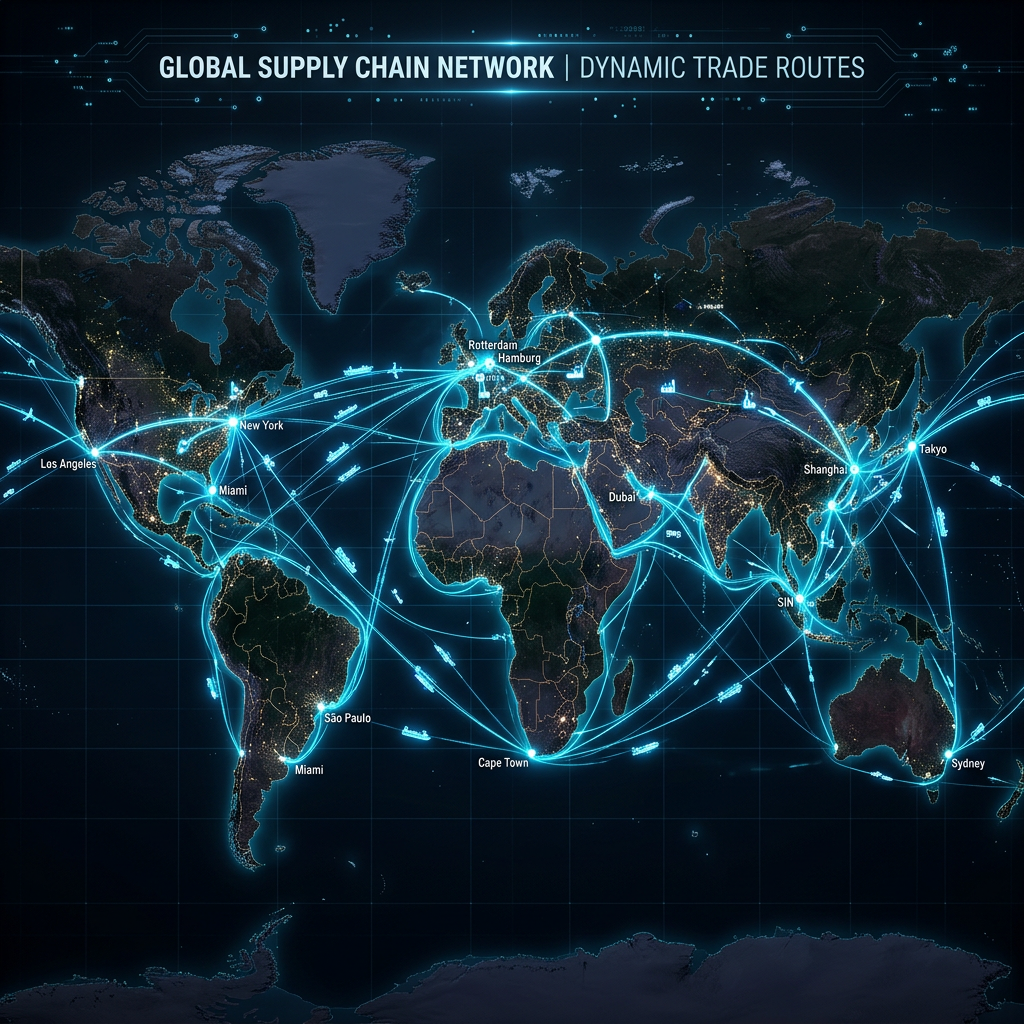
Supply chain disruptions have become a significant element affecting inflation rates and the overall stability of the economy recently. The disruptions have contributed to around 60% of the inflation rise since early 2021, resulting in elevated production costs, diminished corporate profits, and escalated consumer prices. In mid-2022, the stabilization of supply chains correlated with a noticeable deceleration in inflation rates.
Economic Impact of Supply Chain Disruptions
Supply chain disruptions yield a range of complex and varied economic consequences. These factors not only increase inflationary pressures but also exert pressure on corporate profitability by complicating the procurement of raw materials and components. Production costs escalate and frequently transfer to consumers, leading to elevated retail prices and a reduction in purchasing power. Furthermore, disruptions may lead to product shortages, which can adversely affect consumer sentiment and the stability of the market.
The primary factors contributing to these disruptions are natural disasters, global health pandemics, and political uncertainties. Natural disasters have the potential to disrupt production and compromise infrastructure, as demonstrated by the Great East Japan Earthquake in 2011.
Supply Chain Resilience Strategies
The COVID-19 pandemic revealed weaknesses in global supply chains, resulting in factory shutdowns and logistical difficulties. Political factors, including trade wars and geopolitical tensions, create instability and uncertainty in international trade, thereby complicating supply chain operations. To successfully address these challenges, organizations need to implement strategic measures. Enhancing resilience via supplier diversification serves to reduce risks linked to disruptions.
Collaborative approaches, including the establishment of industry partnerships, facilitate the sharing of resources and best practices among organizations, thereby promoting a sense of community. Furthermore, utilizing technological solutions such as supply chain management software improves operational efficiency by offering real-time visibility and optimizing processes. In the future, organizations need to integrate resilience, agility, cost-effectiveness, and speed into their supply chain strategies to improve customer satisfaction. Despite the anticipated challenges, the adoption of innovative solutions and cutting-edge technologies has the potential to enhance growth and optimize supply chain management. A proactive risk management plan customized for specific networks is crucial for ensuring operational efficiency and protecting financial performance in the face of ongoing disruptions.
Levels of Analysis: Macro, Meso, and Micro
The macro, meso, and micro environments of a firm are analytical frameworks used to understand the different layers of external and internal factors that influence the firm’s operations and success. They differ primarily in scope, proximity to the firm, and the level of control management has over them.
Macro-contextual level
The contextual level consists of “global forces.” This area includes economic development, demographics, politics, technological development, and social development.
Meso-transactional level
The transactional level consists of ‘market forces,’ which include suppliers, supply and demand, distribution, competitors, and strategic alliances.
Micro-organizational level
The organizational level involves forces that address the internal environment of the firm. Examples are vision, mission, strategy, resources, processes, products, and services.

Organizational Analysis Framework amidst the Aftermath
To write and to think are two separate realities. Is speaking in a conversation format aligned with the organization’s goals? Meaningful initiatives are either discovered or made. Discovery is not creation. Creation differs from invention, and regeneration differs from innovation. When we create meanings, they become just that. Rabbit holes are everywhere. The context evaluates four key features of an organization. It also analyzes four parts of an organization, namely the following:
1) Products or services
2) Support or operational systems,
3) Finances, and
4) Governance.
Each of these phrases can be used to describe the dimensions of a critical decision a firm makes. However, considering the whole rather than the pieces, it is essential to determine whether what we’re doing is something we want to continue doing.
Generative Business Models
“Generative” means innovative, possibly emerging, entrepreneurial, and claiming new ground. “Regenerative” means recovering, restoring, rejuvenating, or rehabilitating something that has suffered from deterioration or neglect. It is laying the groundwork for a fresh generational effort. When people are unsure how to launch generative/regenerative activities, they turn to sustainability. The underlying idea is that we can maintain what is normal and historic by fighting change. Some may consider sustainability as a growth initiative, but it is not intended to create something new or rejuvenate something that has died.
The notion of “generative business models” is frequently understood within two primary contexts: the categories of business models particularly designed for generative AI technology or a framework for comprehensive business model innovation.
Business Models for Generative AI
Within the realm of artificial intelligence, organizations frequently implement models that focus on the mechanisms of value delivery and monetization. Typical classifications encompass the following:
API-Based Services
Allowing developers to use advanced generative models through an Application Programming Interface (API), which helps them build applications without needing to understand the complicated technology behind it.
End-User Applications
These are software applications designed for consumers or businesses that use generative AI for specific tasks (e.g., image generation, content creation, coding support) and often use a freemium or subscription pricing model.
Enterprise Solutions
Offering customized, secure, and scalable generative AI platforms for large organizations, enabling the integration of AI capabilities into existing enterprise workflows and systems.
Infrastructure and hardware providers are entities that supply the necessary computing resources, such as GPUs and TPUs, and the cloud infrastructure needed to train and run large-scale generative models.

Business Models in the Digital Era
A framework for categorizing four general business models in the digital age, grounded in customer knowledge and the breadth of the supply base, is presented as follows:
Suppliers
generally possess limited direct insight into the end customer and distribute their products via intermediaries, concentrating on particular products or services (for instance, a manufacturer of washing machines).
Multichannel businesses
possess extensive customer insights derived from direct interactions and offer product access via a range of physical and digital channels, exemplified by numerous traditional banks and retailers.
Modular Producers
These companies provide specific, “plug-and-play” functionalities that encompass an ecosystem (e.g., payment processing entities such as Stripe or PayPal), yet depend on partners for distribution and customer insights.
Ecosystem Drivers
These entities exhibit extensive customer insights and a diverse supply network, utilizing these advantages to provide a cohesive experience that integrates their products with those of third parties, thereby generating revenue from other participants within their ecosystem (e.g., large internet retailers).
Regenerative Business Models
In light of escalating environmental and social crises, businesses must transition from a focus on harm reduction to the implementation of regenerative business models. These models aim to produce positive results for individuals and the environment, all while maintaining financial sustainability. Regenerative models aim to restore natural systems and improve the health of communities. They utilize principles such as systems thinking, circular economy, regenerative agriculture, community engagement, and continuous adaptation.
The four primary categories of regenerative business models are as follows:
1. Circular Regenerative Business Models
Focus on optimizing resource efficiency and implementing closed-loop systems to reduce waste, improve product lifespan, and involve consumers in sustainable practices.
2. Regenerative Agriculture-Based Models
Emphasize the importance of soil health and biodiversity, resulting in enhanced crop yields and decreased dependence on chemicals.
3. Collaborative Commons
Promote shared ownership and fair wealth distribution among stakeholders to develop resilient communities.
4. Purpose-Driven Models
Emphasize missions that extend beyond profit, thereby enhancing stakeholder engagement and promoting long-term sustainability.
The implementation of these models can lead to favorable environmental results while simultaneously improving brand loyalty, increasing employee satisfaction, and bolstering overall resilience in a dynamic market environment.
COVID-19 Impact: Digitalization, Flexible Work, and Business Model Innovation
Exploratory research into the aftermath of COVID-19 reveals major movements toward digitization, flexible work arrangements (particularly hybrid models), and business model innovation as businesses and individuals adjust to a new, more dynamic environment.
Key emerging models and areas of change are the following:
For firms
Hybrid and Remote Work Models: The most significant shift is the transition from traditional office models to hybrid and remote work.
Firms quickly adapted these models during the pandemic, and many are still using them to meet employee requests for flexibility while potentially saving money.
The challenges include adopting performance management approaches, assuring effective e-leadership (digital leadership), and reducing employee isolation and tiredness.
Digital Transformation and E-commerce
The pandemic has increased the need for businesses to transition to digital platforms.
Businesses that rely significantly on physical connection (e.g., hospitality and arts) were severely disrupted, while those with a digital presence or the capacity to shift online (e.g., e-commerce, digital services, and IT enterprises) frequently prospered or adapted better.
Digital Social Entrepreneurship (DSE) has also grown in popularity as a means of meeting new societal demands through the use of digital technology.
Business Model Innovation and Resilience
To deal with disruptions, many small and medium-sized firms (SMEs), particularly those in the service sector, have shifted their business models to emphasize digital technology and new transformation drivers.
Companies that conduct a lot of research and development were more robust and had a lower impact on their profitability throughout the recession. This evidence shows that the ability to innovate is a critical factor in surviving economic shocks.
Focus on agility and dynamic capabilities
The volatile environment has highlighted the value of organizational agility, reduced bureaucracy, and the ability to adjust swiftly and flexibly to change. The ability to constantly learn and adapt is an essential skill.
For people
Employees value the autonomy, flexibility, and improved work-life balance that NWOW arrangements provide.
Many employees reported higher productivity when working from home, generally due to reduced commuting time and more control over their schedules.
Changing Skill Demands
The transition to digital and remote work has increased the demand for strong technology skills, self-motivation, and adaptive performance (the ability to adjust to changing work demands).
While flexibility is desired, concerns have arisen about increased work demands/intensity, the risk of a mental health crisis, and the need for suitable home ergonomic setups.
Labor Market Shifts
The epidemic caused career changes and an increase in the number of persons looking for independent or casual labor. There are also ongoing arguments regarding the “urban-rural flight” and the effects of remote employment on different demographics.
Overall, the study shows a continuing shift toward more flexible, digitally linked, and adaptive models for both businesses and individuals, progressing beyond initial emergency responses to a more permanent re-evaluation of traditional labor structures.
Until next time,
CleverPens Fatywines
DISCLAIMER
Readers are cautioned to distinguish fact from interpretation, to hold themselves accountable to proper procedure and permitted findings, and to be responsible in their research and discussion.
RELATED READINGS
© CLEVERPENS. All rights reserved.
REFERENCES
Business-To-Business (B2B) | Definition, Process, Strategy, & Example. (n.d.). Retrieved December 16, 2025, from https://studyfinance.com/business-to-business-b2b/
CiiRUS Short-Term Rental Software | Maximizing Your Returns: The Benefits of Understanding How Macroeconomic Trends Affect STR. (n.d.). CiiRUS Vacation Rental Software. Retrieved December 16, 2025, from https://www.ciirus.com/knowledge/maximizing-your-returns-the-benefits-of-understanding-how-macroeconomic-trends-affect-str
FDA-Regulated Products Supply Chain Disruptions: Industry Perspective | BakerHostetler. (2025, December 4). BakerHostetler. Retrieved December 16, 2025, from https://www.bakerlaw.com/insights/fda-regulated-products-supply-chain-disruptions-industry-perspective/
Freight Management 2025: Processes, Solutions & Trends. (n.d.). Retrieved December 16, 2025, from https://www.freightfox.ai/blog/freight-management
George. (2024, May 17). Fulfillment Center: Navigating supply chain disruptions. Imagine Supply Chain. Retrieved December 16, 2025, from https://imaginesupplychain.com/fulfillment-center-navigating-supply-chain-disruptions/
GLOBAL SUPPLY CHAIN TASK FORCE: Reimagining the Global Supply Chain Post COVID-19. (2021, June 4). National Defense University Foundation. Retrieved December 16, 2025, from https://ndufoundation.org/news/article/news-article/2021-06/global-supply-chain-task-force-reimagining-global-supply-chain
Hsu, C. (2024, May 24). Insights on managing supply chain disruptions. Retrieved December 16, 2025, from https://www.jusdaglobal.com/en/article/managing-supply-chain-disruptions-insights/
Klöckner, M., Schmidt, C. G., Wagner, S. M., & Swink, M. (2023). Firms’ responses to the COVID-19 pandemic. pmc.ncbi.nlm.nih.gov. https://doi.org/10.1016/j.jbusres.2023.113664
Mafael, A., Raithel, S., & Hock, S. J. (2021). Managing customer satisfaction after a product recall: the joint role of remedy, brand equity, and severity. Journal of the Academy of Marketing Science, 50(1), 174–194. https://doi.org/10.1007/s11747-021-00802-1
Petersen, D., & Petersen, D. (2025, March 3). How exceptional customer experience drives business success. Capital Premium Financing –. https://capitalpremium.net/the-service-revolution-elevating-customer-experience-for-business-success/
Raithel, S., & Hock, S. J. (2020). The crisis‐response match: An empirical investigation. Strategic Management Journal, 42(1), 170–184. https://doi.org/10.1002/smj.3213
Strategic Business Development: Successfully Expanding into Latin America. (n.d.). Retrieved December 16, 2025, from https://bizlinkconnect.com/blog/strategic-business-development–successfully-expanding-into-latin-america
Supply Chain Disruptions 2025: Impact & Solutions. (n.d.). Retrieved December 16, 2025, from https://www.freightfox.ai/blog/supply-chain-disruption
Tech-Driven approach to Logistics | Traffic Tech – Traffic Tech. (2023, November 14). Traffic Tech. Retrieved December 16, 2025, from https://traffictech.com/our-tech-driven-approach/
Wenzel, M., Stanske, S., & Lieberman, M. (2020). Strategic responses to crisis. Strategic Management Journal, 42(2). https://doi.org/10.1002/smj.3161
Wikipedia contributors. (2025, November 26). Ebook. Retrieved December 16, 2025, from https://en.wikipedia.org/wiki/Ebook



Leave a Reply