
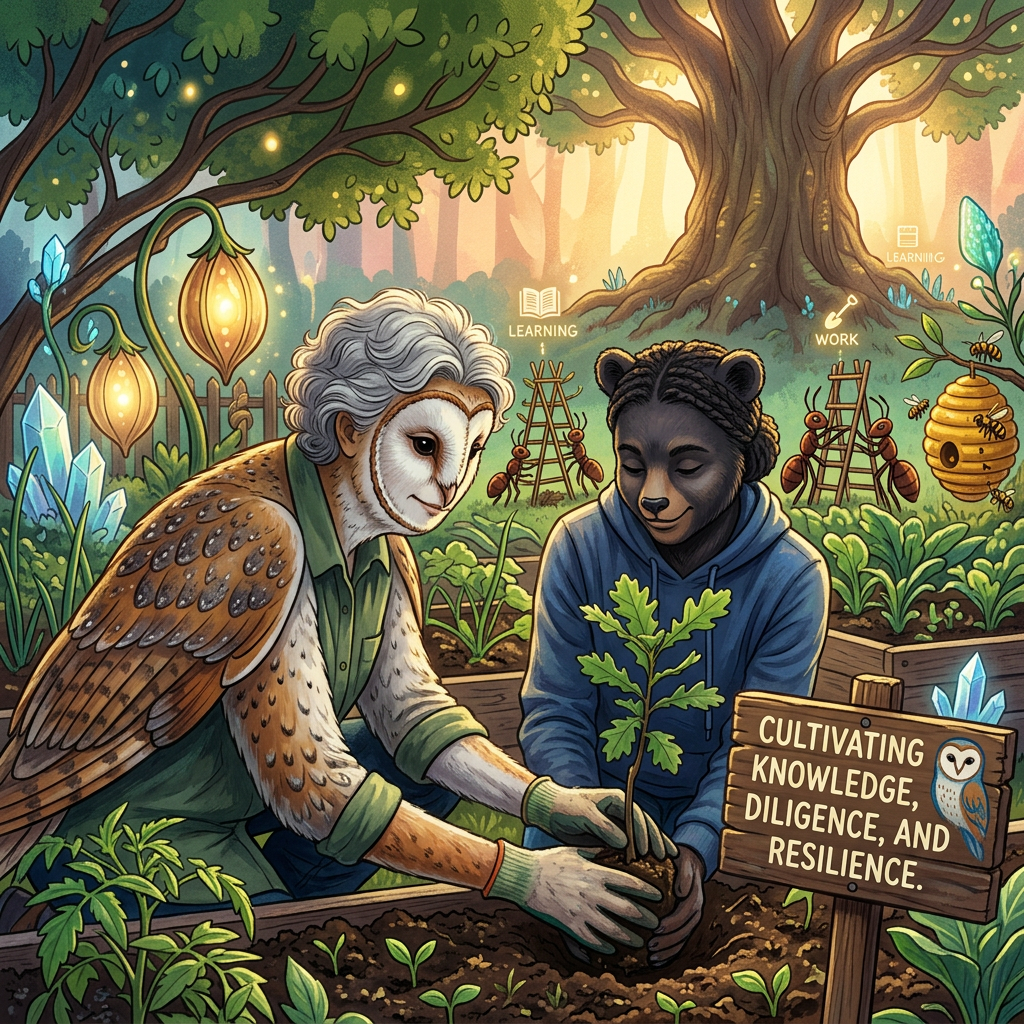
Pip: Cleverpens has been busy—workplaces, classrooms, and the occasional meme—all asking the same uncomfortable question: Are we actually supporting people or just expecting them to be tougher?
Mara: That’s the thread running through everything here. We’ve got pandemic-era labor relations, the gap between curiosity and mastery, student belonging, and what it actually takes to get people to embrace change willingly.
Pip: Let’s start with the pandemic—and what it revealed about who workplaces were really built for.
Pandemic Learning And Adaptation
Pip: The pandemic didn’t just disrupt work — it exposed how little room most workplaces had made for the human beings inside them.
Mara: A union leader in “Navigating Workforce Well-being: Post-Pandemic” put it plainly: “Our members don’t just want policies. They need assistance. People are carrying loads that are not included in the reports.”
Pip: That’s the gap—between what shows up in an attendance record and what’s actually happening to a person.
Mara: Labor relations manager Rylie responded by proposing therapy sessions, flexible arrangements, and wellness check-ins. One skeptical executive asked whether employees should simply be more resilient. Rylie’s answer: “When people feel supported, resilience increases.”
Pip: Resilience as an output of care rather than a demand — that’s a meaningful reframe.
Mara: “Open Window” takes that same tension into a school setting. Students were overwhelmed, teachers were burning out building online classes, and a student named Clare published an essay calling the situation out. Rather than suppress it, the principal opened a forum.
Pip: Letting the discomfort into the room instead of managing it away.
Mara: And “Exploring Apathy: Memes and Personal Responsibility” complicates the picture further. Whyne, a journalism student turned digital media intern, noticed that serious systemic failures were being flattened into memes about personal laziness—entertainment standing in for accountability.
Pip: Her post didn’t go viral. Turns out “maybe the problem is structural” is a harder sell than a relatable GIF.
Mara: Which is exactly her point. What gets shared shapes what gets discussed — and what gets left out.
Pip: That question of what education leaves out leads us somewhere else entirely.

Curiosity, Mastery, And Lifelong Growth
Pip: If the pandemic revealed gaps in workplace support, a parallel question runs through learning itself—what does it mean to actually know something versus just knowing about it?
Mara: “Bridging Curiosity and Mastery in Lifelong Learning” frames it through two characters. The organizer tells them: “The future belongs to those learners who can both explore widely and delve deep.”
Pip: Wide enough to connect things, deep enough to actually do something with them.
Mara: “Missing Lesson” pushes further. A veteran teacher, standing at a former student’s funeral, is asked why school never taught anyone how to cope with loss or uncertainty. The curriculum had competencies and measurable outcomes—but no lessons on resilience or grief.
Pip: Life itself administered the exam he hadn’t prepared anyone for.
Mara: Both posts land in the same place: learning has to reach beyond what’s testable.

Belonging, Advocacy, And Student Confidence
Pip: Knowing what to learn matters — but so does whether you feel like you belong in the room at all.
Mara: “The Last Seat” follows Clare, who applies to a capped leadership workshop partly out of fear of missing out. Once inside, she meets Ethan, then Sofia. The post notes that “opportunities are precious not simply for what they offer directly but for the relationships they create.”
Pip: One anxious decision, one chain of connections, one community that made university feel like home.
Mara: “The Quiet Garden” works the same territory from the teacher’s side. Ms. Swan notices Carlo—quiet, overlooked, labeled average—and practices what the post calls stealth advocacy: praising his reasoning, assigning him leadership roles, and never making a public production of it.
Pip: Quiet enough that Carlo could own the growth himself.
Mara: He placed second at the science fair. More importantly, he stopped believing the old story about himself.
Pip: Belief as infrastructure—which turns out to matter just as much when you’re asking adults to change.

Persuasion, Resistance, And Workplace Change
Pip: So what actually moves people—in a classroom, in a workplace, anywhere?
Mara: “The Harder the Wind Blew” answers that directly. Corporate trainer Elena Reyes ran compliance audits and weekly pressure reviews to drive adoption of a new digital system. Psychologist Mateo reframes it for her: “There is pressure that can force compliance. But not commitment.”
Pip: The distinction that changes everything.
Mara: When Elena shifted—asking workers what they feared, sharing peer success stories, and letting people learn at their own pace—adoption rates exceeded expectations. Employees started offering improvement suggestions. Some became advocates for the system they’d been resisting.
Pip: Because they were finally being treated as people with legitimate concerns rather than obstacles to a rollout.
Mara: Elena’s final question to herself became, “Am I being the North Wind, or am I being the sun?” Warmth moved people where pressure had only made them grip tighter.

Pip: Support, belonging, curiosity, warmth — the posts keep circling the same center.
Mara: What people need to actually grow, versus what systems tend to offer them instead.
Pip: More of that next time, then.
DISCLAIMER: Names, characters, places, and incidents are products of the author’s imagination or are used fictitiously. Any resemblance to actual events, locales, or individuals, living or dead, is entirely coincidental.
© 2026 Cleverpens. All rights reserved. All characters and events on this page are fictitious. Any resemblance to real individuals, living or dead, is purely coincidental.
READINGS:
Cleverpens. (2026a, June 14). Bridging curiosity and mastery in lifelong learning. Cleverpens. Retrieved June 15, 2026, from https://cleverpens.com/2026/06/15/bridging-curiosity-and-mastery-in-lifelong-learning/
Cleverpens. (2026b, June 14). Exploring Apathy: Memes and personal responsibility. Cleverpens. Retrieved June 15, 2026, from https://cleverpens.com/2026/06/15/exploring-apathy-memes-and-personal-responsibility/



Leave a Reply