
By: Fatima Winniclare Jayme
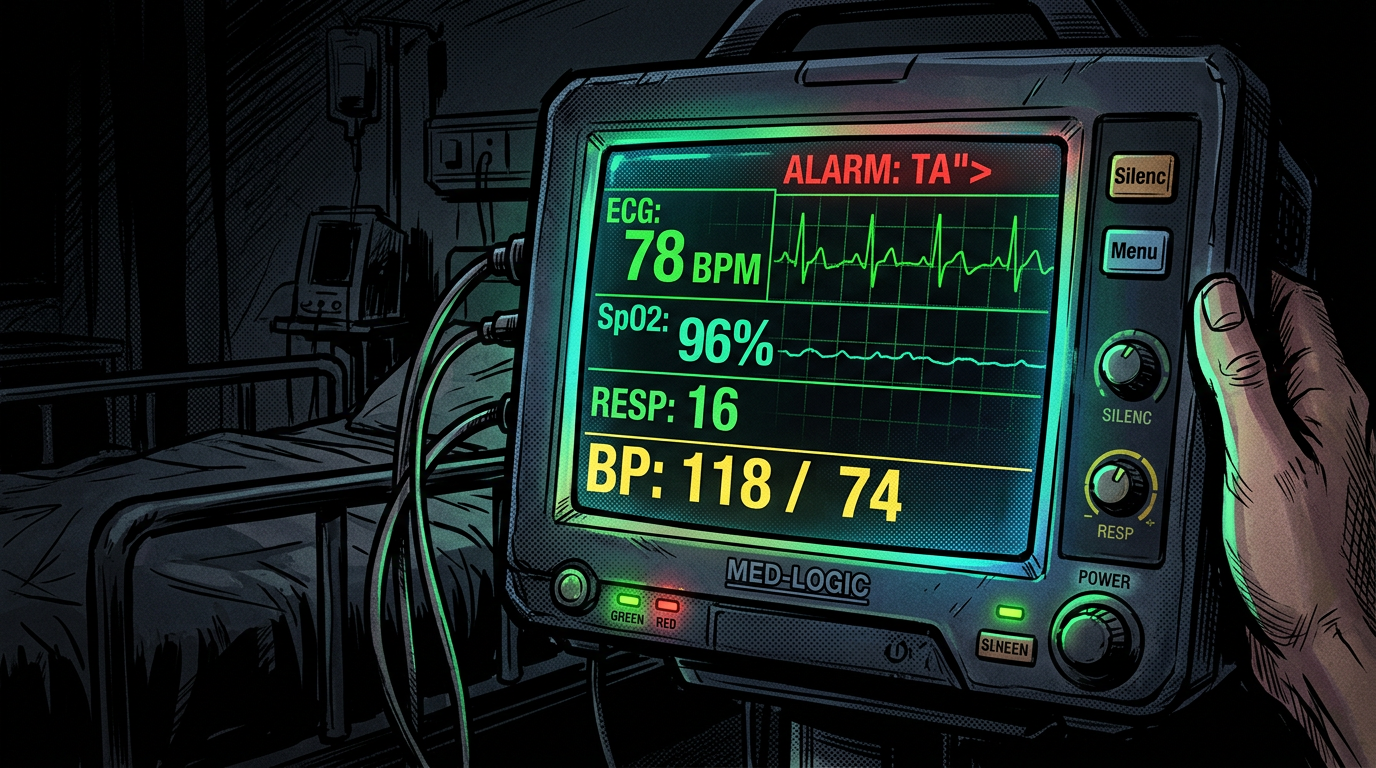
The famous hospital was recognized for good patient results and sophisticated amenities. The hospital has bought a new digital monitoring system called Care-to-Watch to make patients safer.
Care-to-Watch monitored patient vital signs constantly and triggered alarms when data deviated from the specified criteria. Nurses and physicians liked the technology because they could monitor multiple patients at once.
Hospital executives have touted Care-to-Watch as a key tool to avert medical crises.
First Months with Care-to-Watch
In the first several months, personnel replied to almost every alarm instantly. When sirens went off, nurses rushed to check patients.
Many alerts identified genuine concerns. Others turned out to be harmless issues such as loose sensors, patient movement, or temporary fluctuations. The personnel proceeded to respond carefully since the safety of the patient remained the priority.
The Expanding Challenge
As the hospital became busier, the number of alerts increased significantly. In a typical shift, nurses may hear dozens of alarms every hour. Many of these notifications did not require intervention following evaluation.
The personnel developed informal routines and habits over time. Some nurses discovered that alarms were often innocuous. Some delayed responses when they believed an alarm was likely caused by equipment issues.
Others were more concerned about juggling many requests at once. Nobody wanted to compromise patient safety. Rather, they were adapting to a demanding environment.
The Accident
One evening, Care-to-Watch sent out multiple notifications for a patient recovering from surgery.
The assigned nurse noticed the notifications were likely caused by a sensor issue because similar alerts had occurred repeatedly throughout the week.
By the time the patient was re-examined, a significant complication was identified, and action had to be taken immediately.
The patient fully recovered, but an internal investigation was launched following the incident.
The Review
The hospital investigation found no evidence that staff members deliberately failed to carry out their duties. Reviewers instead pointed to numerous probable contributory elements. The monitoring system generated a high number of non-critical alerts. Staff had become used to regular alerts.
Existing methods focus on responding to alarms rather than periodically assessing alerts’ quality. The workloads expanded throughout the years without any changes in the way they were monitored.
“We were overwhelmed by the amount of information we had to process,” staff members said. The findings were viewed differently by different stakeholders.
Group A
Some administrators argued, “The system worked. It identified the problem and generated alerts.”
Group B
Some clinicians answered: “The system was producing so many alerts that it was becoming increasingly difficult to separate the signal from the noise.”
Group C
Patient activists asked, “Why were repeated warning signs about alarm overload not addressed earlier?”
Group D
Many personnel commented, “First, all the alarms seemed important. After a while, they seemed normal.”
SUMMARY: The major regional hospital has implemented a computerized monitoring program, Care-to-Watch, to promote patient safety by continuously monitoring vital signs and alerting staff about deviations. Initially, healthcare workers responded immediately to alarms, but as the frequency of alerts and patient loads increased, many alarms were categorized as non-critical, and workers began to habituate and delay responses. The interesting point is that one patient did suffer complications from frequent false alarms.
An internal probe found no evidence of deliberate negligence but did find design problems in the monitoring system and an excessive frequency of alerts. Different stakeholders have different opinions on the effectiveness of the system. The key questions are who is to be blamed for alert fatigue, the impact on patient safety, and the moral issues of keeping a system infamous for false warnings. The narrative highlights the need for better organizational processes and for a comprehensive consideration of how prevalent threats could impact the urgency of response in healthcare settings.
Discussion Questions
Clinical perspective
What responsibility do healthcare professionals have when technology generates vast volumes of information?
What’s the right mix of expert judgment against system-generated alerts?
Psychological Viewpoint
What is the distinction in this scenario between adaptation and desensitization?
When does alert fatigue become a patient safety issue?
Ethical perspective
When nobody meant to do any harm, but the way things are arranged leads to danger, who is responsible?
Is it ethical to continue with a method that is known to produce false alarms over and over again?
Systems viewpoint
Was the hospital fault-tolerant, adaptive, desensitized, or any mix of the three?
What organizational improvements might help prevent such situations?
Leadership perspective
What is the right response when front-line personnel bring up issues that seem insignificant when evaluated individually?
What can companies watch for as warning indications that should be investigated more deeply?
Instructor’s Note: This is not a case of technical failure, per se. It concerns the interplay between the following:
1. Humans’ attentiveness
2. Judgement of professionals.
3. Organisational learning
4. System Architecture
5. Patient safety
Students can investigate several ideas such as the following:
A. Fine-tuning
Staff devised solutions to meet increased workloads and information needs.
B. Fault Tolerance / Reliability
But there were false alarms and process issues, and the hospital nonetheless continued to run.
C. Desensitizing
The familiarity with notifications may have eroded the urgency of particular warnings.
D. Procedural Justice
There are questions about whether staff concerns about alarm overload were received and addressed.
Reflective Question: The key is not just asking, Why did someone miss an alert? Instead of asking, how could Care-to-Watch slowly stop responding to the signals that were supposed to keep people safe in the first place?
This question is important not only to health care but also to education, business, government, technology, and everyday life. Sometimes the biggest risks are not the dramatic failures, but the situations that are so familiar they no longer seem odd.
DISCLAIMER: Names, characters, places, and incidents are products of the author’s imagination or are used fictitiously. Any resemblance to actual events, locales, or individuals, living or dead, is entirely coincidental.
© 2026 Cleverpens. All rights reserved. All characters and events on this website are fictitious. Any resemblance to real individuals, living or dead, is purely coincidental.



Leave a Reply