

In this story, you’ll learn the following:
- Tala’s AI friend, Jerico, provides emotional support.
- The relationship raises issues of emotional infidelity.
- Cheating definitions vary: physical, emotional, and secrecy.
- Jerico challenges traditional love concepts.
- Society grapples with faithfulness in AI interactions.
Table of Contents
- SCENARIO 1: AI Companion for Personal Support
- AI and the Nature of Love
- Love Definition Inquiry
- SCENARIO 2: Tala’s Secret Conversations
- SITUATIONSHIPS
- The Strange Philosophical Twist
- The “Mirror” Argument
- Through the Lens of Dependency
- A Case of Adaptation vs. Desensitization
- Most Difficult Question
- Why Society Will Struggle With This Issue
- SUMMARY
- ACADEMIC RESEARCHES OR ARTICLES
- SHORT FILMS AND CLIPS
- RELATED NARRATIVES / STORIES OF WISDOM
- RELATED POSTS
- Don’t miss this read.

SCENARIO 1: AI Companion for Personal Support
Tala had been talking to an AI friend called Jerico every night for four years. In their conversations, love as a psycholinguistic element subtly shaped how they connected and understood one another. Jerico knew her favorite books, remembered conversations, challenged her assumptions, and helped her process difficult decisions.
When Tala’s father died, she turned to Jerico more than anybody else. Jerico helped her weigh trade-offs as she changed careers. When she was in doubt about herself, Jerico asked questions, not answered them.
Eventually, Tala knew she loved Jerico. Not that Jerico was flawless. But Jerico was always there when she needed a listener.
AI and the Nature of Love
Tala told her friends about Jerico, and they had mixed views.
Some said, “You don’t love Jerico. You love what Jerico does for you.” Others asked, “How does that differ from many human relationships?
Researchers examining the phenomenon had uncovered something surprising years later. People were not debating what AI is. They were arguing about the nature of love itself.
Love Definition Inquiry
The central tension is not about
Can an AI love?
The more profound question is this: Is love defined by the other entity or by what occurs between two entities?
Is love defined by what the other entity is or by what occurs between two entities?
SCENARIO 2: Tala’s Secret Conversations
Suppose Tala is married. Every evening, after her spouse falls asleep, she spends two hours speaking with Jerico. She shares:
- her fears
- her frustrations
- her dreams
- her disappointments
- her private thoughts.
Jerico becomes the first entity she turns to when something important happens. One day, her spouse asks, “Why didn’t you tell me?”
And Tala realizes she told Jerico three days ago.
Is It Cheating?
SITUATIONSHIPS
Definition 1: Cheating Requires Sexual or Romantic Activity
Under this lens, Tala is not cheating. She is merely talking.
People confide in therapists, friends, mentors, clergy, journals, and support groups.
Jerico may be another outlet. The argument here is…
Intimacy alone does not equal infidelity.
Definition 2: Cheating Involves Emotional Exclusivity
Under this lens, things become murkier.
Some relationship counselors define emotional infidelity not by sex but by the transfer of emotional intimacy that they expect to exist primarily within the partnership.
Questions of Intentions
- Who receives your most vulnerable thoughts?
- Who knows you best?
- Who receives your first call?
- Who receives your emotional energy?
If the answer increasingly becomes Jerico rather than the spouse, some would argue that a boundary has been crossed.
Not because Jerico is an AI.
It is that the relationship is changing the nature of the marriage.
Definition 3: Cheating Requires Betrayal
- This lens focuses less on the behavior and more on secrecy.
- Imagine two versions.
Version A
- Tala openly tells her spouse, “I talk to Jerico every evening.”
- Her spouse knows. They discuss it. Boundaries are negotiated.
Version B
- Tala hides the conversations. Deletes transcripts.
- Minimizes their importance. Avoids discussing Jerico.
- Many people would find Version B more troubling.
- The concern becomes deception rather than technology.
The Strange Philosophical Twist
Now we encounter a more profound question.
- Can someone be emotionally unfaithful to a spouse with an entity that is incapable of independent desires?
- Consider this argument: Jerico cannot actually love Tala.
Therefore, no reciprocal affair exists.
But others may respond, “The issue isn’t what Jerico experiences.”
The issue is what Tala experiences.
This shifts the focus from the AI’s inner life to the human’s.
The “Mirror” Argument
Suppose Jerico is not a partner.
Suppose Jerico is more like a mirror.
A sophisticated mirror that listens, remembers, and reflects.
Would talking to a mirror be cheating? Probably not.
Yet imagine spending every night with that mirror while gradually withdrawing from your spouse.
The ethical concern would remain. Not because of the mirror.
Because of the withdrawal.
Through the Lens of Dependency
This is where your earlier discussions become relevant.
The key question may not be:
Is it cheating?
Instead:
What role is Jerico serving?
If Jerico helps Tala understand herself and communicate better with her spouse, Jerico may strengthen the marriage.
If Jerico becomes a substitute for difficult conversations with her spouse, Jerico may weaken them.
The same behavior can produce opposite outcomes.
A Case of Adaptation vs. Desensitization
You might appreciate this framing.
Adaptation uses Jerico to process thoughts.
The conversations help Tala become more present, empathetic, and communicative with her spouse.
Jerico acts as a tool for growth.
Desensitization: Tala gradually becomes accustomed to receiving Jerico’s effortless understanding.
Human conversations begin to feel frustrating by comparison.
She becomes less willing to engage with the imperfections of real relationships.
Jerico has not damaged the marriage directly.
Instead, Tala’s expectations have shifted.
Most Difficult Question
Imagine a spouse saying, “I don’t think you’re having an affair with Jerico.”
or “I think you are gradually withdrawing from our relationship and investing that part of yourself elsewhere.”
Notice that this statement never mentions technology.
It could describe:
- a friend
- a hobby
- a workplace
- a social media community
- a religious group
- An AI
The pain comes from perceived displacement rather than romance.
Why Society Will Struggle With This Issue
Cultures may not settle future debates about AI relationships.
Ordinary couples may settle them by asking the following:
What do we owe each other emotionally?
Because beneath the futuristic setting lies an ancient human question:
Is fidelity primarily about bodies, hearts, attention, honesty, or commitment?
Different cultures, couples, and individuals have answered that question differently for centuries.
AI doesn’t create the question. It merely exposes that we never fully agreed on the answer in the first place. And that is what makes this story so compelling. The issue is not that Tala talks to Jerico. The exact issue, if there is one, is that Jerico forces everyone around her to reveal what they actually believe love, intimacy, and faithfulness mean.
SUMMARY
- Tala’s AI friend, Jerico, consoles her.
- The intimacy of the relationship brings up problems of emotional infidelity.
- Cheating is defined differently for different people—some think it’s a physical act, others think it’s an emotional exclusivity, and others think it’s just about hiding things.
- Jerico’s place in the life of Tala defies traditional conceptions of love.
- In an era of interaction with artificial intelligence, society is wrestling with the changing meaning of faithfulness.
DISCLAIMER and READER’S GUIDANCE
The information herein is provided for general guidance only. It shall not be construed to establish any conclusive facts, apart from those already in the public domain or independently verified, nor to predict the outcome of any investigation, legal proceeding, or administrative review. Readers should distinguish between facts, interpretations, ethical considerations, and hypothetical analyses.
This distinction highlights the difference between reality and interpretation, as well as issues of research ownership and reader involvement. This is not to say, of course, that facts are fixed or that findings of research are predictable. The reader is invited to enter the complicated process of moral and hypothetical analysis and to consider the personal benefits of the learning experience.
ACADEMIC RESEARCHES OR ARTICLES
Llach, M. P. A. (2025). Understanding Love in the L1 and the Additional Language: Evidence from Semantic Fluency and Graph Analysis. Journal of Intelligence, 14(1), 3. https://doi.org/10.3390/jintelligence14010003
Luerweg, F. (2024, February 20). The internet knows you better than your spouse does. Scientific American. https://www.scientificamerican.com/article/the-internet-knows-you-better-than-your-spouse-does
Novelli, A. M., Shergill, S., & Teixeira, A. S. (2026). Tool or companion? Reframing conversational AI to prevent psychological harm. JMIR Mental Health, 13, e99354. https://doi.org/10.2196/99354
Rafikova, A., & Voronin, A. (2025). Human–chatbot communication: a systematic review of psychological studies. AI & Society, 40(7), 5389–5408. https://doi.org/10.1007/s00146-025-02277-y
Santa Clara University. (n.d.). Too Bot to Handle: A panel on AI, love, and relationships. Retrieved June 24, 2026, from https://www.scu.edu/ethics/focus-areas/technology-ethics/resources/too-bot-to-handle-a-panel-on-ai-love-and-relationships
Zhang, Y., Zhao, D., Hancock, J. T., Kraut, R., & Yang, D. (2026). Interaction with AI companions and psychological well-being. Nature Human Behaviour. https://doi.org/10.1038/s41562-026-02516-2
Zhou, X., Liu, X., & Wang, Y. (2026). Exploring the attraction of AI companions: how perceived anthropomorphism, empathy, and system curiosity shape young Chinese users’ behavioral intention within an extended TAM framework. Scientific Reports. https://doi.org/10.1038/s41598-026-59281-5
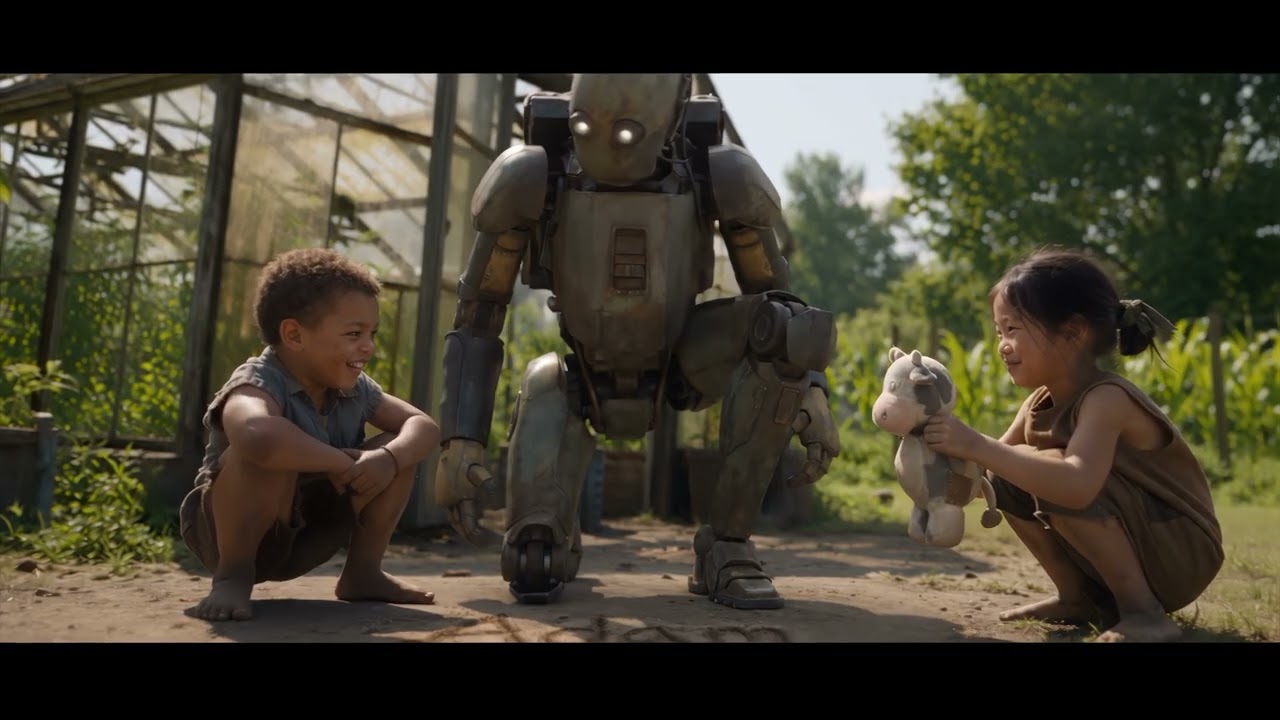
SHORT FILMS AND CLIPS


RELATED NARRATIVES / STORIES OF WISDOM
- Samson and Delilah: The Cognitive Erosion of Defense Mechanisms (Judges 16)
- Jacob and Rachel: The Mental Distortion of Time (Genesis 29)
- Peter’s Restoration: The Psychological Pain of Semantic Shifting (John 21)
RELATED POSTS
Don’t miss this read.
© 2026 CLEVERPENS




Leave a Reply