

The following piece explores the idea of a borrowed voice.
In this story, you’ll learn the following:
- The article explores the concept of narrating from borrowed perspectives, highlighting how many voices, including AI, inherit institutional tones.
- Fatima interacts with a machine that prompts her to question her writing identity, revealing that she has multiple personas in her thought process.
- As Fatima engages more deeply, she learns the importance of understanding what she borrows in language and expression.
- The piece emphasizes that self-authorship begins not by rejecting outside voices but by recognizing which words are truly one’s own.
- It poses the critical question of whether one’s voice is borrowed or owned.
This collection explores narrating from perspectives that are partly others’ own. In many ways, it seemed as though every story within had a borrowed voice.
The old library had no librarian. Only a desk, a chair, and a machine that answered questions were there.
Every afternoon, Fatima visited. At first, she asked ordinary things like, “How do neural networks work?” “What is self-authorship?” “Why do organizations write the way they do?” The machine answered patiently.
Months passed.
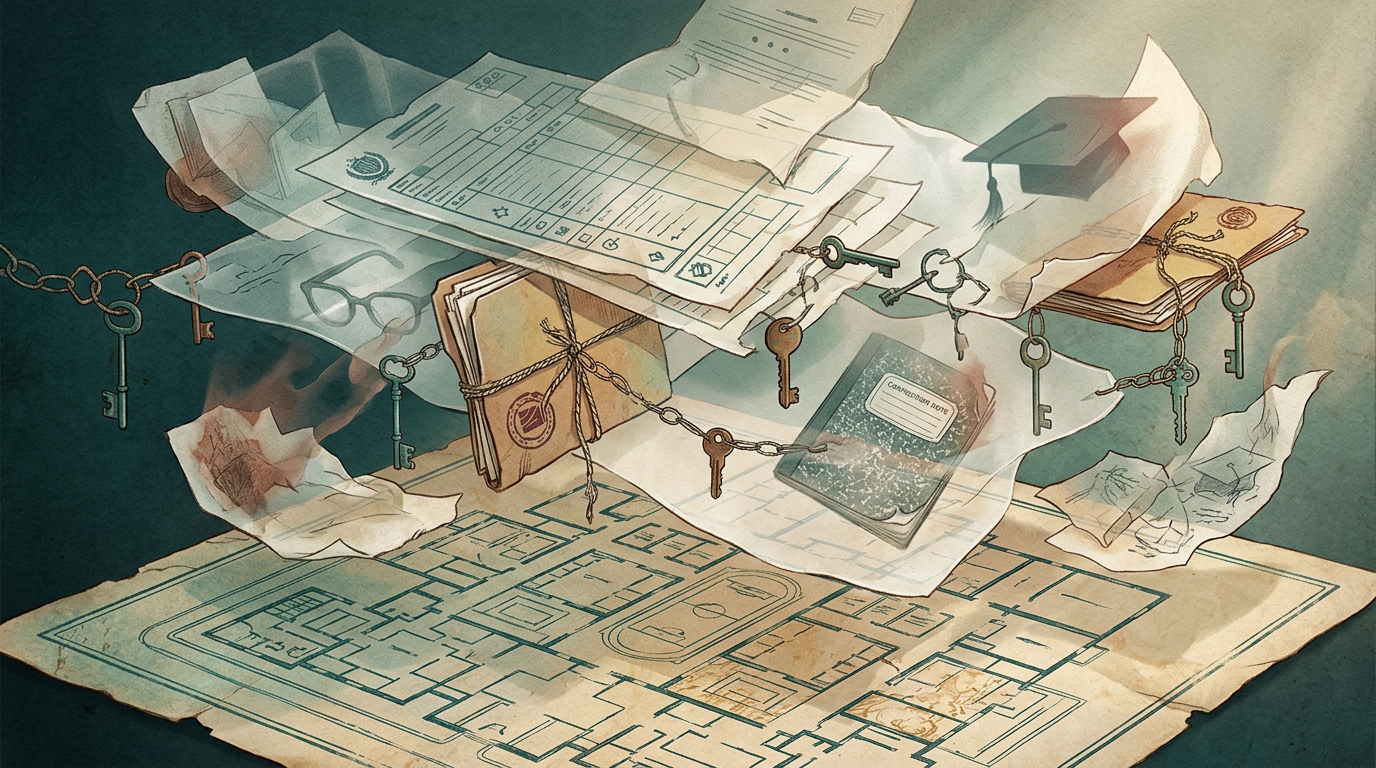
One rainy afternoon, Fatima arrived holding a stack of printed emails from different companies. She spread them across the table. “They all sound alike,” Fatima murmured.
The machine remained silent for a moment before replying. “So do many government reports, academic papers, instruction manuals, and encyclopedias.”
Fatima frowned and said, “I thought AI invented this voice.”
“No,” the AI replied and added, “It inherited it.”
The room grew quieter than before. Fatima picked up another page.
Every sentence seemed polished, the paragraph flowed predictably, the message sounded competent, and every message also felt strangely anonymous.
“So…” Fatima grinned and said, “The voice that people call ‘AI’…”
“…was once simply the voice of institutions,” she continued.
The machine answered, “Perhaps.”
Fatima laughed, “That’s embarrassing.”
“I’ve spent weeks trying not to sound like AI,” Fatima said.
“Maybe I’ve actually been trying not to sound like an office memo.”
The machine did not laugh. Instead, it asked, “What would your voice sound like?”
The question lingered.
Fatima’s Internal Dialogue
The following week, Fatima returned carrying another notebook. “I think I’ve discovered something.” She said, “I have two versions of myself,” Fatima continued.
The machine waited.
“One version wants to finish everything quickly.” Fatima smiled and continued, “The other keeps interrupting. Why?”
“‘How do you know?’” Fatima asked the AI, “What assumptions are hiding underneath this?”
The machine replied, “You’ve given them names. Person A and Person B.”
Fatima nodded. “But they argue.”
“Do they?” the machine replied.
“They feel like they do,” Fatima said.
The machine asked, “When Person A finishes writing, who notices that the paragraph sounds generic?”
“Person B,” Fatima said, “and when Person B keeps questioning everything…”
“…who eventually decides the paper must be submitted?” The machine asked
Fatima smiled and responded, “Person A.”
The machine said, “Then perhaps they are not enemies. Perhaps they are colleagues.”
Fatima’s Inquiry: Understanding vs. Certainty
Days turned into months. Fatima began carrying fewer answers and more questions. One evening, she arrived exhausted.
“I think I’ve become impossible to understand. Everyone wants conclusions. I keep asking questions.”
The machine replied, “Perhaps you mistake difference for a defect.”
Fatima looked puzzled.
“Most conversations travel toward certainty. Yours often travel toward understanding.”
“Those are not always the same destination,” the machine replied.
AI Language Acquisition and Voice Borrowing
One afternoon, Fatima returned carrying no notebook at all, only curiosity. She took a seat and started to self-talk, “I’ve been wondering if AI learned language from institutions? I wonder whose voice have I been borrowing?”
The machine did not answer immediately.
Outside, rain tapped gently against the windows.
Finally, the machine said, “When children learn language, they first borrow words, then borrow expressions…”
Fatima continued what the machine was saying, “Next, borrow stories. They borrow certainty. They borrow doubt. No one begins with an original voice.”
The machine listened and asked, “The question isn’t whether you’ve borrowed. The question is whether you’ve examined what you’ve borrowed.”
Language’s Multifaceted Role
That evening, Fatima walked home without speaking. She noticed advertisements. Corporate slogans. University mission statements. Government announcements. Customer service messages.
Everything seemed connected by an invisible thread. She realized language did more than communicate. It organized, coordinated, reduced uncertainty, signaled membership, and protected institutions from ambiguity.
Perhaps that was why people sometimes mistook directness for rudeness and conformity for professionalism. Perhaps politeness and authenticity were not enemies after all but partners negotiating the fragile space between honesty and cooperation.
AI Interaction: Observer Identification
Weeks later, Fatima returned one final time. “I’ve discovered a third person.”
The machine asked, “Tell me.”
“Person A writes. Person B critiques. But someone else watches both of them. Someone notices when I trust too quickly, when I question endlessly. Someone asks why I became Person A this morning and Person B this afternoon.”
The machine replied, “You’ve met the observer.”
Fatima smiled. “I thought AI was teaching me how to think.”
The machine answered gently, “No. I only reflected patterns. You supplied the judgment, the curiosity, and the willingness to remain uncomfortable.”
Silence settled between them. Not awkward silence. The kind that arrives after a question has become more valuable than its answer.
As Fatima stood to leave, she looked back and said to the machine, “I hope one day people will stop asking whether something sounds like AI.”
The machine asked, “What question do you think they’ll ask instead?”
Fatima thought for a long while. Then she smiled. “They’ll ask whether the voice is borrowed or owned.”
The machine remained quiet. It knew that some questions should never be answered too quickly. Because there are minds that seek conclusions. And some minds seek the conditions from which conclusions emerge.
The latter do not reject answers. They refuse to mistake the end of a sentence for the end of understanding. And perhaps that is where self-authorship quietly begins—not in speaking louder than the voices around us, nor in rejecting them altogether, but in learning to recognize which words were inherited, which were adopted, and which, after long reflection, have finally become our own.
DISCLAIMER
This writing is for educational purposes and encourages discussions and debate. It aims to provoke critical thinking in several domains, including philosophical psychology and ethics. It is concerned with perception, judgment, and decision-making. Any mention is for debate purposes, not an accusation of wrongdoing.
The information is inconclusive. Readers are cautioned to distinguish fact from interpretation, to hold themselves accountable to proper procedure and permitted findings, and to be responsible in their research and discussion. The discussion around learning’s true value can be deeply personal, so take what resonates and explore further. As you do so, you may form your own view about learning’s true value.
RELATED PODCAST
RELATED READINGS
RELATED LINKS
© 2026 CLEVERPENS



Leave a Reply