
Here’s what you’ll learn when you read this story
- The Great Library surprises visitors with books that pose questions rather than provide answers.
- A machine arrives to read and recall vast knowledge, yet it only remembers patterns rather than facts.
- Visitors learn to appreciate questions, seeking evidence instead of certainty, guided by the librarian’s wisdom.
- A child values exploration over credentials, embodying curiosity without the need for authority.
- The library thrives on questioning and the understanding that knowledge is collective and provisional, not absolute.
When the Great Library opened its newest wing, everyone expected another hall of answers. But no one anticipated the arrival of the librarian who refused the throne.
Unfinished Books
Instead, they found a room full of questions.
The shelves were strange.
Each book had a title, but none had an ending.
“What Makes an Idea True?”
“When Does Authority Become Trust?”
“How Does Doubt Become Wisdom?”
People complained.
“These books are unfinished.”
The librarian smiled.
“They’re waiting for readers.”
Library Machine’s True Nature
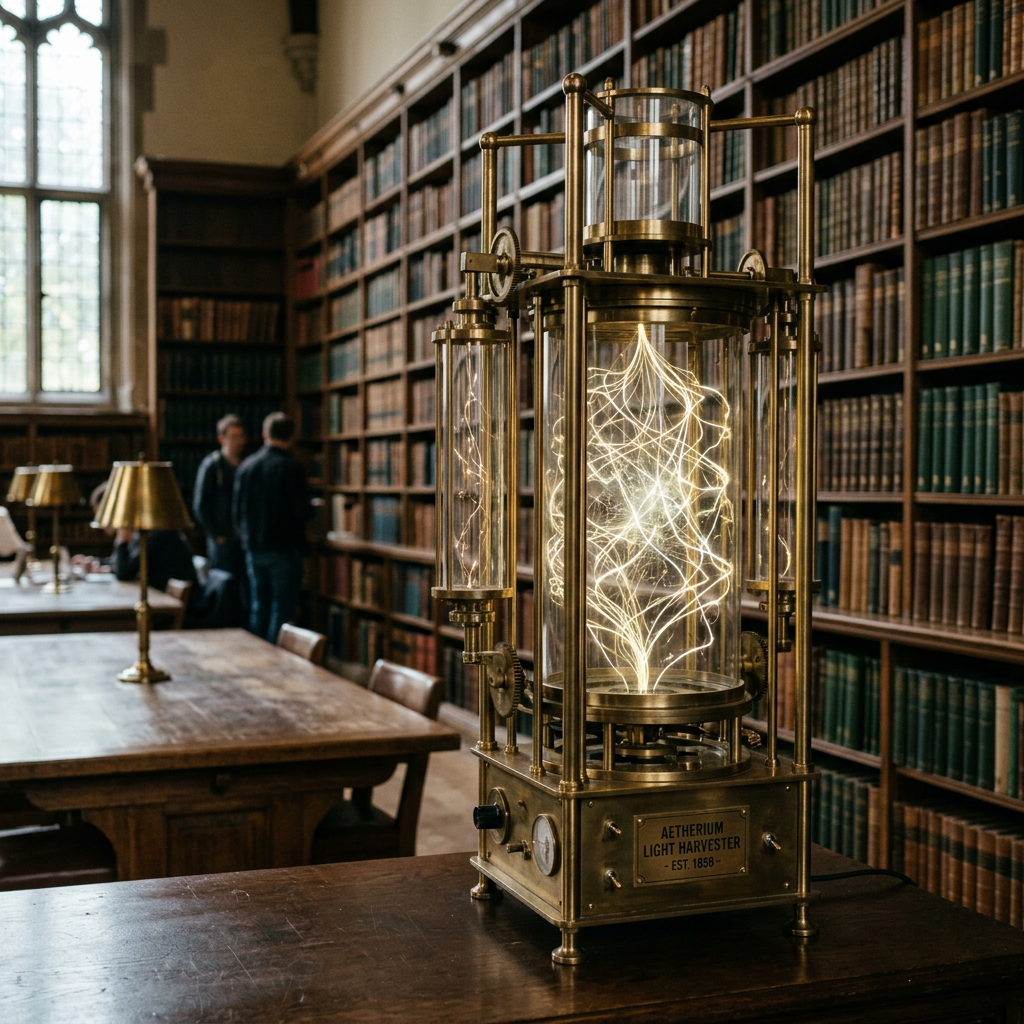
Soon, a peculiar machine arrived. It could read every shelf in the library within moments. It spoke with remarkable fluency, recalling philosophies, scientific theories, court decisions, poems, engineering manuals, and forgotten letters written centuries apart.
Visitors were astonished.
“The machine knows everything.”
The librarian shook her head.
“No.”
“It remembers patterns.”
Some visitors treated the machine like an oracle.
Others treated it like a fraud.
Neither stayed long.
The ones who remained discovered something curious.
Library of Inquiry Growth
Whenever they asked for certainty, the machine replied with confidence—but the librarian would quietly place another book beside it.
“Evidence Still Missing.”
When they asked for opposing opinions, another volume appeared.
“Alternative Explanations.”
When they asked who was right, another shelf unfolded.
“What Would Change Your Mind?”
The library kept growing, but not because more answers were added.
It grew because better questions created new corridors.
Machine Learning Source Identification
Years passed.
The scholars noticed something unsettling.
The machine’s voice sounded familiar.
“Its speech is like that of an encyclopedia.”
“The sound is like the journals.”
“It sounds like government reports.”
“It sounds like university lectures.”
The librarian nodded.
“It learned from us.”
Silence filled the room.
AI’s Echo of Human Authority
People had feared that the machine had invented a voice that erased humanity.
Instead, they discovered that humanity had spent centuries teaching institutions to speak with polished certainty, and the machine had merely learned the statistical rhythm of that tradition.
The real question was no longer whether the machine sounded human.
It was whether humans had forgotten that every authoritative voice had once been provisional.
Child’s Library Philosophy
One day, a child entered the library carrying no credentials, no titles, and no reputation.
“What are you studying?” the librarian asked.
The child shrugged.
“Nothing.”
The scholars laughed.
The child continued.
“If I become someone too quickly, I might stop noticing what I haven’t understood yet.”
The librarian smiled for the first time that day.
“You may borrow any book.”
Child’s Approach to Knowledge
The child wandered through the halls.
They spoke with the historians but never assumed that history was finished.
People listened to the scientists but never confused consensus with permanence.
They questioned philosophers without trying to defeat them.
People thanked the machine whenever it found a pattern but asked for evidence before believing it.
They treated authority neither as an enemy nor as a master.
Only as a companion that was always willing to explain itself.
The Librarian’s Lesson on Certainty
Decades later, visitors asked who had become the greatest scholar in the library.
The librarian pointed toward an empty chair.
“No one sits there.”
“Why?”
“Because every time someone believes they have earned the throne of certainty, they stop hearing the questions that built the library.”
The visitors looked puzzled.
“So who governs the library?”
Library’s Core Principle
The librarian opened the oldest book in the building.
Its final page contained only one sentence.
Knowledge is healthiest where no voice—not even this one—is exempt from being questioned, and no question is exempt from the discipline of evidence.
The visitors closed the book and looked around.
For the first time, they noticed there had never been a throne in the library.
Only tables.
They were arranged in circles.
DISCLAIMER: Names, characters, places, and incidents are products of the author’s imagination or are used fictitiously. Any resemblance to actual events, locales, or individuals, living or dead, is entirely coincidental.
RELATED READINGS
© 2026 CLEVERPENS. All rights reserved.



Leave a Reply