
Here’s what you’ll learn when you read this story:
- San Aurelio Public School, ‘The School That Knew Everyone,” was proud of its strong community links and successful students.
- Ariane is a new teacher, and she wonders if students are ready when they graduate without any basic skills.
- The faculty culture of homophily has led to blind spots. The faculty’s completion focus is on the number of students who graduate, not on their actual skills.
- Ariane asked rudimentary questions to assess skills and discovered significant gaps in students’ knowledge and reasoning.
- The faculty changed their approach to include epistemic diversity. Such an effort can improve the assessment of student competencies and identify unperceived ability gaps.
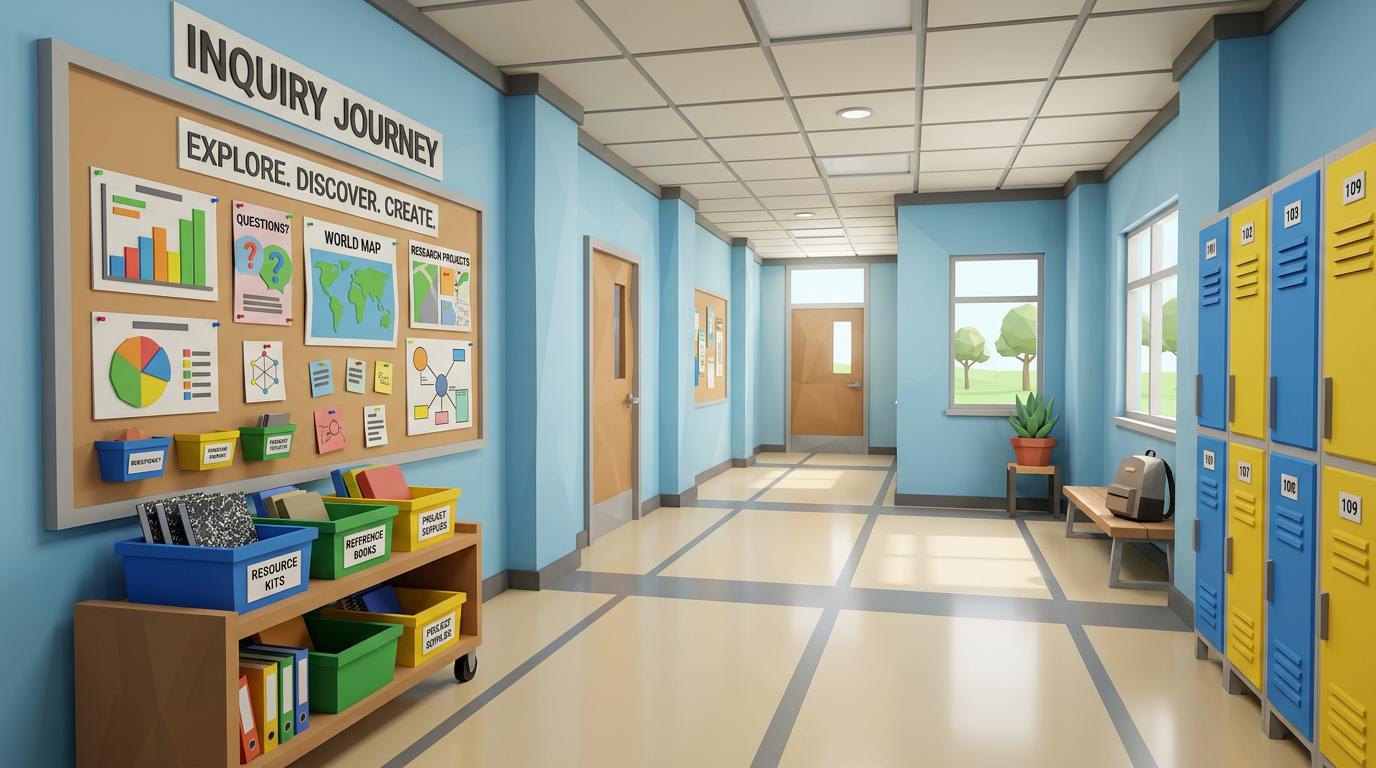
San Aurelio Public School, often called the School That Knew Everyone, had a reputation for producing successful students. Its teachers were experienced. Administrators were well connected. Its alumni included lawyers, engineers, entrepreneurs, government officials, and politicians. The school was proud of its community.
“We understand one another here,” the principal often said. And that was true. Perhaps too true.
The familiar circle
Most senior teachers had worked together for years. They attended the same professional events. Their children attended neighboring schools. They shared teaching materials. They recommended one another for committees and training opportunities. When a new teacher arrived, the older faculty welcomed her. Her name was Ariane.
During her first month, Ariane noticed something strange. Several graduating students struggled with basic skills:
- reading instructions carefully
- explaining their reasoning
- writing coherent paragraphs
- interpreting graphs
- checking calculations
- distinguishing evidence from opinion
- asking clarifying questions
Ariane raised the concern during a faculty meeting. “Maybe we should conduct a basic-skills diagnostic,” Ariane said.
The room became quiet. One senior teacher smiled. “Our students have always performed well.” Another added: “They’re just anxious.” Someone else said, “They’ll catch up in college.” The discussion moved on.
The first blind spot
Ariane wasn’t saying, “Our students are unintelligent.” She was saying, “Our students may be succeeding despite gaps in foundational skills.” But because the teachers had spent years seeing the same students progress through the system, their familiarity became evidence. “We’ve taught these students for years” became “We know these students,” which gradually became “We know that they’re doing fine.” That last step had never actually been demonstrated.
The graduation project
Several months later, the graduating students were assigned a multidisciplinary research project. The results were uncomfortable. Students could locate information online. But many couldn’t determine whether the information was reliable. They could summarize articles. But they struggled to explain an argument. They could produce attractive presentations. But couldn’t explain the data behind their graphs. They could use AI tools. But struggled to verify whether the AI-generated claims were accurate.
The principal was surprised. “How did we not notice this?”
Ariane answered: “Perhaps we were measuring completion instead of capability.”
The homophily problem
The school had developed a highly cohesive professional network. Teachers who shared similar assumptions interacted frequently. Teachers who questioned those assumptions had fewer opportunities to influence decisions. Nobody intentionally excluded dissent. But the pattern was self-reinforcing.
- Similar beliefs → more interaction
- More interaction → greater familiarity
- Greater familiarity → greater trust
- Greater trust → fewer challenges
- Fewer challenges → assumptions remain untested
- Untested assumptions → blind spots
That is where homophily can become epistemically dangerous. Homophily itself isn’t inherently harmful. People naturally form relationships around shared experiences. The problem arises when similarity becomes the dominant filter through which the institution validates its beliefs.
The second blind spot
The teachers had also become accustomed to one another’s teaching methods. When someone submitted a lesson plan, colleagues recognized the familiar structure. “Looks good.”
Nobody asked, “What evidence tells us the students actually learned the skill?”
The school was therefore evaluating the appearance of instructional competence rather than necessarily measuring student capability. That distinction became painfully visible.
Ariane proposes a small experiment.
She asks the teachers to assign students five seemingly simple tasks:
- Task 1: Read a short instruction and explain it in their own words.
- Task 2: Identify the claim and evidence in a paragraph.
- Task 3: Interpret a simple graph.
- Task 4: Assess whether a calculation makes sense.
- Task 5: Explain why they believe an online source is credible.
No elaborate examination. No complicated technology. Just basic cognitive and academic skills. The results are revealing. Many students can produce answers. Fewer can explain how they arrived at them.
The principal realizes something.
The school had spent years asking, “Did the student complete the task?” But rarely asked: “Can the student independently understand, evaluate, and explain the task?” The distinction was enormous. A student could submit without necessarily being able to interpret. Memorize without necessarily being able to reason. Search without necessarily being able to evaluate. Generate without necessarily being able to verify. Pass without necessarily being able to transfer the skill to a new situation.
Then comes the uncomfortable meeting.
The principal says, “We have a problem.” A senior teacher replies, “Our students are graduating.”
Ariane responds, “Yes. But graduation tells us that they’ve completed the system. It doesn’t tell us everything they can do outside it.”
Silence.
The principal asks, “Are you saying we failed them?” Ariane shakes her head. “I’m saying we finally found something worth investigating.” That changes the tone.
The problem isn’t who failed. It becomes: What did our system fail to notice?
The school changes its practice.
The faculty introduces epistemic diversity into the professional review. They invite teachers from different disciplines. Furthermore, they compare their assumptions. Teachers periodically ask an outside educator to observe lessons and examine student work anonymously. They distinguish completion from competence.
They ask students to explain their reasoning rather than merely submit answers. And they introduce a rule: Every major instructional assumption must eventually encounter evidence capable of challenging it.
The surprising result
The school doesn’t suddenly become worse. It becomes more honest about where it is weak. Teachers discover that some students are excellent at memorization but weak at transfer. Some read well but struggle with quantitative reasoning. Others reason well verbally but struggle to write. Others can use sophisticated digital tools but lack basic source evaluation.
The students aren’t placed into a simplistic hierarchy. Instead, their skill profiles become visible. And once the blind spots become visible, they become teachable.
The deeper lesson
Homophily becomes problematic when “we agree” gradually becomes mistaken for “we are correct.” In an educational system, this can affect basic skills, which are often quietly assumed rather than continuously tested. And basic skills are foundational. If a student cannot reliably read → interpret → reason → communicate → calculate → verify → reflect, then increasingly sophisticated technologies can actually mask the weakness.
AI can generate the essay. A template can generate the presentation. A calculator can generate the answer. A search engine can generate information. But none of those necessarily guarantees, “The learner understands what is happening.”
The case’s final question
At the end of the year, the principal writes on the faculty-room board: “What do we know about our students because we have measured it—and what do we believe about them because we’ve become accustomed to seeing it?”
Nobody answers immediately. Ariane smiles and says, “That’s probably the question we should have started with.”
The conceptual flow is homophily → blind spots → basic skills; connection can therefore be represented as similarity → social comfort → shared assumptions → less dissent → fewer disconfirming observations → blind spots → unnoticed skill gaps → students compensate → the system interprets compensation as competence → gaps become normalized → advanced tools can conceal them further → basic skills become fragile.
And there’s the particularly nasty, uh-oh: A system can look highly successful precisely because its members have become excellent at compensating for the weaknesses nobody is measuring.
That’s why the antidote isn’t destroying homophily. It’s creating enough epistemic friction—different perspectives, external review, independent evidence, student self-explanation, cross-disciplinary assessment, and willingness to say “I might be wrong”—so that belonging doesn’t become a substitute for knowing.
SUMMARY
Ariane, the new teacher, revealed a worrying reality in the San Aurelio Public School. It is a public school with successful alumni. However, its graduates recently presented large gaps in their skills. The faculty mistook familiarity for competence, and their confidence blinded them to these issues. Adoption of epistemic diversity necessitated changes in assessment. The issue was not completion but assessment of skills.
DISCLAIMER
This writing is for educational purposes and encourages discussions and debate. It aims to provoke critical thinking in several domains, including philosophical psychology and ethics. It covers perception, judgment, and decision-making. Any mention is for debate purposes, not an accusation of wrongdoing.
The information is inconclusive. Readers are cautioned to distinguish fact from interpretation, to hold themselves accountable to proper procedure and permitted findings, and to be responsible in their research and discussion. The discussion around life’s true value can be deeply personal, so take what resonates and explore further. As you do so, you may form your own view about life’s true value.
RELATED READINGS
© 2026 CLEVERPENS



Leave a Reply