
In this story, you’ll learn the following:
- The comparison of the rabbit and the ant revealed two different perspectives on the stability of the organization and the core problems.
- The post-pandemic outlook for the university consortium seemed bright. Enrollment was increasing but so was teacher turnover. The group’s shuffle was disconcerting.
- People need to break away from institutional systems so they can learn, which undermines the concept that leaving an organization is a sign of failure.
- The Board wondered what kind of learning environment they had in their school, considering the long-term effects on teachers and children.
University Consortium Post-Pandemic Resilience Report
The university consortium had survived the pandemic. That was how the Board described it. Now, they were ready to explore opportunities beyond the learning box.
Enrollment had recovered. Campuses had reopened. Digital systems had been retained. Faculty turnover had stabilized. Several employees who had left during the previous years had been replaced.
At the annual board meeting, the president presented the conclusion confidently and said, “We demonstrated resilience.”
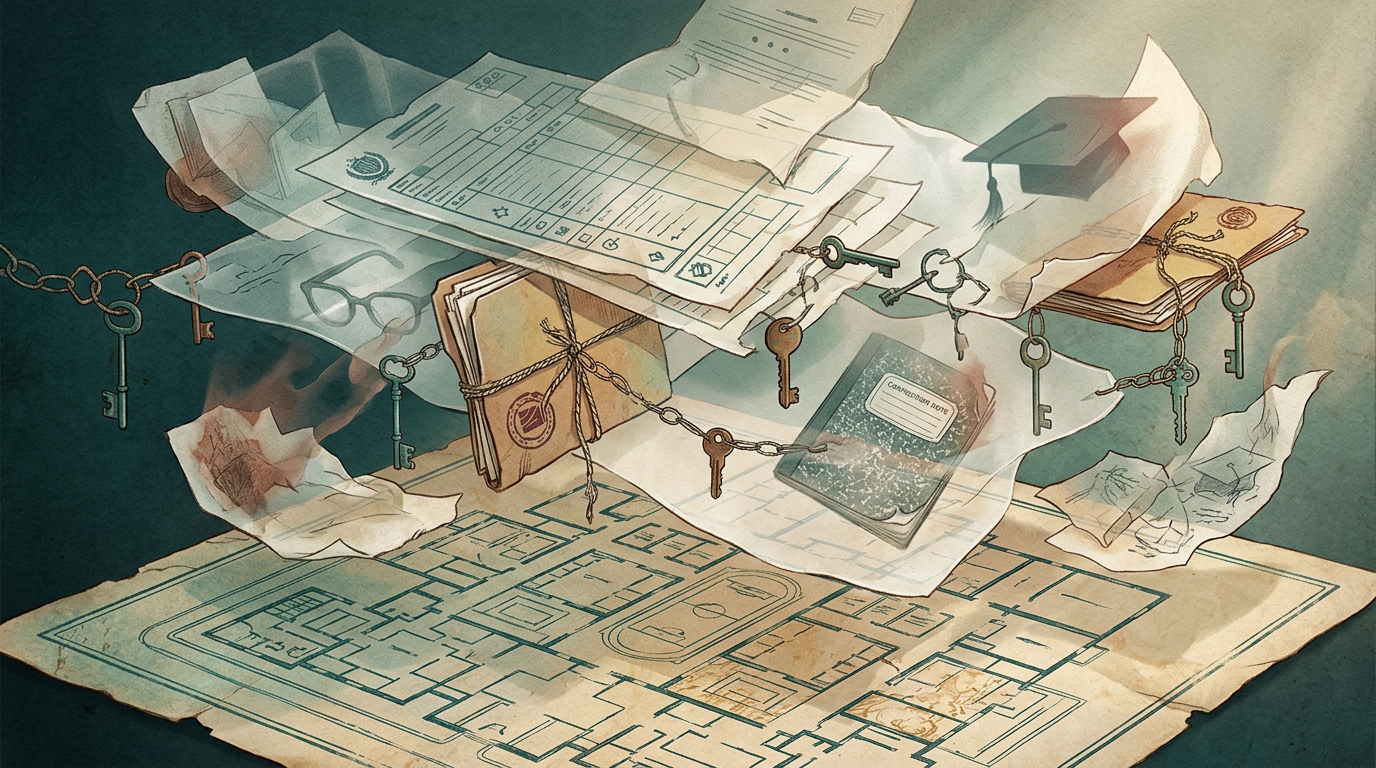
The room nodded. Then the board secretary placed a different report on the table. It was not a financial report. It was a map. The map showed the movement of faculty, researchers, administrators, and professional staff across the consortium during the previous six years. One pattern immediately became visible.
Several people who had proposed substantial changes to curriculum, assessment, research practices, workplace structures, or institutional decision-making had eventually left. Their official reasons varied.
Some resigned for better opportunities. Some cited personal priorities. Some wanted to protect their well-being. Some transferred to another institution within the consortium. Some simply said they were ready for something different. There was no single person who could be identified as having forced them out. There was also no single policy that explained the pattern.
The Board therefore considered the matter closed. After all, people had made their own choices. But one board member asked:
If these were individual choices, why do we keep seeing similar choices from people who occupy different positions?
The room became quiet.
The Executive’s Problem
The President did not disagree that people had left. The difficulty was interpreting what their departure meant. Was resignation simply resignation? Was it structural retirement before formal retirement? Was it healthy self-preservation? Was it organizational failure? Could all four be true at the same time? The Human Resources report indicated that replacement positions had been filled.
But another report indicated that some of the initiatives originally proposed by departing employees had quietly disappeared. The knowledge had not necessarily been transferred.
The relationships surrounding that knowledge had disappeared with the people. The institution had retained the positions. It had not necessarily retained the epistemic diversity those people brought into the system.
Then another question emerged:
Are we actually replacing people—or are we replacing vacancies?
The Ant and the Rabbit
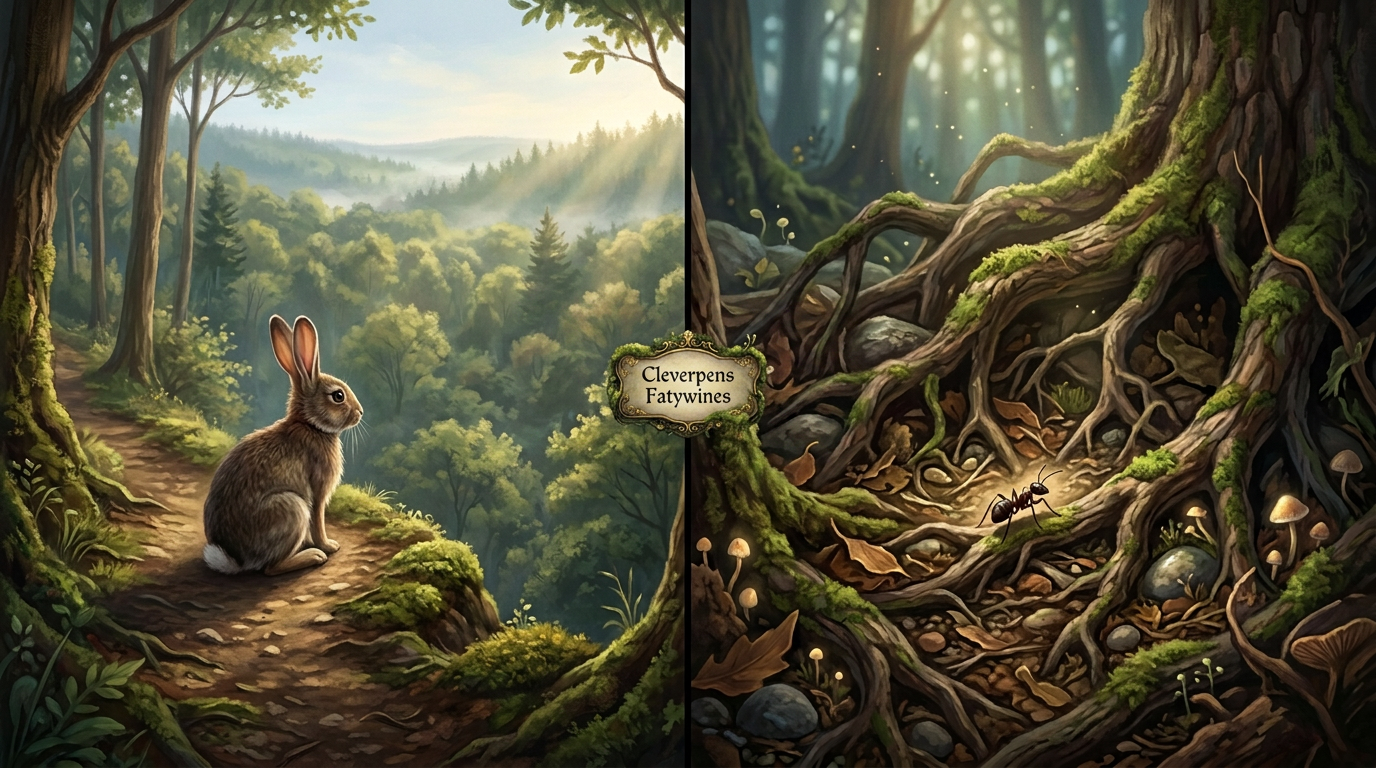
One executive offered an unusual analogy and started to narrate it: We are looking at the institution like a rabbit. The rabbit could see the forest. It could observe the overall population, movement, resources, and large-scale patterns. From that perspective, the institution looked stable. But an ant experienced something entirely different. The ant knew which pathways were blocked. Which signals had stopped working. Which relationships had become essential? Which areas had become difficult to enter? Which resources had disappeared? Which behaviors had become necessary just to survive.
The rabbit said,
The forest is healthy because it remains standing.
The ant might respond:
You have not walked through it.
Neither perspective was necessarily wrong. But neither was sufficient.
The Board began to wonder whether institutional stability could conceal deterioration occurring at a smaller scale. A department might be functioning while its people were exhausted. A team might be productive while nobody felt safe enough to disagree. A university might retain its organizational structure while losing the people who are capable of challenging its assumptions.
The Uncomfortable Question
The Board then considered a deeper possibility: perhaps the institution had become very effective at resilience. People learned how to adapt. They learned which battles were worth fighting. They learned how to accommodate disagreement. They learned how to survive uncomfortable environments. Some eventually left. The organization continued. From the outside, that looked like resilience. But the Board asked:
What if resilience is allowing the system to remain unchanged?
That question disturbed the room more than the turnover figures had. Because if people repeatedly learn to survive the system, the system itself may never learn.
Learning Without the Box
Another member challenged the usual language of organizational change.
We always tell people to think either inside the box or outside of it.
She paused and said, “What if the problem is the box itself?”
The question changed the discussion. Perhaps learning was not simply about becoming better at functioning within institutional structures. Nor was it merely about challenging those structures from outside. Perhaps sometimes learning required distance from the structure altogether.
A departing employee might therefore be leaving more than just a job. They might be moving into a different learning environment. Away from the hierarchy. Away from familiar expectations. Away from the institutional vocabulary that defined what could be considered a legitimate problem.
The person might discover something that could not have been discovered while remaining inside the original system. And the institution might discover something only because the person left. The board secretary wrote one sentence on the screen:
What became learnable because they left?
Nobody immediately answered.
From Heutagogy to Autogogy
The discussion eventually reached the question of learning itself. The consortium had invested heavily in learner-centered education. Students were encouraged to become autonomous learners. The institution promoted heutagogical approaches in which learners increasingly determined what, why, and how they learned. But the Board encountered an uncomfortable symmetry.
If learners could eventually determine the conditions under which they learned, could employees also recognize when the institutional environment was no longer appropriate for their own learning? And if they could leave to continue learning, was that necessarily institutional failure?…
Perhaps not. Learning sometimes requires leaving the classroom. And sometimes the classroom is not a room. It is an organization. It is a hierarchy. It is a professional community. It is a culture. It is even a worldview. The Board began to see another progression:
- Pedagogy: Someone structures my learning.
- Andragogy: I increasingly direct my learning.
- Heutagogy: I determine and negotiate what, why, and how I learn.
- Autogogy: I begin questioning the architecture that determines what learning itself is supposed to be.
And then came the paradox. After learning away from the structure, the learner may eventually return to pedagogy. But perhaps they do not return to reproduce the old pedagogy. They return to create conditions in which another learner can eventually outgrow the teacher.
The Forest Again
The Board returned to the map.
The rabbit saw migration. The ant saw trails. The executive saw turnover. The departing employee might have experienced survival, agency, discovery, or loss. The students experienced the consequences through changes in mentors, teaching practices, relationships, and institutional knowledge.
The consortium experienced population movement. The institution experienced either learning or forgetting. The same event existed at several scales. And each scale revealed something the others concealed.
The Board now faced a question that no retention program, survey, or resilience initiative could answer:
What is our organization blind to seeing because of the way we observe it?
The President looked again at the original report. The institution was still standing. But perhaps that was no longer the most important question. The more difficult question was, what kind of forest are we becoming—and what kinds of ants, rabbits, trees, and relationships can still survive, disagree, adapt, and change within it?
SUMMARY
The university consortium’s recovery from the pandemic demonstrates that individuals have varying perspectives on instructor attrition and stability and that specialized learning environments are required. The departure of employees underscores the necessity of determining the appropriate time to leave for personal growth. The Board is contemplating the implications of their departure, which raises questions about the capacity of institutions to evolve and the nature of learning.
DISCUSSION
Power isn’t inherently destructive. Institutions need authority. A school, college or university cannot function if nobody can make decisions.
The danger emerges when authority becomes the primary solution to problems created by insufficient capacity. Examples are the following:
Problem: insufficient staffing
Solution: increase managerial control.
Problem: declining productivity
Solution: increase surveillance.
Problem: employee disagreement
Solution: increase hierarchy.
Problem: declining trust
Solution: increase procedures.
Problem: institutional uncertainty
Solution: increase reporting.
The organization becomes increasingly controlled while also becoming increasingly incapable. That’s the paradox.
DISCLAIMER
This writing is for educational purposes and encourages discussions and debate. It aims to provoke critical thinking in several domains, including philosophical psychology and ethics. It is concerned with perception, judgment, and decision-making. Any mention is for debate purposes, not an accusation of wrongdoing.
The information is inconclusive. Readers are cautioned to distinguish fact from interpretation, to hold themselves accountable to proper procedure and permitted findings, and to be responsible in their research and discussion. The discussion around learning’s true value can be deeply personal, so take what resonates and explore further. As you do so, you may form your view about learning’s true value.
RELATED LINKS
© 2026 CLEVERPENS



Leave a Reply