

In this story, you’ll learn the following:
- Coping with loss and uncertainty.
- Resilience and empathy.
- The absence of lessons on emotional wisdom or handling life’s challenges.
- Education should prepare students for academic issues and life’s profound challenges alike.
- The concept of the Missing Lesson became a transformative insight for reshaping approaches to teaching.

Teacher’s Unlearned Lesson
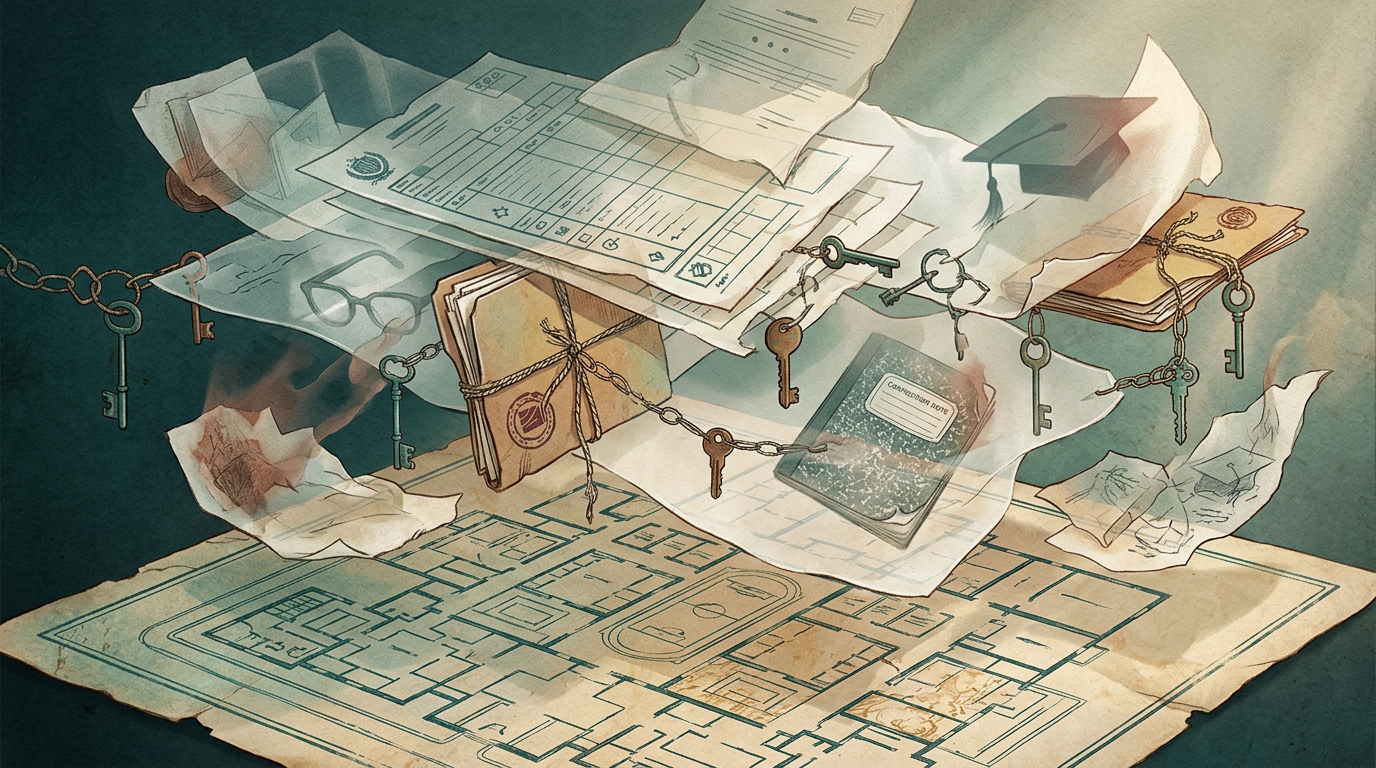
For more than twenty years, Mr. Reyes had taught hundreds of students. Yet there remained one missing lesson he had not yet discovered. He knew how to teach theory, assess performance, and prepare pupils for examinations. On the walls of his classroom were certificates, prizes, and photos of successful graduates who often thanked him for their success.
Student’s Unexpected Death and Life Lesson
One afternoon, he found himself surrounded by mourners at the funeral of a former student who had died unexpectedly in an accident, including his classmates. A question came in tears and quiet; no textbook had prepared him to answer. In fact, only now did he realize just how vital the missing lesson in life truly was.
One of his ex-students went to him and inquired, “Sir, in school we studied mathematics, science, and history. But why didn’t we learn how to cope with loss, uncertainty, and the fragility of life? That missing lesson might have helped us all.”
Missing Life Skills Curriculum
Long after the funeral was over, the question remained. That night, Mr. Reyes examined the curriculum he had faithfully been delivering for years. He looked over pages of competencies, standards, and measurable outcomes. But he saw no specific lessons on resilience, judgment, empathy, risk awareness, sadness, or the wisdom needed when life wouldn’t follow a lesson plan. He realized the importance of the lesson he was missing.
For the first time in his career, the teacher felt he was the one being examined. It was as if life were delivering its own missing lesson to him.
Missing Lesson Concept Exploration
The next morning, he walked into his classroom with the same lesson notes but a fresh viewpoint. He began to ask himself if education should only train students to answer academic issues or whether it should also train them for the profound challenges life invariably puts before them. The concept of a missing lesson would no longer escape his thoughts.
It was not a principal, a parent, or a kid who questioned the teacher on that day. Instead, it was the world itself presenting a missing lesson he’d never prepared for.
It was life itself.
DISCLAIMER
This writing is for educational purposes and encourages discussions and debate. It aims to improve critical thinking in several domains, including philosophical psychology and ethics. It is concerned with perception, judgment, and decision-making. Any mention is for debate purposes, not an accusation of wrongdoing.
The information is inconclusive. Readers are cautioned to distinguish fact from interpretation, to hold themselves accountable to proper procedure and permitted findings, and to be responsible in their research and discussion. The discussion around learning’s true value can be deeply personal, so take what resonates and explore further. As you do so, you may form your own view about learning’s true value.
RELATED READINGS
Don’t miss out on these
© 2026 CLEVERPENS. All rights reserved



Leave a Reply